Wanderlust
Jun 25, 2026
Fifty Years Later: Returning to Afghanistan
Written by
Bill Jones
Afghanistan is often viewed through the lens of conflict, yet it is also a place of remarkable cultural depth and enduring resilience. In this deeply personal essay, longtime GeoEx Trip Leader Bill Jones reflects on returning fifty years after his first visit. His journey inspired a new small group trip to Afghanistan, where he will lead travelers in exploring the country's rich history and living culture.
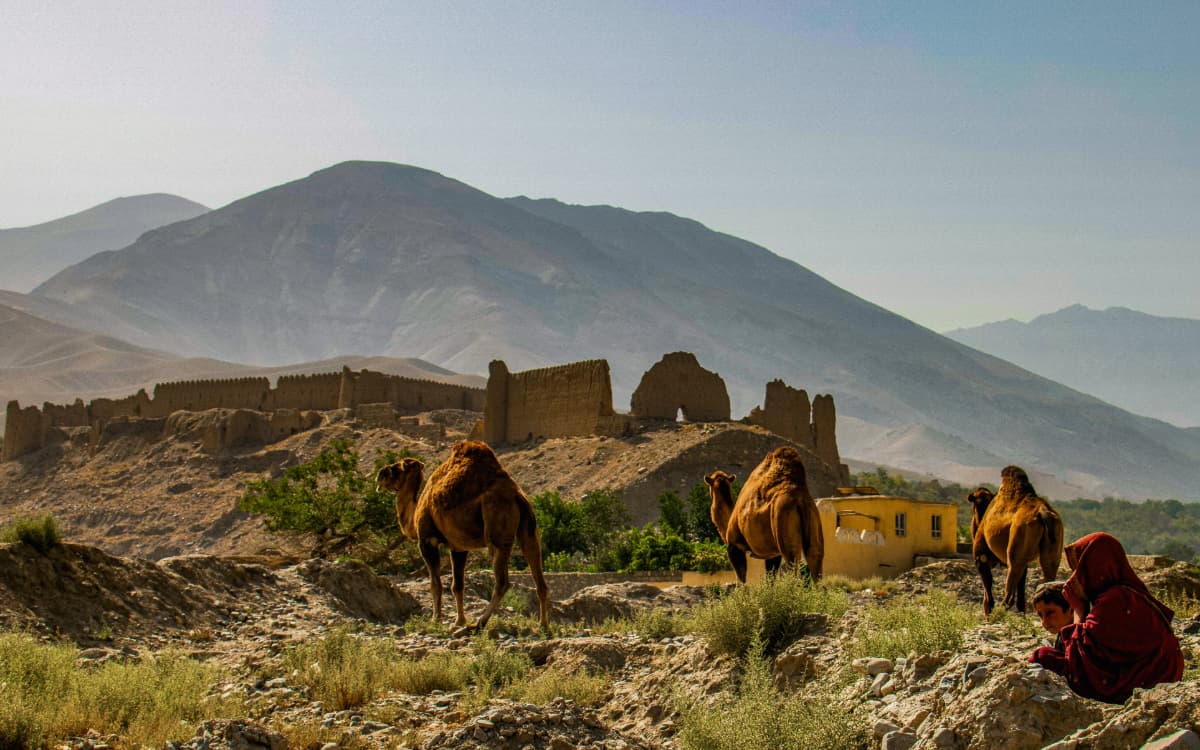
On 15 August 2025, I stepped once again onto Afghan soil—fifty years after my first arrival.
The date marked four years since the Taliban’s return to power in 2021. Kabul was observing the anniversary with formal ceremony—flags, speeches, guarded choreography. I chose to arrive on that day deliberately. If I was to return, I wanted to do so inside reality, not between headlines.
When I first came here in the early 1970s, Afghanistan was part of the overland route that drew seekers, wanderers and the merely curious. I was twenty-two—long on idealism, short on comprehension. The country felt ancient but accessible, proud yet unperformed.
Memory, however, is a seductive editor. I did not want to meet nostalgia.
I wanted to meet Afghanistan as it is.
Kabul: Continuity Beneath History
At Babur’s Gardens—laid out in the early 16th century and home to the tomb of the Mughal founder—children ran between cypress trees. Their laughter carried across terraces that have survived empire, invasion, republic, emirate and occupation. Political systems rise and fall; childhood endures.
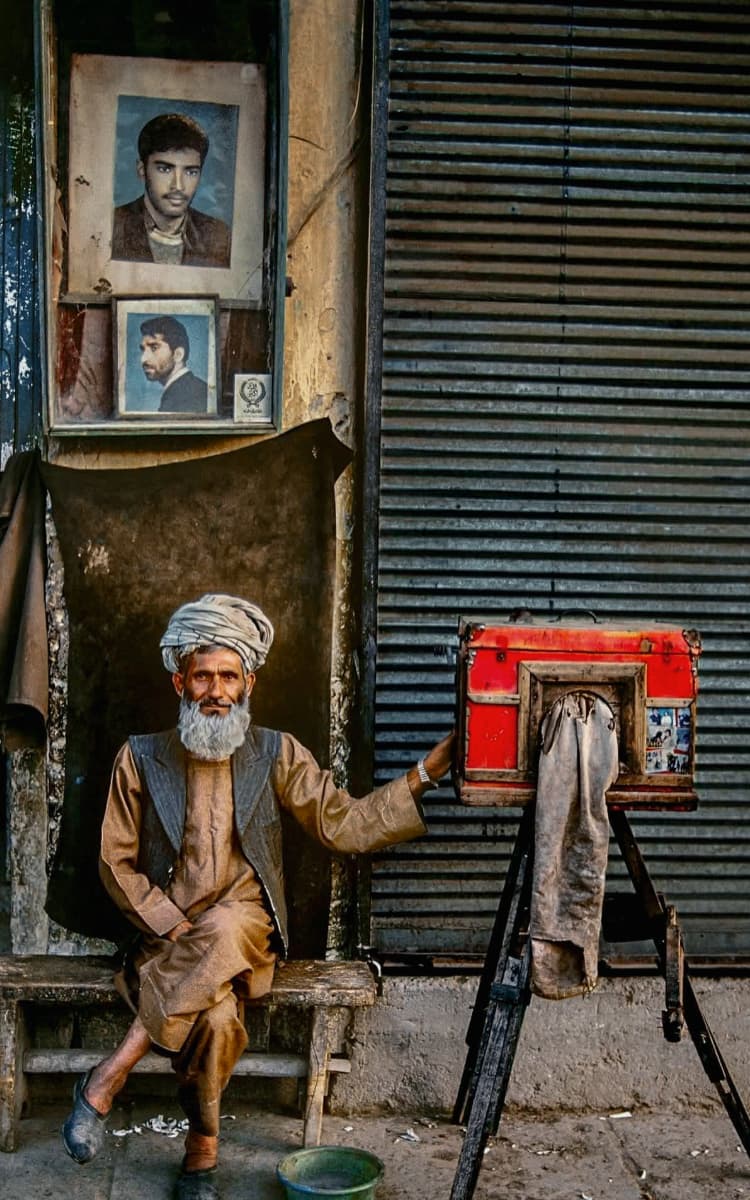
Later, I met photographer Aji Zamman, still working with a traditional wooden box camera much like the ones used in Kabul decades ago. He composes slowly, lifts the cloth, waits. In a world governed by immediacy, his method feels almost devotional.
The highways linking major cities are markedly improved from what I remember decades ago. Infrastructure has advanced over the past four years. One can acknowledge this without endorsing ideology. Travel teaches an uncomfortable lesson: reality rarely conforms to a single narrative.
Yet calm does not equal freedom.
Afghanistan asks you to hold both truths at once.
Herat: A City Older Than Conquerors
Herat predates the empires that later claimed it. Captured by Alexander the Great in 330 BCE and refounded as Alexandria in Ariana, it has for centuries been one of the great cultural centres of the Persianate world—home to poets, theologians, calligraphers and mystics.
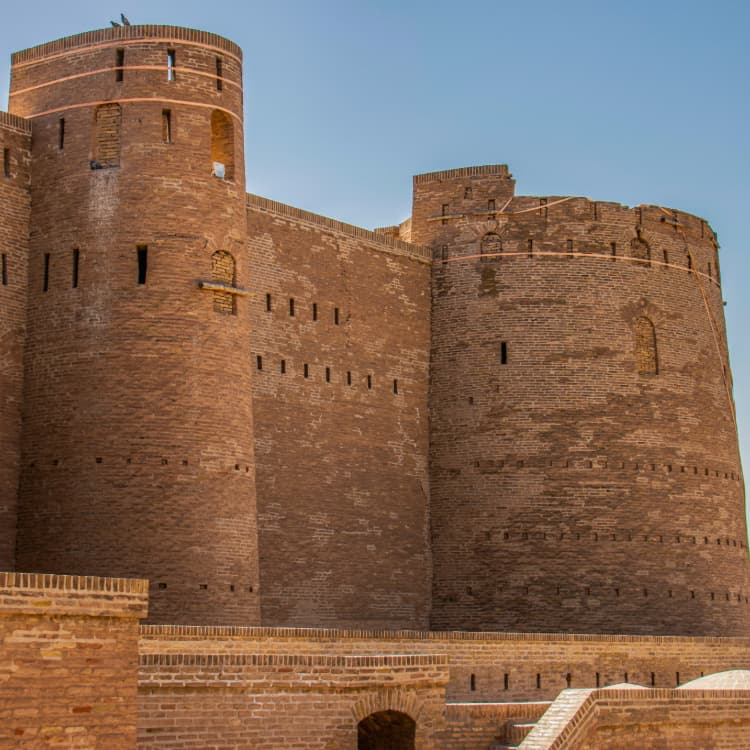
The Citadel—whose foundations trace back to antiquity and whose current form reflects multiple reconstructions—rises above the old quarter as a monument not to conquest, but to endurance.
In modest workshops across the city, women artisans worked with extraordinary concentration. Woodcarvers shaping intricate geometry. Ceramicists glazing bowls in luminous turquoise. Miniature painters continuing a refined tradition developed under the Timurid renaissance of the 15th century. Gold leaf applied with a brush finer than a single hair. Entire epics contained within the space of a palm.
Yes, the present restrictions placed upon women are severe. To ignore that would be dishonest. But to reduce these artists to symbols of oppression would be equally misleading. They were not abstractions. They were masters of discipline and lineage.
At the shrine of Khwaja Abd Allah Ansari—the 11th-century Sufi mystic whose writings still shape Afghan spirituality—I met Hosham, an Afghan who had recently returned home after completing his master’s degree in Italy. He spoke fluent Italian; I listened as he described the inward path of Sufism—annihilation of ego, love as surrender, the polishing of the heart.
As we spoke, a devotee practised sama—the recitation and melodic singing of devotional poetry. The voice rose through the tiled courtyard, carrying verses that dissolved boundaries between theology and longing.
Afghanistan is often described as the “home of Sufi saints.” In that moment, the phrase felt less historical than immediate.
We spoke perhaps ten or fifteen minutes. Yet something in the exchange felt suspended outside time.
No politics. No positioning. Only recognition.
Two men from different geographies, sitting beneath centuries of spiritual inheritance, listening to poetry soften the air.
Those were moments of quiet bliss—I believe for both of us.
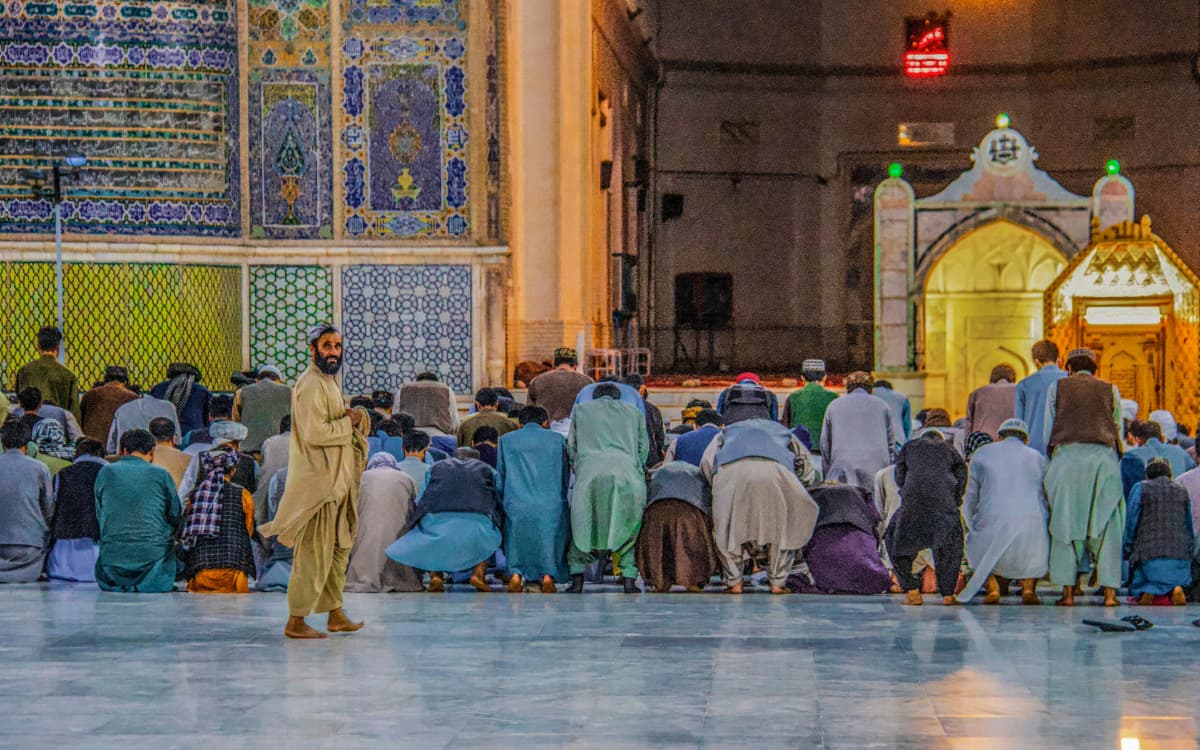
That evening at the Friday Mosque of Herat, worshippers gathered after prayer.
Where are you from? Why are you here? Are you Muslim?
The questions were direct but curious. In Afghanistan, intention matters.
Later, in the antique market, Herat’s famed blue glass caught the lamplight—fragile, luminous, improbably delicate for a land so often defined by hardness.
Afghanistan resists simplification.
Bamiyan: Impermanence Made Visible
Bamiyan remains one of the most symbolically charged landscapes in Central Asia.
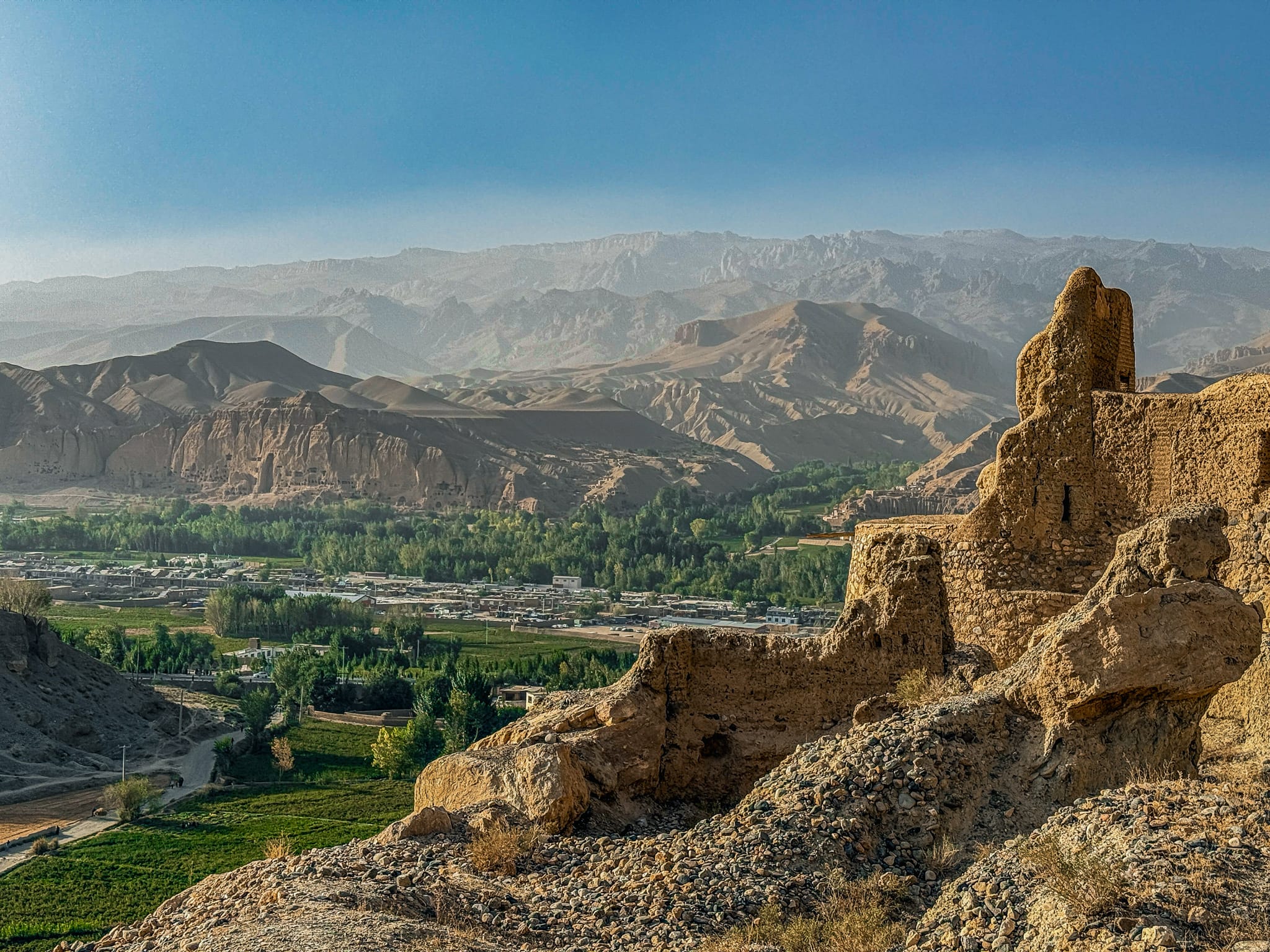
In the 6th century, colossal Buddha statues were carved into the sandstone cliffs overlooking the valley—markers of a period when Buddhism flourished along the Silk Road. In March 2001, the Taliban destroyed them. The empty niches remain.
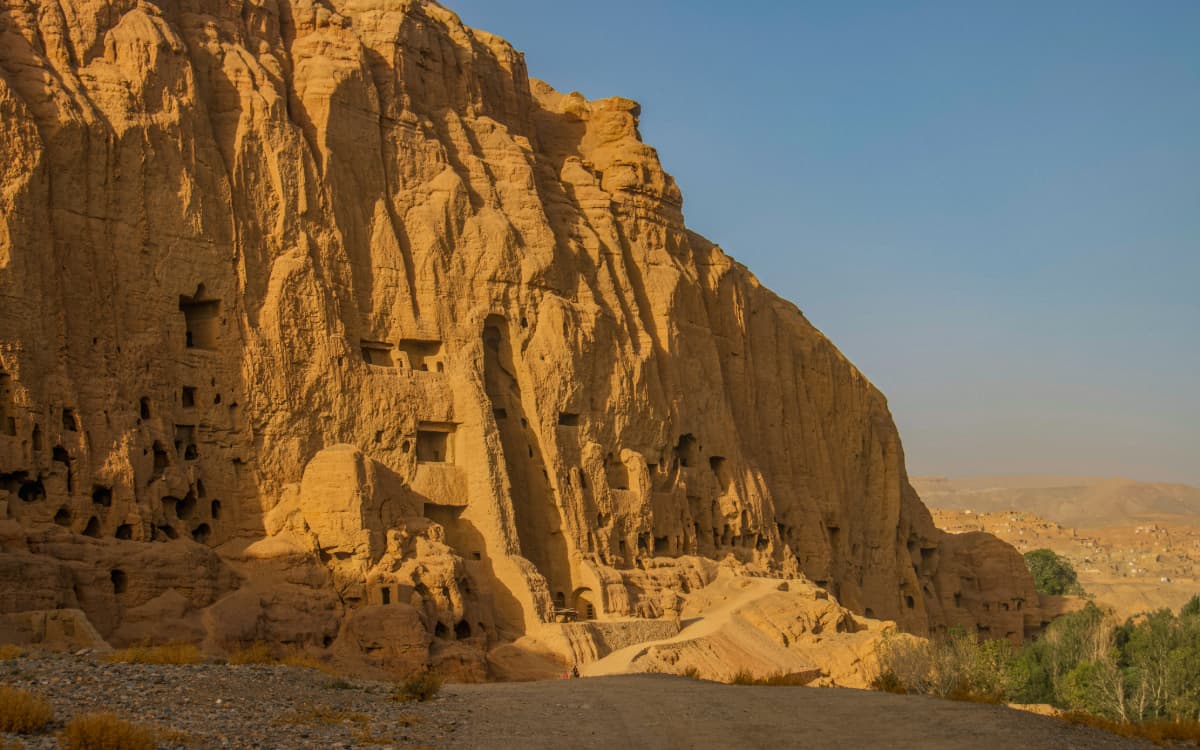
Standing before them in 2025, I expected anger.
Instead, I felt stillness.
As a Buddhist, impermanence is not abstract doctrine. The statues are gone. The valley remains. The caves—hundreds of them—still contain traces of murals and monastic life. The cliffs still diminish the ego. Awe does not depend on preservation.
Strangely, I did not miss the Buddhas. Their absence has become part of the teaching.
Hospitality, too, remains.
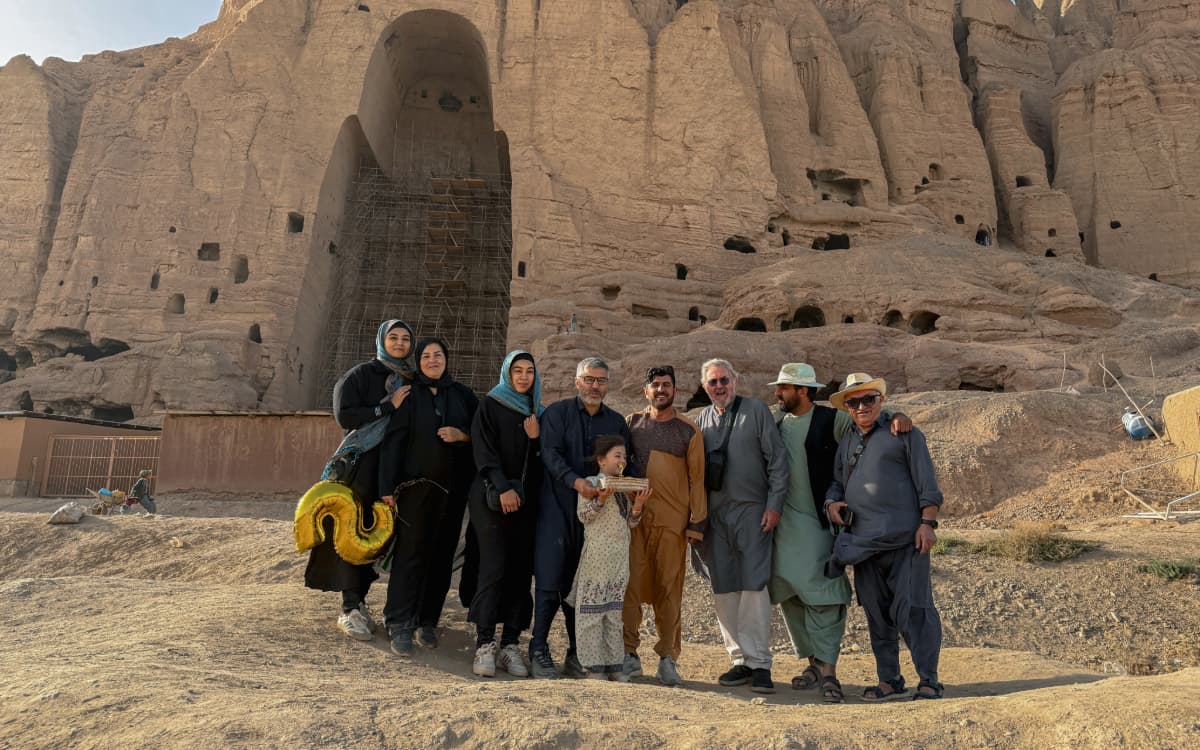
Fifty years ago, I drank tea in this valley with a family who welcomed a young foreigner without suspicion. This time, another family beckoned us over during their daughter’s seventh birthday celebration. A modest cake—clearly precious—was shared without hesitation.
Half a century collapsed into a single gesture.
At sunset we climbed Shahr-e Gholghola—often translated as the “City of Screams”—associated with the Mongol destruction of Bamiyan in the 13th century under Genghis Khan. From its heights, the valley glowed gold. History here is unvarnished. Yet nearby lies Band-e Amir, a series of naturally formed travertine lakes of astonishing turquoise.
Devastation and beauty occupy the same geography.
They always have.
Balkh: Where Poetry Outlives Power
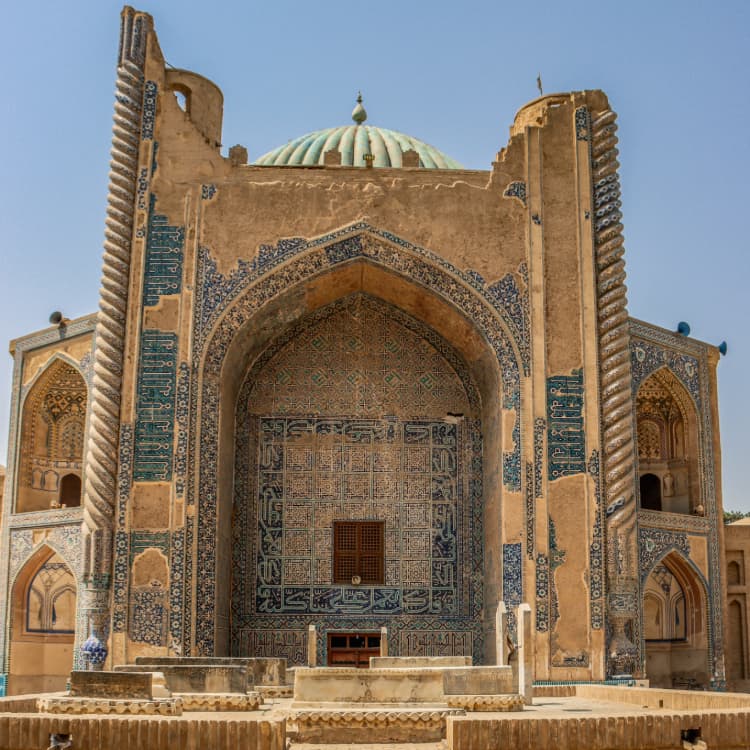
In ancient Balkh—one of the oldest cities in the region and associated with the early life of Jalal al-Din Rumi—we walked among ruins linked to his father’s madrassah. Nearby rests Rabia Balkhi, remembered as one of the earliest women poets in Persian literature.
Empires fracture. Language persists.
Afghanistan has long produced voices that outlast regimes.
A Return Both Powerful and Uneasy
This journey was not comfortable.
Restrictions on women are real and consequential. Education curtailed. Public participation limited. Any visitor who ignores this does so wilfully.
But refusing to engage at all is another form of distance.
Afghanistan is not a slogan. It is not an argument. It is human.
In 2027, I will return with small groups of travellers who understand that meaningful travel is not consumption but attention. We will move deliberately. Support local guides and artisans directly. Ask questions. Listen carefully. Accept ambiguity.
This is not a holiday.
It is witness.
Closing Reflection
We inhabit an era of instant judgement. We decide before we encounter. We categorise before we listen.
Afghanistan resists that reflex.
It unsettles certainty. It complicates moral comfort. It refuses to exist solely as villain or victim.
Fifty years ago, this country expanded my horizons.
In 2025, it deepened my humility.
To sit in a Sufi shrine while poetry rises into afternoon light… To stand before an empty niche and feel peace instead of outrage… To share birthday cake in a valley shaped by centuries of upheaval…
Is to recognise that the human spirit exceeds the structures that attempt to contain it.
Afghanistan does not ask to be approved.
It asks to be encountered—fully, honestly, without reduction.
And perhaps the most courageous journeys are not toward certainty, but toward understanding.
Or perhaps Afghanistan does not ask for admiration.
It asks for the discipline of presence.
And perhaps the rarest form of courage today is the willingness to stand inside complexity without turning away.
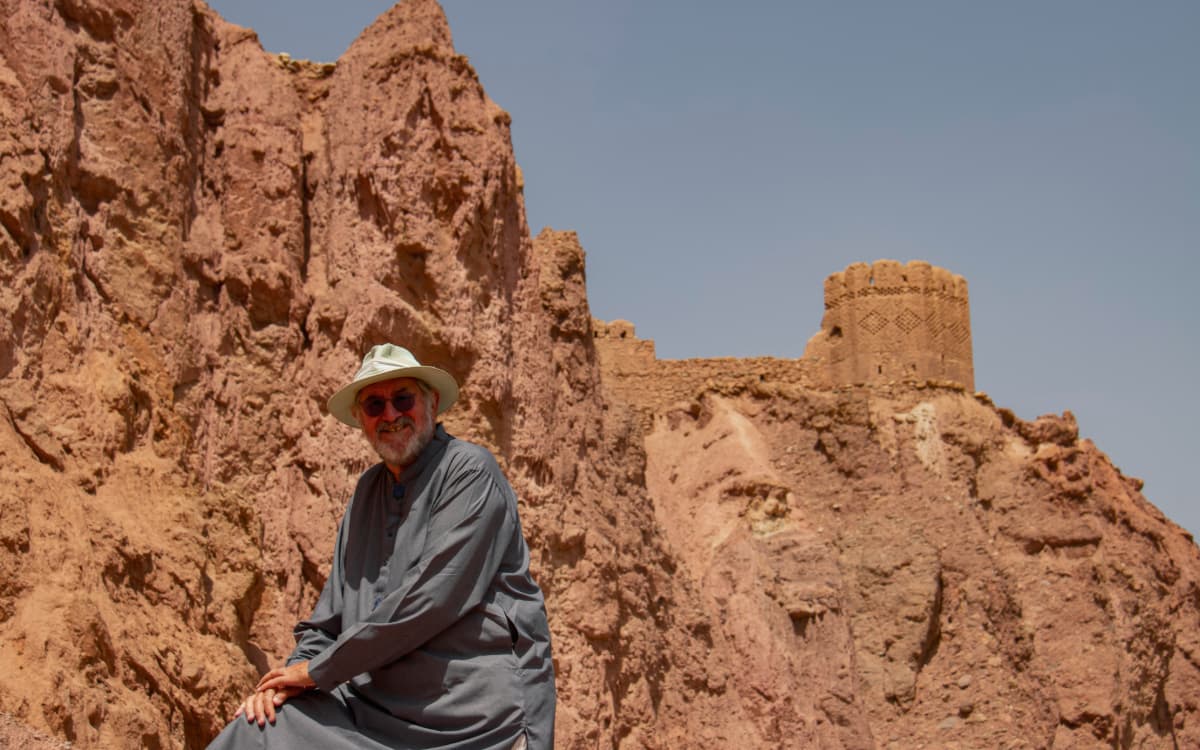
Bill Jones
Paris, France
24 February 2026
Join Bill Jones on Afghanistan's Silk Road Legacy, a small group trip through Kabul, Herat, Bamiyan, Balkh, and Band-e Amir. Travel alongside Bill and expert local guides as you experience Afghanistan's history, culture, and enduring hospitality.
Contact a GeoEx travel expert to learn more and discuss whether this trip is right for you.