Wanderlust

Nov 5, 2025
A Tour of The Grand Egyptian Museum: Where Egypt Comes Home
Written by
GeoEx staff
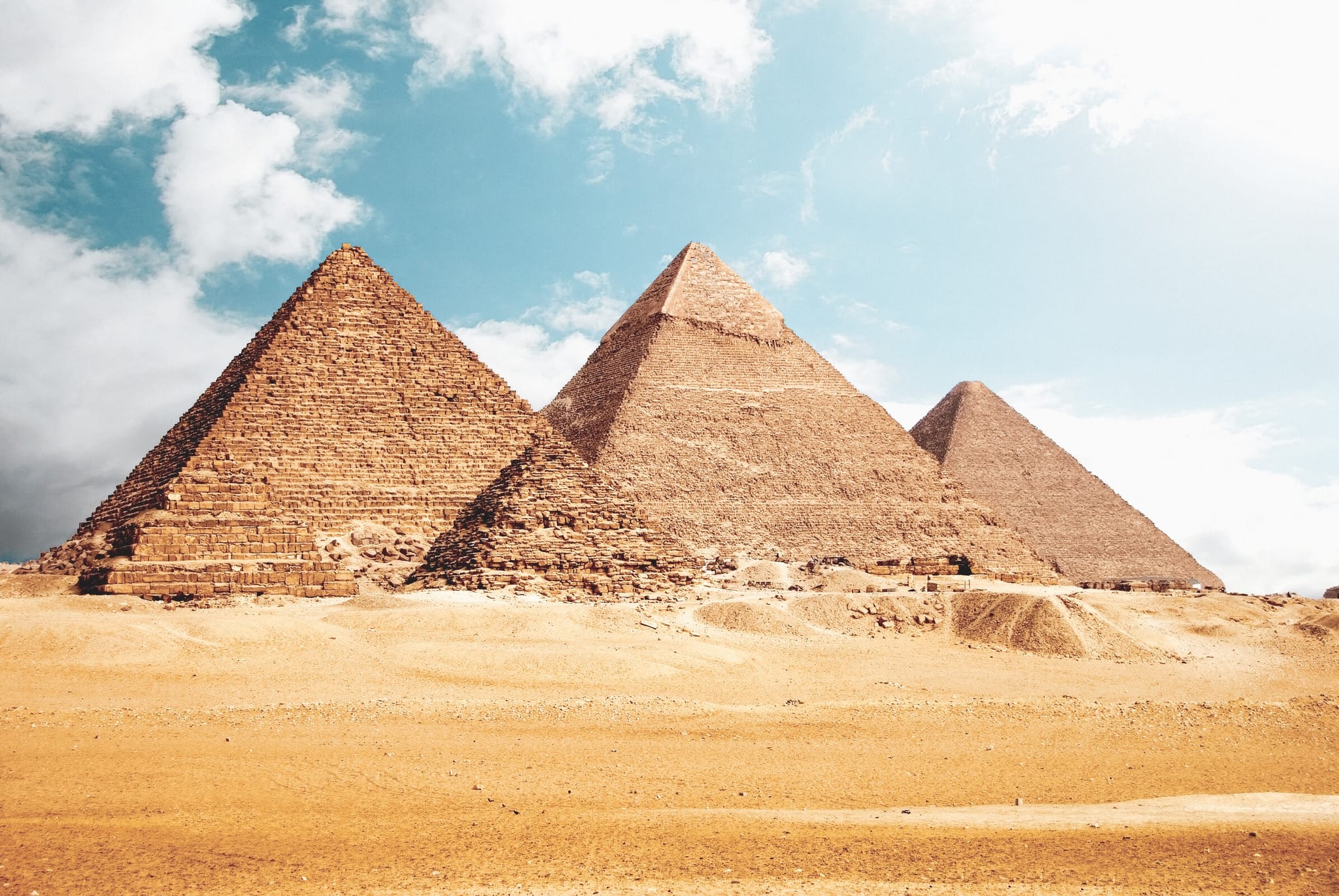
At the edge of the Giza Plateau, beneath the gaze of the pyramids, a long-awaited moment has arrived. More than two decades in the making, the Grand Egyptian Museum has quietly opened its doors, gathering Egypt’s history back to where it began.
For the first time in modern history, the pieces of Egypt’s story, once scattered across the world, are reunited on Egyptian soil. Every line of the architecture, every gallery, every object reflects that return. To stand inside the GEM is to witness a civilization seeing itself whole again.
Why It Matters
For more than a century, Egypt’s story has been told in fragments: a statue in London, a sarcophagus in Paris, a handful of treasures traveling the world. The GEM marks the moment those fragments find their way home. To stand here now is to feel the weight of something larger than preservation. The full Tutankhamun collection, the Khufu ship, the artistry of thirty dynasties, all gathered within sight of the pyramids that first defined them.
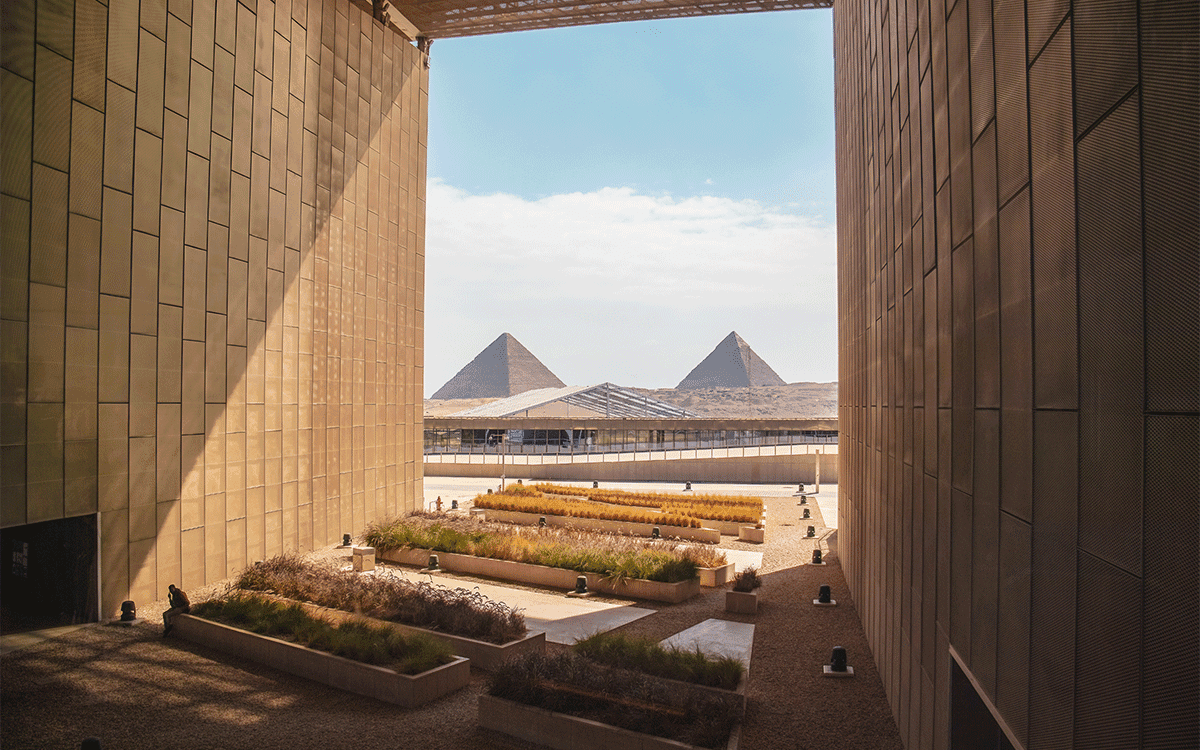
Every detail of the museum’s design carries this sense of belonging. Its orientation aligns perfectly with the Great Pyramid, and its limestone exterior is drawn from the same desert earth. Inside, the vision is unmistakably Egyptian. Archaeologists, conservators, and historians from across the country have guided every phase of its creation, shaping a space that reflects the country’s vision of continuity and care.
A Civilization, Gathered Whole
More than 100,000 artifacts now rest beneath one roof, forming the largest collection of Egyptian antiquities in history. Each piece has been restored with a precision that feels reverent, each placement intentional. Together, they trace the evolution of human imagination through artistry, science, and faith that defined Egypt and shaped the world beyond it.
At the heart of the museum are the Tutankhamun Galleries, occupying nearly one third of the entire space. Over five thousand objects from the young pharaoh’s tomb are displayed together for the first time since Howard Carter uncovered them in 1922. The chariots, gilded shrines, and reed sandals once laid beside him now stand together again, arranged exactly as they were found more than a century ago. Here, travelers find not the myth of a boy-king, but the humanity of a civilization that found eternity through craftsmanship.
Nearby, fragments of daily life, painted pottery from workers’ villages, carved ivory combs, reed pens, and fragments of linen reveal how beauty and purpose intertwined in daily life. They remind visitors that Egypt’s genius thrived not only in temples and tombs, but in the ordinary rhythms of living.
WHAT YOU'LL FIND INSIDE
- The Grand Staircase
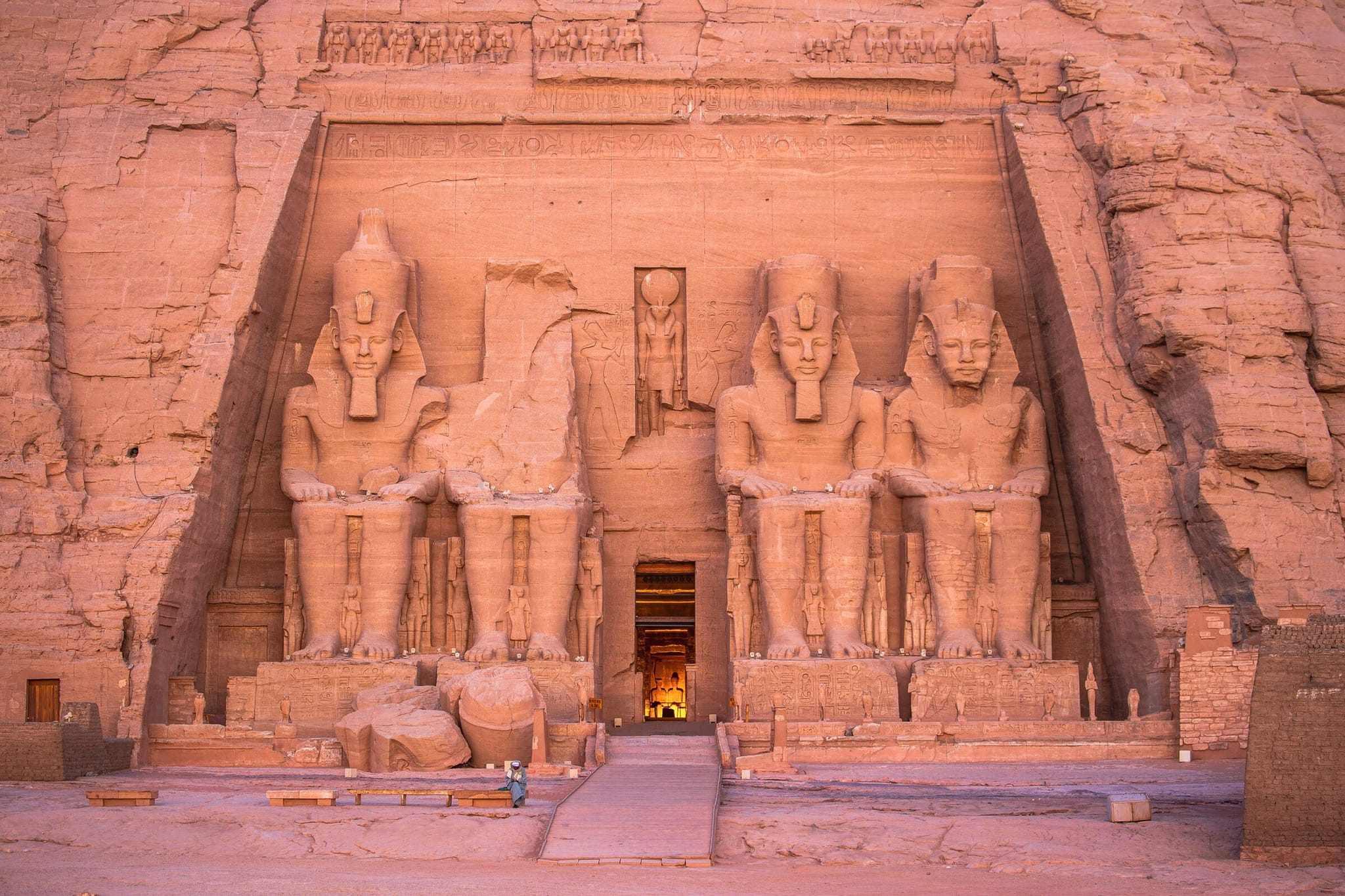
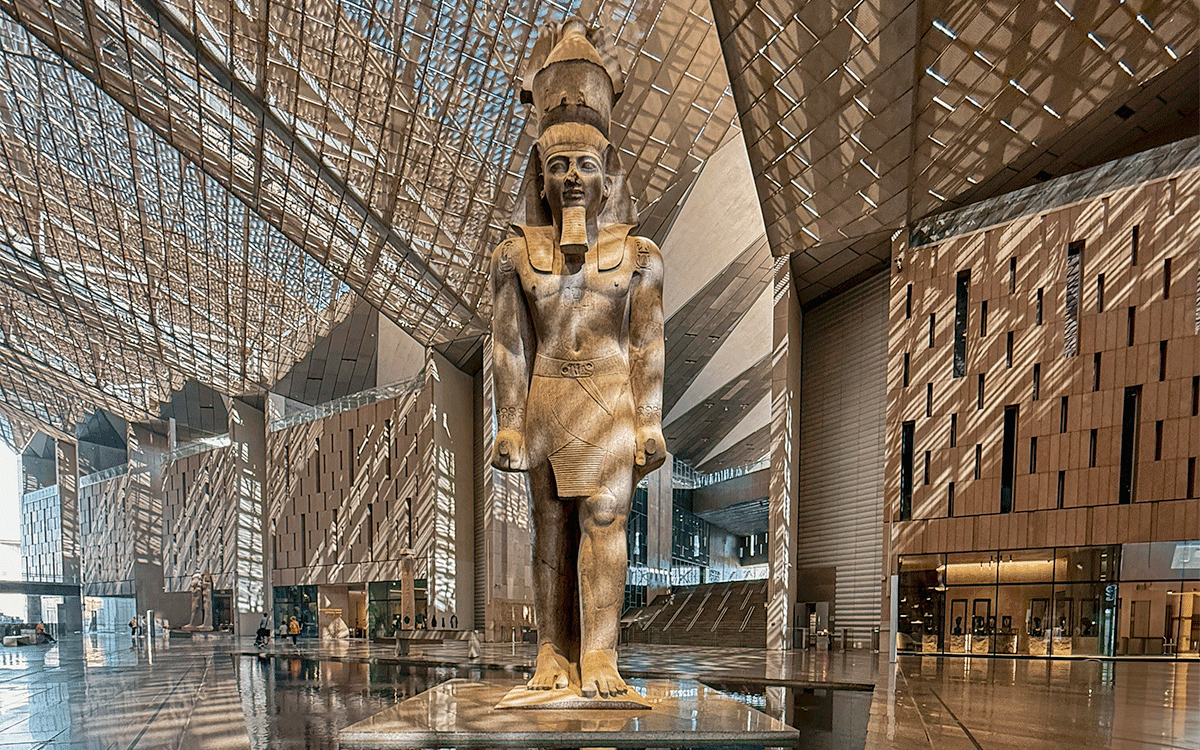
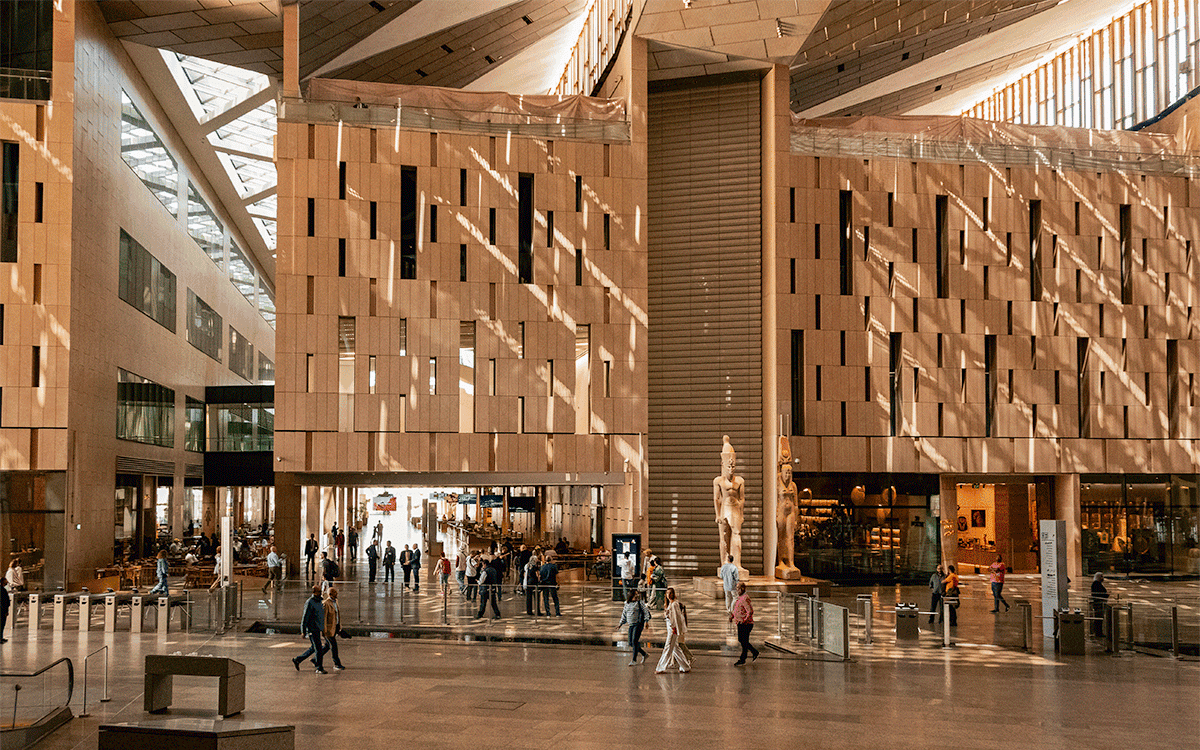
The Grand Staircase forms the museum’s spine, a processional ascent through thirty dynasties of history. Colossal statues of pharaohs rise toward natural light, their presence calm and commanding. Ramses II stands in the atrium, his restored form luminous in the soft glow filtering through the stone. As visitors climb, they move through time itself, each figure marking a chapter in Egypt’s story, each step a reminder of the civilization’s enduring reach.
- The Khufu Ship
Nearby rests one of the most astonishing feats of ancient engineering: the Khufu Ship. Crafted more than 4,600 years ago from Lebanese cedar and reassembled from 1,200 fragments, it now resides in a gallery designed precisely to its proportions. Suspended in air, the vessel seems ready to set sail once more. It is both artifact and philosophy, a tangible reflection of Egypt’s mastery of craft and its belief in life’s eternal voyage.
- The Narmer Palette
Often overlooked amid the gold and grandeur, this small siltstone relic captures the moment Egypt became one. Its carvings record the unification of Upper and Lower Egypt, an origin story displayed within sight of the pyramids that rose from that unity.
- The Fayum Portraits
Within a quieter space, a collection of Roman-era funerary portraits reveals faces that seem startlingly present. Painted two thousand years ago, these images meet the viewer’s gaze with warmth and clarity. Each portrait bridges two artistic traditions: the realism of Greco-Roman style and the enduring Egyptian faith in the eternal soul. They remind travelers that art’s purpose has always been connection, transcending time and empire alike.
- The Restoration Labs
Beneath the museum lies one of the largest conservation centers in the world. Seventeen laboratories are dedicated to studying, preserving, and stabilizing Egypt’s treasures. Specialists work with technology so advanced that it can analyze pigment composition or the cellular structure of linen fibers. These spaces ensure that Egypt’s cultural legacy will remain intact for generations to come. What is displayed above is the visible result of decades of unseen dedication.
- The Terrace
The museum’s terrace may be the GEM's quietest yet most stirring space. Step outside, and the pyramids align perfectly along the horizon. The desert stretches in quiet symmetry, and the city hums softly in the distance. Egypt’s past and present exist in the same frame, a living continuum of culture and memory.
- Architecture of Meaning
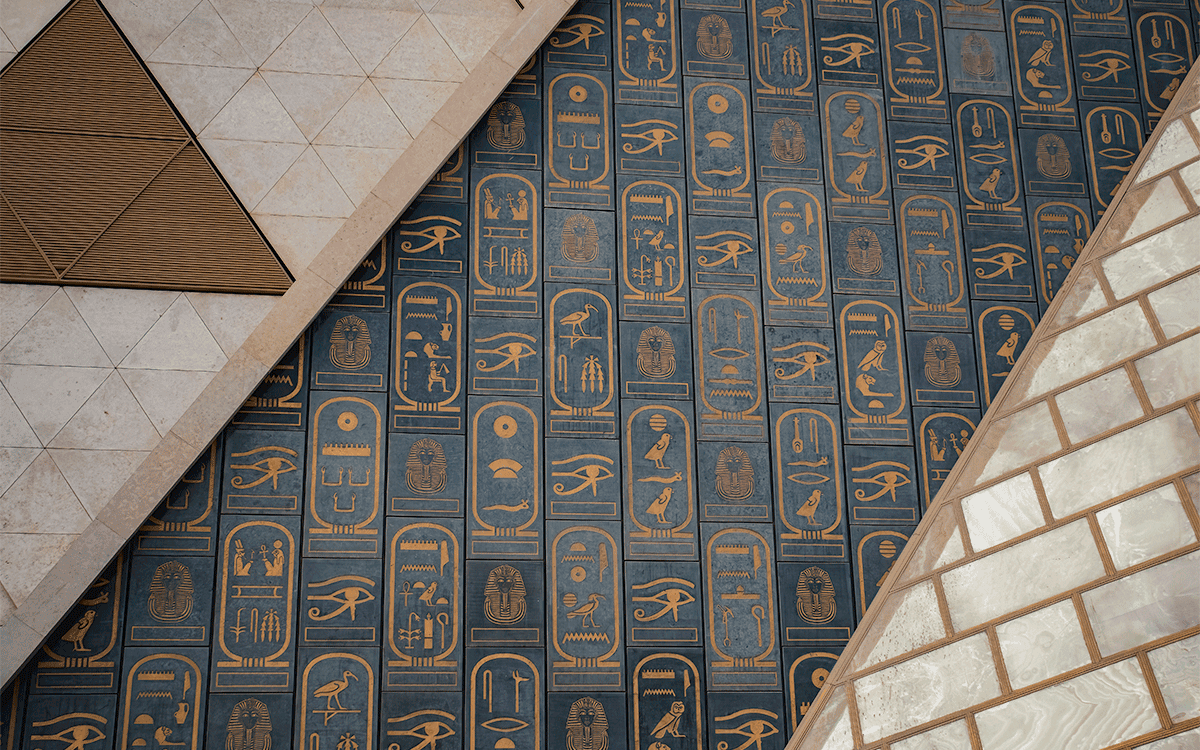
Designed by Heneghan Peng Architects, the museum mirrors the geometry of its surroundings with precise intent. Its translucent stone façade captures the golden hues of the desert while allowing light to filter through, creating a sense of calm spaciousness inside. The triangular motif, a subtle homage to the pyramids, repeats throughout the design, from the roofline to the window grids, binding structure and symbolism into one.
The result is a space that feels monumental yet intimate. The galleries invite movement and contemplation rather than spectacle. Light and shadow are part of the storytelling, guiding visitors through epochs without a single word. In its restraint, the architecture honors the artifacts it houses, allowing Egypt’s narrative to unfold naturally through space, texture, and light.
Why Go Now
What makes this moment extraordinary is not only what is on display, the chance to be among the first to see it before the world floods in. The galleries are still new, and the air still carries that rare sense of unveiling. Decades from now, when the GEM stands as another fixture of Cairo’s landscape, those who came early will remember what it felt like when Egypt opened its doors and invited the world in. A moment worth crossing the world for.
To explore options for Egypt travel, browse GeoEx’s custom and group trips to Egypt or call our adventure travel specialists at 888-570-7108.