Wanderlust
Dec 24, 2020
Ten Silver-Lining Lessons of 2020
Written by
Don George
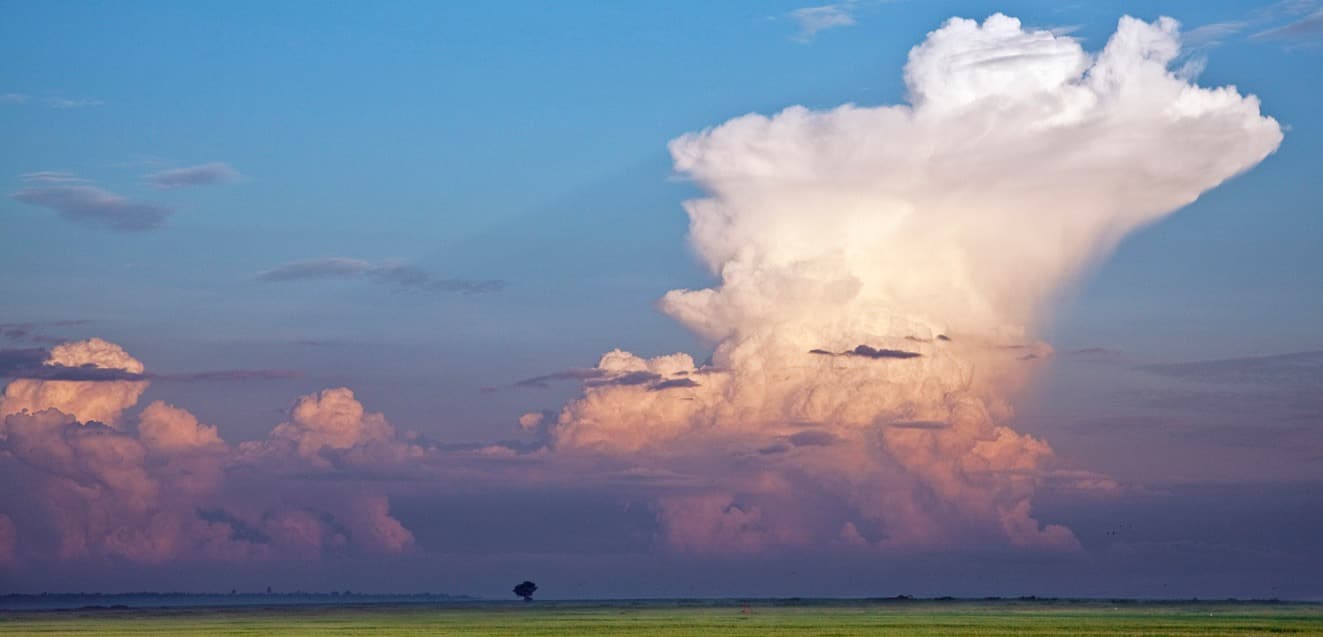
As we approach the end of this seemingly interminable year, I’m sitting in my study with a glass of champagne by my side. You might think I’m trying to hasten 2020 into the mists of memory, but it’s more complicated than that. One of the prime lessons I’ve learned—in some fundamentally life-shaking ways—this year is that we can’t control what the universe brings to us; we can only control how we respond to that, what we do with it. This was perhaps the greatest revelation of 2020 for me, but it seeded numerous other learnings that blossomed during the year too. So now, as I prepare to bid farewell to this cumulonimbus cloud of a year, I’m searching for, and celebrating, its silver-lining lessons.
1. Our Planet Is Intricately, Ineluctably Interconnected
On March 18, very shortly after shelter-in-place guidelines were announced in the Bay Area, I wrote an essay titled “Wanderlust in the Time of Coronavirus.” In that, I said, “Another lesson \[the coronavirus outbreak\] has made me realize is just how intricately interconnected our planet is. The fact that a virus in a remote region of China can spread to infect the entire globe in less than three months is stunning. Conversely, it is profoundly moving to witness the unifyingly brave and selfless acts of medical workers and first responders around the globe, and the desperate efforts of researchers working around the world and around the clock towards the creation of a cure. “
This passage, which feels like something out of a history textbook now, nine months later, was my first articulation of this intricate, ineluctable interconnectedness. Through the months, my sense of it and its import has deepened and expanded as we have seen just how profoundly, and similarly, the virus has disrupted virtually every facet of everyday life around the globe, from filling hospitals to restricting travel to making remote work the norm. “We are all in this together” has taken on a new meaning that underscores both the peril and the promise of our latticed global home.
2. Treasures Abound in Our Own Backyard
Not being able to wander the wide world initially propelled me to explore my literal backyard. As I wrote in that March 18 essay, “I’m communing with the yellow freesia that have just begun to bloom, exulting in the buds on the persimmon tree’s boughs, urging the birds of paradise to take orange-winged flight. I’m approaching home as if it were a new and exhilarating place and feeling some of the same wonder-frisson that I normally feel only on the road.”
Soon these travels expanded to my neighborhood and then, gradually, to the iconic attractions of the Bay Area, places that in a normal year would be crowded with visitors from around the globe. I spent a glorious day at Stinson Beach, walked across the Golden Gate Bridge, hiked into the heart of Muir Woods, and lost and found myself in Point Reyes. It was enlightening to discover how many special places are within day-trip distance of my home, how there are world-class wonders all around us; we just need to adjust our minds to see them.
3. Life is More Rewarding in the Slow Lane
A corollary lesson I re-learned was the importance of slowing down and paying attention. I’m normally reminded of this truth every spring, when I contemplate the edifying arrangement of rocks, pebbles, and moss at the Ryoanji temple rock garden in Kyoto. This year I learned it simply sitting at my desk, savoring the way the sun stippled the spring-green leaves outside my window, the soul-soothing heat and aroma of a good cup of tea, and the richness of the artifacts—a miniature moai from Easter Island, a pottery plate from Crete, a woodblock print of Mount Fuji—that surrounded me.
My mantra became, “Slow down, slow down; pay deep attention to the details all around.” The more closely I looked, listened, smelled, tasted, and touched, the more keenly I enjoyed and appreciated, and the more rewarding every moment became. Before long, this led to a new truth: Approach the everyday with the attentiveness of a sacred place, and soon the entire world takes on a special grace.
4. Nature Has the Power to Heal
Another corollary lesson was the quintessential power of nature to ground and restore, both physically and mentally. I felt this especially at Stinson Beach, in Muir Woods, and on the Point Reyes Peninsula. When the world became too much with me, as it often did during this topsy-turvy year, I learned that leaving the news behind and losing myself to ocean, beach, and tree, bestowed serenity, sanctity, and a touch of eternity. These immersions in nature became my own healing go-to: shinrin-yoku forest bathing and hama-yoku, beach bathing, too.
5. Wanderlust Abides Without and Within
On this year’s long and winding road, I discovered that local travels can propel us around the globe. In April, an impromptu quest to see the fragile pink cherry blossoms in my local park transported me to the fragrantly framed philosopher’s path in Kyoto. That cherry blossom odyssey inspired this buoyant declaration: “You can stay at home, feeling stuck and dull, and surrender to despair. But if you look at life in a different way, adventure is everywhere. The time will come when we’ll travel again; we’ll wander near and far. I’ll get to my Japan again; you’ll get to Zanzibar. The time will come, I know it will–this too shall pass, for sure. The global pandemic will end, and spring will bloom once more. And until then, remember this: Earth’s wide wonders still abound, inside and outside too. You hold the key within you now: You just have to open the door.”
Some weeks later, I happened upon a photo of Bali that whisked me to a rice paddy outside Ubud eight autumns before. It was the last day of a one-week stay on that blessed isle, and my one unfulfilled desire was to hear a gamelan orchestra. As I walked in memory through the paddy, I heard the lilting, gonging sounds of a gamelan. I followed those sounds into a nearby forest, but no matter where I looked, I couldn’t find their source. As my sorrow at leaving Bali mingled with my frustration at not seeing the orchestra, an epiphany suddenly struck me: “I didn’t need to see the gamelan to hear its music, and I didn’t need to be in Bali to have Bali in me. It was already there, gonging and trilling and booming, rice paddy blooming, and it always would be.”
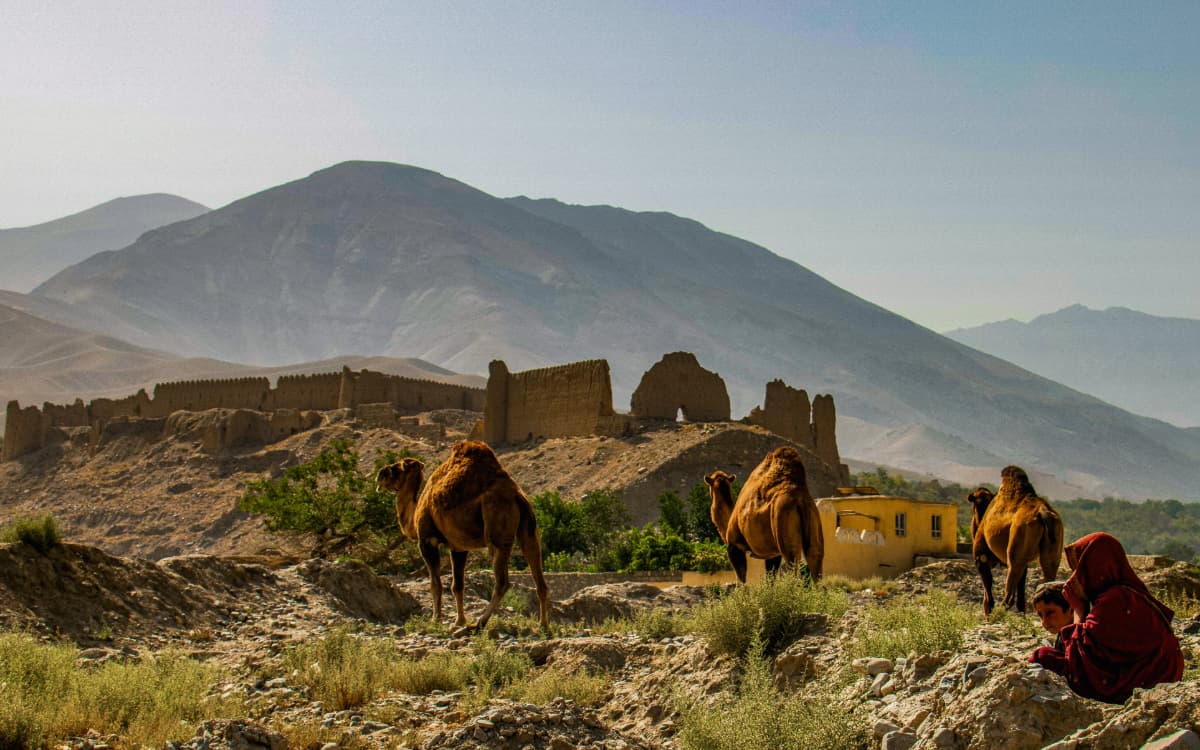
This notion that we contain the wide world inside us manifested even more marvelously earlier this month, when a box of dusty thirty-year-old notes, maps, and photos that I had excavated from my garage catapulted me back onto the Karakoram Highway in northern Pakistan, on the road to fabled Hunza, my first adventure with GeoEx and an exhausting-but-exhilarating epic that changed my life in many ways.
And so I learned this year that we can still widely roam without ever going far from home.
6. We Can See the World Without Leaving Our Desk
I also found that we can travel afar even when we’re desk-bound. My first experience of this was with the Facebook group “View from my window,” whose members were staying home because of the pandemic, and posting photos to share their everyday views. In one hour of window-scrolling, I beheld a British backyard basking in blue and golden blooms and an Illinois field flowing with freshly fallen snow, a sky-swirling sunrise pasteling Palau and skyscrapers sizzling in dusk-lit Macau, snow-tipped peaks in Peru and sun-drenched beaches in Lamu, cobbled piazzas in Italy and blue-green bays in Guadeloupe. I saw deer and elk and cockatoos, llamas and lambs and kangaroos.
These world-spanning, mind-expanding views brought home a truth I always re-learn when I venture far away: how one person’s exotic is another person’s everyday.
7. We Can Also Welcome the World into Our Home
As the months passed, this lesson took on another dimension as well, as my laptop cast a kind of magic spell. With a click of my mouse, I could suddenly Zoom into kitchens and studies and living rooms, to meet with guides, and authors, and students, and friends, in a global conversation that had no end.
In this sense, the world became smaller than ever this year; instead of me visiting Earth’s far-flung corners, those corners have visited me, right here in my humble study. Of course, I haven’t been appraising camels in a dusty market, or sipping green tea in a tatami-matted room, or staring at stained-glass glory in an ancient cathedral—but this magic-laptop-ride has still offered world-wandering of a kind.
So one more lesson of this stay-at-home year has been how we can communicate across countries and cultures even when we’re not able to travel there.
8. Embracing Is Key to Letting Go; Letting Go Is Key to Becoming Whole
As the months wore on, the year’s true toll became clearer: so much suffering, so much sadness, so much mourning. On my healing sojourns in nature, I came to understand the necessity of accepting and embracing the wounds the year had inflicted, the fatigue and exhaustion and despair it had engendered. I realized a simple, soulful truth: We have to embrace it to let it go.
This was a multi-part journey. It began on a May foray to Stinson Beach, where I wrote, “I sat and stared, sat and stared, for a half-hour or more. I told myself not to demand anything, not to expect anything, but just to let it be. I felt myself quiet and quiet, slow and slow—and then, when I had lost track of time, I suddenly felt something reaching out to me. The sea was wrapping me in its watery embrace. And then I felt something inside me stretch and sigh and break.
“All the trials of the past half-year flowed through me—not just mine, but those of our whole human tribe. All the death and suffering, all the sadness and loss.
“I realized how many wounds I had accumulated in the past months, how many wounds we had all collectively absorbed. And I realized how many of these wounds, mine and others, had simply been ignored.
“And then I was filled with a suffusing sense of peace. And I heard a voice that wasn’t mine, but somehow spoke inside me, say: Go with the flow—this is nature’s way.
“At that moment, I let go. Let the wounds wash back into the sea. And then I sensed a great balm of healing, a great cleansing blue-green balm flowing over me.”
A month later, that lesson deepened at Muir Woods. There I literally hugged an old-growth redwood, “my first outside-the-home hug in three months,” and near the end of an afternoon of hiking, temporarily became one of those venerable trees: “I sat there for an hour, and let all the trials, tremors, and tribulations of the world I had left in the parking lot drift away. I felt grounded, calm, quiet—earth-bound, forest-embraced.
“In another hour, or two, I would walk back to the main paved trail, where other pilgrims would be exclaiming in awe at the sacred sequoias, just as I had earlier that day.
“But for now, I was content to root right here, on this blessed bench in the middle of nowhere, or rather, in the middle of everywhere, the wind whooshing through me, bird-chirps strung from my boughs, toes spreading under scratchy pine needles into hard-packed earth, sun-warmed canopy reaching for the sky, aging trunk textured by time, deep-pulsing, in the heart of Muir Woods.”
In autumn, that lesson expanded inward and outward among the wild wonders of North Beach, on the Point Reyes Peninsula. The day began with an unsettling visit to Point Reyes Station, where masks and social distancing “reminded me relentlessly that the carefree, serendipitous spirit I always cherished here had been pandemified this year. Much as I loved this special town, I did not feel carefree or serendipitous now.”
As I stood there disoriented and dispirited, something told me to drive to North Beach. There I walked to a stretch of sand where I was absolutely alone, and then I stopped and stared at the waves. Expectation and disappointment roiled inside me, and I realized I had lost my way.
Then I opened my journal, and wrote: I need to let go of everything I can’t control. I need to focus on the world right around. Now, here, I need to erase the shell that separates me from this place. I need to embrace the wild wisdom that fills this space. . . .
I surrender myself to the infinitude of the sea. I embrace the sea in the wild heart of me.
Those words opened a new road before me, which I described in my Wanderlust story:
“I wrote those words, and something deep inside me stirred, a promise and a dream. I recalled a passage from James Joyce, that had once defined and inspired me: ‘He was alone. He was unheeded, happy, and near to the wild heart of life. He was alone and young and wilful and wildhearted, alone amid a waste of wild air and brackish waters and the seaharvest of shells and tangle and veiled grey sunlight.’
“In my teenage years, those poetic words had graced a poster on my bedroom wall, conjuring adventure’s exhilarating call; now they called to me again on this Pacific strand, reminding me that possibility thrives throughout the land. There is still so much to be excited about, so much to be grateful for. There are unimaginable adventures still to come, and wonders on every shore.
“Instead of feeling powerless, I should focus on what I can control: celebrate the riches close at hand, cultivate the yearning soul. The pilgrim’s path is sometimes hard, and obstacles abound. But follow the compass of your heart, and your feet will map the ground.
“I opened my arms to hug it all: the sun, sand, breeze, and sea. I hugged the teen who dreamed of life; I hugged the modern me. The world reduced to this one truth, that I had to live to teach: I had to lose myself to become complete, in the wild heart of North Beach.”
We have to embrace it all to let it all go, and we have to let it all go to once again become whole.
9. We Can Shape the New World of Travel
From the world inside to the world outside, this year drove home the need for me and all of us who are passionate about travel to reassess the travel equation. The pandemic pushed the global Pause and Reset buttons, enabling us to ask fundamental questions: As travelers, how do we want to be when we begin to travel anew? As tourist destinations, how do we want to be when visitors flock to us again?
I realized that we need to be more mindful of the affects that we have, good and bad, on the places we visit; and I realized that those places face two challenges: They need to preserve the qualities that distinguish them and draw people to them, and they need to develop alternative sources of revenue so that they are not totally tourism-dependent. This made me more determined than ever to practice regenerative travel, that preserves and promotes the traditional practices and products of a place, and to ensure that the cultures and countries we visit benefit in meaningful ways from the journeys we make.
This also deepened my commitment to the three C’s: communication, connection, and community. For me, these are the keys to realizing travel’s potential: to teach us to appreciate the global mosaic of landscape, creation, custom, and belief, and to cherish each and every distinctive piece; to lead us to approach unfamiliar cultures and peoples with curiosity and respect, and to realize that virtually all people, everywhere, want to treat their fellow humans with care. Pondering the world to come, I felt re-energized to preach what I have long believed: that travel paves the pathway to global understanding, evolution, and peace.
We are the stewards of Earth’s cultures and lands; we shape the future with our hearts, minds, and hands.
10. The Journey Begins and Ends in Gratitude
All these lessons led to one more, which is really the beginning and the end: How fortunate we are to have our health, our homes, our families, and our friends; how fortunate we are to be here in this moment, surrounded by the riches of every day; how grateful we are to all of those who sacrifice in infinite ways.
I am grateful for my cherished colleagues, all of them, near and far, and I am grateful for my wonderful readers, wherever you are. Writing these columns through this tempestuous year has been a rite of passage for me, and the incredible response I have received from readers like you has been a buoying epiphany. I realized once again how these connections are my ultimate dream and goal—whether they are forged in person or in words, these connections make us whole. Traveling with you on this Wanderlust way has become a cherished pilgrimage of hearts, and has reminded me of one more truth: Together, we are more than the sum of our parts.
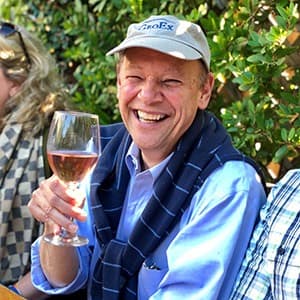
As we approach the end of this year’s path, on behalf of all of us at GeoEx, I want to thank you for your friendship, engagement, and support, for all that you have done. And now let’s pause and raise a glass: To a better world to come, and new adventures, at home and abroad, in 2021!
Yours in abiding wanderlust,
Don George
* * * * *
Do you have some silver-lining lessons to share? I’d love to hear your thoughts on my reflections—and any learnings you have gleaned this year! As always, thank you very much for your comments. They mean the world to me and to all of us at GeoEx!