Wanderlust

Jul 25, 2025
A Timeless Connection in Greece
Written by
Don George
Editor’s note: This May, GeoEx launched its Unexplored Greece trip. This trip had a deep personal resonance for me, and I was privileged to be its leader. In creating this trip, our prime goal was to offer travelers a robust mix of the iconic and the unexpected: sites that every traveler to Greece should see combined with off-the-beaten-path experiences and encounters that travelers visiting Greece on their own would almost certainly never experience. When we began our May journey, I was filled with questions about whether we were going to be able to create this ambitious alchemy of the iconic and the unexpected. And then this happened….
— DG
Panagiotis Merinopoulos, the last tanner of Amfissa, Greece, approached the barn-like stone building and put his hand on a weathered wooden doorway. Turning to our group with a broad smile and a sparkle in his eye, he said, “Welcome to my workshop.”
Then he opened the door, and we stepped through time.
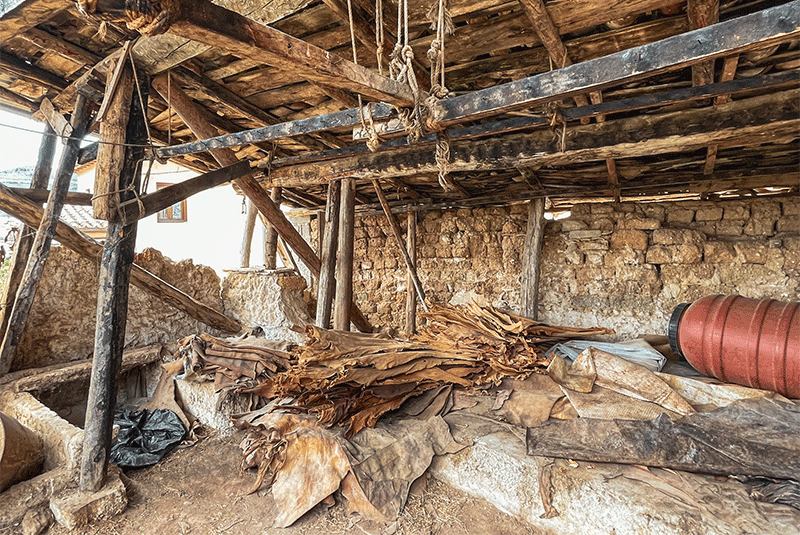
In the shadowy expanse, I could make out a web of crisscrossing wooden boards, 20 feet long, suspended from the darkened wooden ceiling and strung with ropes; long stone vats sunk into the floor used to soak raw hides; wooden racks used to stretch the hides as they dry; and two monstrous wooden drums larger than me.
The air was thick and musty, redolent with the scents of animal hide, damp stone, tannins from oak bark and olive leaf, and generations of sweat. Against one wall, dusty shelves held old tools – awls, heavy-duty needles, bristle brushes, leather burnishers. And in a far corner, a slab of stone supported two mysterious machines covered like ruins in layers of leather residue.
We met Panagiotis on the third day of our trip. That day was devoted to visiting Delphi, the site of the famed Oracle, where generals and statesmen from throughout the Mediterranean world had ventured to receive sacred counsel from the 8th century BCE to the 4th century CE.
Before visiting that rocky, remote site, we explored the nearby town of Amfissa, a sleepy place of 6,000 people that tourists rarely visit. This town was once renowned throughout Greece for its tanners, so we had decided to make our own pilgrimage to the workshop of the town’s last tanner.
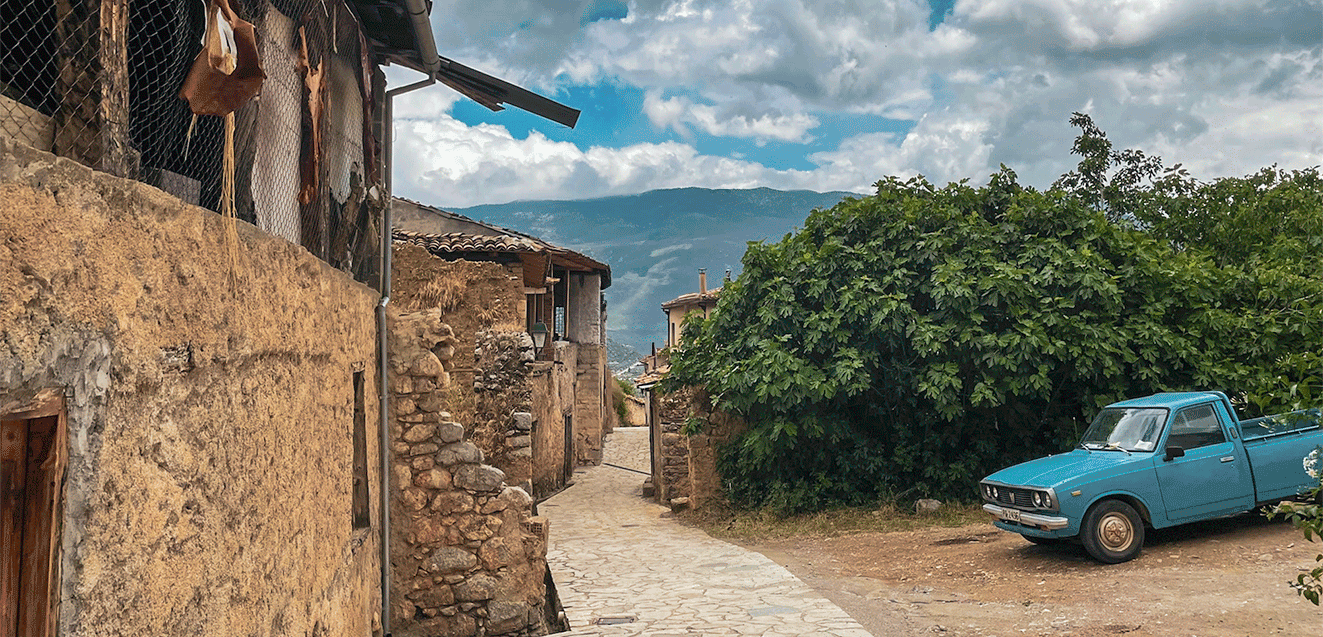
The old tanners’ quarter, known as Harmaina, is set slightly apart from the main town, and nestled along a small, winding stream that once powered the tanners’ trade. The quarter was absolutely deserted when we arrived, and we wandered over cobbled alleys past modest, two-story stone or mud-and-wattle houses, crumbling and patched here and there with faded ocher, gray, and pale blue plaster. Wooden balconies sagged under the weight of potted geraniums. The roofs were terra cotta-tiled, the stony lanes dappled in olive-tree shadows.
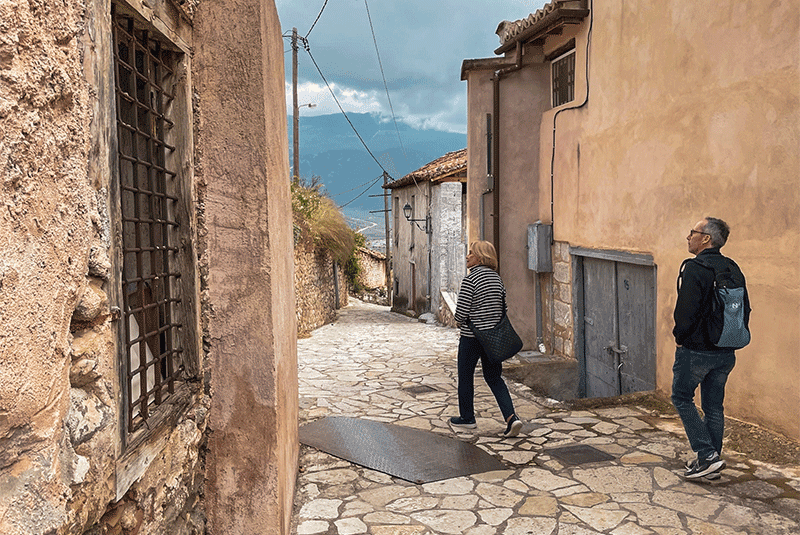
After a few minutes of out-of-time wandering, a hearty man with bright eyes and a warm smile appeared and greeted us. This was Panagiotis, and as he led us down a winding alley, he told us about the history of tanneries in Amfissa.
Tanning began to flourish in Amfissa around the 16th century, Panagiotis said. The area was well suited to tanning because it had abundant water sources, which provided the clean water crucial for soaking and treating the hides; a fertile valley to raise plentiful livestock, which meant easy access to goat and sheep hides; and expansive olive groves and other vegetation that provided the tannins needed for curing.
During the 19th and early 20th centuries, Panagiotis continued, the Harmaina quarter was a buzzing hub of artisanal activity. “At its peak, there were over 40 active tanneries here,” he said, sweeping his arm over the now desolate street. “Imagine that!”
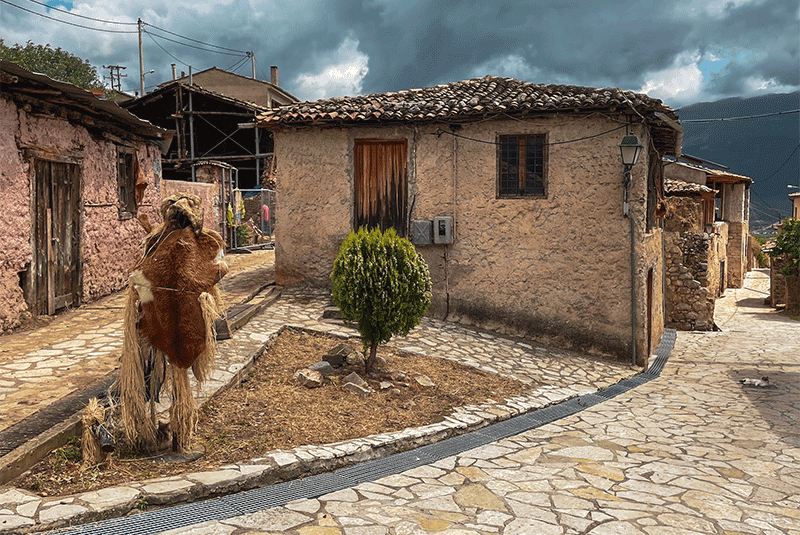
Tanners worked in small family-run workshops, many passed from father to son. They worked entirely by hand: soaking, liming, fleshing, tanning, and finishing, all without machinery. Their principal products were shoes, saddles, belts, bags, and book bindings.
“The leather produced in Amfissa was known throughout Greece for its durability and quality,” Panagiotis said, a quiet pride in his voice. “We even supplied book bindings to the Vatican in Rome. In fact,” he turned to look at us all, “we still do!”
After World War II, industrialization and the rise of synthetic materials and mass production caused the tanning industry to decline. Now, with help from his father and brother, he is the last tanner left in Amfissa, Panagiotis said, with a determined glint in his eye. “I want to keep this tradition alive!”
With those words, we reached his barn-like workshop and entered another world. Standing in a Rembrandt-like shaft of light near the giant wooden drums, Panagiotis explained the process of tanning: “After we receive goat and sheep hides from local butchers, we manually soak and clean the skins in cold spring water from the Harmaina stream. Next we soak the skins in lime for several days in these drums” – he pointed to the giants beside him – “to loosen the hair. Then dehairing is done by hand using special curved knives on the wooden racks.”
To illustrate the before and after, he held up a skin with the bushy black, brown, and white hair still on, and then another skin that had been completely dehaired.
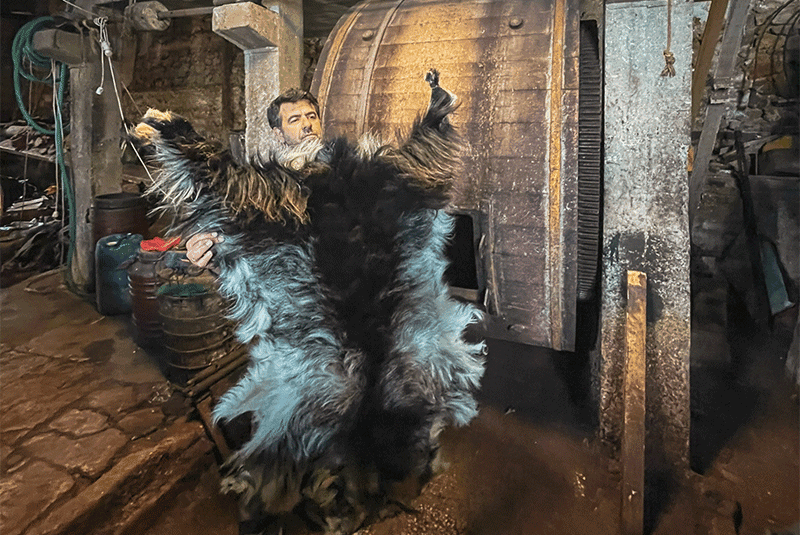
“After this,” Panagiotis continued, “we use tannins made from local bark and leaves to tan the leather in the drums. This process can take several months. Once fully tanned, the hides are removed and rinsed in fresh water, then hung to dry.”
As he spoke, some members of our group took notes; others took photos or videos. Nods and subtle smiles of wonder were exchanged. “Wow!” and “I didn’t know that!” punctuated the air.
“The dried leather,” Panagiotis said, “is oiled or greased with natural fats like olive oil and tallow to restore its suppleness. Finally, the leather is sorted by thickness, pliability, and surface quality. Some may be further dyed or waxed; others are left in their natural light brown tone, which is a hallmark of our leather.”
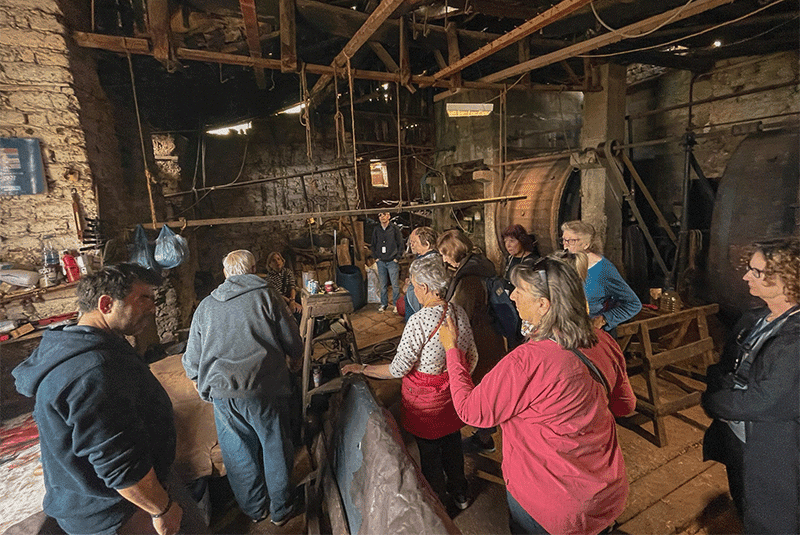
At this point, Panagiotis’s father appeared and beckoned for us to follow him to a far end of the room. There he energetically displayed the time-worn tools they have used for generations to cut, stitch, and stamp the leather.
When he finished, our group began posing questions about the history and process of tanning. As the questions continued, I could see the father’s eyes shine.
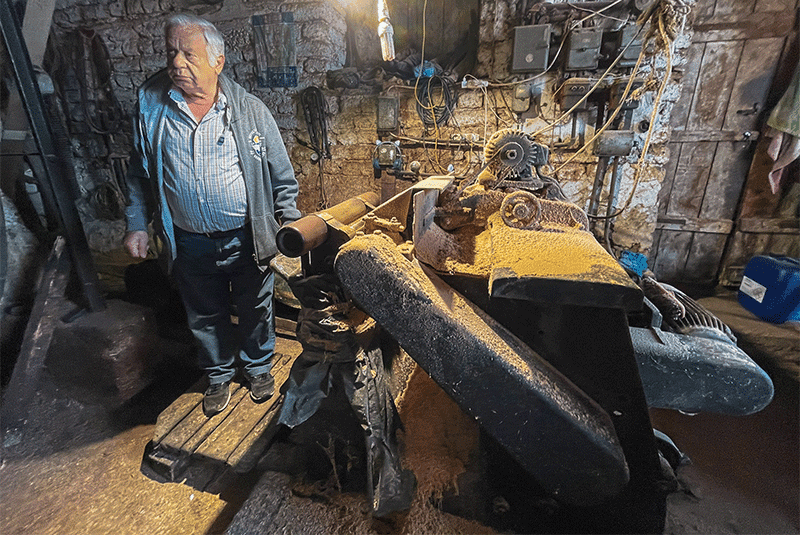
When the time came for us to leave, he put his arm around his son and looked at us all. “When I heard that foreigners were coming here today, I did not know what to expect,” he said. “To be honest, I was not so happy to have you here.” Then a big smile creased his face. “But now I am so happy to meet you! We are honored to have you here! Thank you for coming all this way to learn about our tannery!”
“We are honored to be here!” one member of our group said. “Thank you for sharing your amazing art with us!”
“Yes! What a magical experience!” another added. Then she impulsively hugged the father and son.
“Yes! This was pure magic!”, “So wonderful!”, “Such an unexpected treat!” others exclaimed.
Suddenly hugs and handshakes filled that ancient space, burnishing the last tannery of Amfissa to an even deeper glow.