<rss xmlns:a10="http://www.w3.org/2005/Atom" version="2.0"><channel><title>GeoEx Recce Blog RSS Feed</title><link>http://www.geoex.com/blog/rss</link><description>GeoEx Recce Blog RSS Feed</description><language>en</language><item><guid isPermaLink="false">{9C3A467E-1631-4E30-B459-A92F9509E193}</guid><link>http://www.geoex.com/blog/2013/05/jan-morris-in-conversation</link><title>Jan Morris in Conversation with Don George</title><description>&lt;p style="margin: 0in 0in 8pt;"&gt;Legendary travel writer Jan Morris met in conversation with Recce editor Don George on May 8 at the New York Times Center in Manhattan. It was an exhilarating evening, with the talk ranging from the slopes of Mount Everest to the streets of Trieste, Italy. &lt;/p&gt;
&lt;p style="margin: 0in 0in 8pt;"&gt;Our own Maura Ginty was in attendance. Here are excerpts from the notes she took:&lt;/p&gt;
&lt;p style="margin: 0in 0in 8pt;"&gt;Eighty-six-year-old and absolutely amazing legend Jan Morris strolls onto the stage with a swagger &amp;ndash; and casually reminds us that she will notice and remember those of us who did not clap. &lt;/p&gt;
&lt;p style="margin: 0in 0in 8pt;"&gt;Her conversation with Don George begins at the beginning of Morris&amp;rsquo;s career as a reporter, with the scoop of a lifetime: the first successful ascent of Mount Everest, by a British expedition team. Everest is a story Morris has told innumerable times, but she tolerates questions about it graciously. Describing herself as &amp;ldquo;young, fit, ambitious, and brutal enough to climb Everest,&amp;rdquo; she was also sly enough to beat the other newspapers to announce the story. This was an era when runners, walkie-talkies, and decryptors all played a role in fishing out the right news. In the course of the expedition, she &amp;ldquo;invented a devilishly complicated and clever code&amp;rdquo; where the actual meaning was the opposite of the literal. As a result, her telegraph stating &amp;ldquo;Snow conditions&amp;nbsp;bad advanced&amp;nbsp;base&amp;nbsp;abandoned May 29, awaiting improvement, all well&amp;rdquo; actually meant that the ascent had been successful &amp;ndash; Everest had been conquered. The message was intercepted by a Reuters reporter, but while he knew something was afoot, he couldn&amp;rsquo;t quite figure out what. And that&amp;rsquo;s the hidden essence of what a Sherpa runner sent off safely.&lt;/p&gt;
&lt;p style="margin: 0in 0in 8pt;"&gt;Then Morris thought, &amp;ldquo;If I got down the mountain in time, I could get my report there for the coronation of Queen Elizabeth the II,&amp;rdquo; which, as she said, &amp;ldquo;seemed like a good milestone indeed, didn&amp;rsquo;t it?&amp;rdquo; Suddenly, she declares, &amp;ldquo;I started running down the mountain at dusk&amp;hellip; Off we set, slithering down the mountain, through the ice falls, awaiting the avalanches&amp;hellip; I was getting weaker and weaker, gathering dust as I slithered down Everest with my secret message&amp;hellip; But then I had to write a long dispatch. I had to write it all myself since I couldn&amp;rsquo;t go up there again. I finally reached camp with my Sherpas and sent it off.&amp;rdquo; &lt;/p&gt;
&lt;p style="margin: 0in 0in 8pt;"&gt;Half a world away, &amp;ldquo;in gray old London, in on a golden coach came the news that a British expedition had climbed the highest point in the whole world&amp;hellip;&amp;rdquo; Silence fills the room.&amp;nbsp; &amp;ldquo;And now,&amp;rdquo; Morris adds, almost in a whisper, &amp;ldquo;I&amp;rsquo;m the only person left alive from that expedition.&amp;rdquo; Well, that&amp;rsquo;s not so surprising, she adds, since she was the second youngest person on the team. They were all &amp;ldquo;extraordinarily nice people,&amp;rdquo; she recalls, who became friends for life. &lt;/p&gt;
&lt;p style="margin: 0in 0in 8pt;"&gt;Morris surprises George when she reveals that the story was published in the Times of London without her byline, just as &amp;ldquo;From Our Special Correspondent.&amp;rdquo; She adds that she was not allowed to write about the expedition for 10 years &amp;ndash; &amp;ldquo;at which point no one wanted to read about it.&amp;rdquo;&lt;/p&gt;
&lt;p style="margin: 0in 0in 8pt;"&gt;&amp;ldquo;Actually,&amp;rdquo; Morris continues, &amp;ldquo;a year in New York changed me more than Everest. Every year for 60 years I&amp;rsquo;ve come here &amp;ndash; this is the 60&lt;sup&gt;th&lt;/sup&gt; anniversary of both my Everest and New York expeditions. I&amp;rsquo;ve always found this a kind city and I&amp;rsquo;ve found kindness as the supreme principle in life.&amp;rdquo; In fact, Morris recalls, she once wrote that if she had to have a heart attack, she would choose to have it in New York, because she knew the kind people there would immediately come to her aid. George quickly assures her that she doesn&amp;rsquo;t need to have a heart attack at that moment to prove that New York is kind.&lt;/p&gt;
&lt;p style="margin: 0in 0in 8pt;"&gt;George asks her about the next stage in her life journey, and Morris describes how she turned to writing about cities: Venice &amp;ndash; &amp;ldquo;the most beautiful melancholic city in the world after the war&amp;rdquo; &amp;ndash; and eventually Trieste, her current favorite and the subject of what she describes as her last complete book, &amp;ldquo;Trieste and the Meaning of Nowhere.&amp;rdquo; &lt;/p&gt;
&lt;p style="margin: 0in 0in 8pt;"&gt;How does she apprehend a city, George asks. Morris responds immediately, &amp;ldquo;Wander aimlessly, grin like a dog, and run around the city, and it will seep into your pores.&amp;rdquo; On her first visit to New York, she recalls, she would simply ask for directions, and the stories would flow out, and those personal histories became entangled in the mood and history of the place. &lt;/p&gt;
&lt;p style="margin: 0in 0in 8pt;"&gt;Morris also recommends the smile test: &amp;ldquo;You smile at everyone who passes, and this is a gauge of the nature of the city at the moment.&amp;rdquo; In some places the locals look away in discomfort or disgust, in others they stare back dumbfoundedly, and in others, the fortunate places, her smile is brightly returned. &amp;ldquo;Your San Francisco,&amp;rdquo; she says, smiling at George, &amp;ldquo;that&amp;rsquo;s one of the smilingest places.&amp;rdquo; &amp;nbsp;&amp;nbsp;&lt;/p&gt;
&lt;p style="margin: 0in 0in 8pt;"&gt;At the end of their conversation, Morris tells all of us lucky souls in the audience the most important lesson she&amp;rsquo;s learned in a lifetime of intrepid travel and inquisitiveness: the importance of kindness. &amp;nbsp;She announces that she&amp;rsquo;s thinking about starting a political party founded on kindness, and she asserts that people would vote for it in the millions. She&amp;rsquo;s serious about this, she says, and she especially wants schoolchildren to know about the indelible value and fun and ultimate profitability of kindness. &lt;/p&gt;
&lt;p style="margin: 0in 0in 8pt;"&gt;As the room erupts into applause, we all feel that we have been somehow blessed by her very presence &amp;ndash; and we walk back into the city with a bit more brightness, and kindness, in our step. &lt;/p&gt;
&lt;p style="margin: 0in 0in 8pt;"&gt;&amp;nbsp;&lt;/p&gt;</description><pubDate>Thu, 16 May 2013 00:00:00 -0700</pubDate></item><item><guid isPermaLink="false">{66D91D18-5B77-4AAF-9CD1-DF51C3E235FB}</guid><link>http://www.geoex.com/blog/2013/03/cuba-part-five-paladar</link><title>Inside Cuba: A GeoEx Journey -- Paladar</title><description>&lt;p style="line-height: 150%; margin: 0in 0in 10pt;"&gt;It&amp;rsquo;s an inevitable request from every group that travels through Cuba. At some point the novelty of the Hemingway bars wears off and visitors to Havana want something a little more authentic: &amp;ldquo;I want to drink where the locals drink!&amp;rdquo; &lt;/p&gt;
&lt;p style="line-height: 150%; margin: 0in 0in 10pt;"&gt;Until recently this was a tough request to honor. There are plenty of bars in Havana, but most are filled with tourists happily handing over the equivalent of $3 for a beer or $5 for a daiquiri, a price few Cubans would dream of paying. To truly drink with locals meant buying a bottle of cheap rum and hanging out on the &lt;i&gt;malecon&lt;/i&gt;, the seaside road, or venturing into dingy establishments where grumpy old men huddled around an old TV watching a local baseball game. Neither provided the type of welcoming ambience most visitors were hoping for. &lt;/p&gt;
&lt;p style="line-height: 150%; margin: 0in 0in 10pt;"&gt;Enter El Chanchullero (pictured) and the &lt;i&gt;paladar&lt;/i&gt; movement. In 1998, as part of a series of pro-tourism reforms, the Cuban government started allowing citizens to open their homes as semi-private restaurants. Over the past fourteen years the movement has changed the landscape of the Cuban dining experience and in the last few years it is starting to do the same for bars, with El Chanchullero serving as a prime example. In this Old Havana home, locals and tourists mingle at a bar where a beer will cost you $1 and a rum about the same. &lt;/p&gt;
&lt;p style="line-height: 150%; margin: 0in 0in 10pt;"&gt;On the other side of town in the Vedado neighborhood, Bar Madrigal is offering something similar yet strikingly new to the Havana night-scene. Owner Rafael Rosales turned his home into a bar trendy enough that it caught the attention of the &lt;a href="http://www.nytimes.com/2012/03/18/travel/private-restaurants-try-to-expand-cubas-menu.html?pagewanted=all&amp;amp;_r=0"&gt;New York Times&lt;/a&gt; in early 2012. And although he was happy for the free publicity, Rafael admits, &amp;ldquo;I didn&amp;rsquo;t intend this bar to be for tourists. With all the attention I know I could raise my prices, but that would mean that few Cubans could afford to come and this would be just another bar for tourists.&amp;rdquo; Instead, Rafael keeps his prices low and his crowd equal parts local and foreigner. His bar, the only non-dance club that stays open until 4am on weekends, is setting a trend that others are sure to follow.&lt;/p&gt;
&lt;p style="text-align: center; margin: 0in 0in 10pt;"&gt;*****&lt;/p&gt;
&lt;p style="line-height: 150%; margin: 0in 0in 10pt;"&gt;Intrigued to find out more about Cuba? Check out our &lt;a href="http://www.geoex.com/trips/cuba-custom"&gt;GeoEx journeys to Cuba&lt;/a&gt;. &lt;/p&gt;</description><pubDate>Mon, 25 Mar 2013 00:00:00 -0700</pubDate></item><item><guid isPermaLink="false">{BE02B85B-1DAA-4126-B578-CA0B83176F17}</guid><link>http://www.geoex.com/blog/2013/03/cuba-part-one-dance</link><title>Inside Cuba: A GeoEx Journey -- Flamenco</title><description>&lt;p style="line-height: 150%; background: white;"&gt;It is known that in dance-obsessed Cuba, salsa and ballet reign supreme. With that in mind, we were a bit surprised when our partners in Havana approached us about attending a private performance of the country&amp;rsquo;s leading flamenco company. Skepticism quickly subsided when the Compania Irene Rodriguez began their performance in the rundown Centro Andaluc&amp;iacute;a, a short walk from our hotel. Feet pounded the wooden floor, arms cut through the air and dresses whipped across the stage. For a moment I felt as if we had been transported from Havana Vieja back to the southern Spanish region where the iconic dance was born.&lt;/p&gt;
&lt;p style="line-height: 150%; background: white;"&gt;When the first number ended, the dancers left the stage, but Irene, the founder and director of the company, remained. With humble honesty, she spoke with our group about everything from the rising popularity of flamenco to her struggles to raise funds to afford costumes for competitions. She was so modest about her achievements that it wasn&amp;rsquo;t until our local guide, Dunieski, interrupted her that we learned Irene was recently awarded the first prize in the 8&lt;sup&gt;th&lt;/sup&gt; Ibero-American Choreography Competition. This honor was bestowed upon her by none other than Cuba&amp;rsquo;s prima ballerina assoluta, Alicia Alonso. &lt;/p&gt;
&lt;p style="line-height: 150%; background: white;"&gt;At that announcement, Irene blushed and gestured to her company, and the dancers returned to the stage. Before starting the second number, an interpretation of the first contact between Spanish colonizers and the indigenous Tiano Indians, Irene apologized to our group and explained that we were watching more of a practice than a performance. Dunieski quickly added, &amp;ldquo;This is because next week the company will be headlining a show at the Teatro Nacional&amp;rdquo; &amp;ndash; which caused Irene to blush again.&lt;/p&gt;
&lt;p style="text-align: center; margin: 0in 0in 10pt;"&gt;*****&lt;/p&gt;
&lt;p style="line-height: 150%; margin: 0in 0in 10pt;"&gt;Intrigued to find out more about Cuba? Check out our &lt;a href="http://www.geoex.com/trips/cuba-custom"&gt;GeoEx journeys to Cuba&lt;/a&gt;. &lt;/p&gt;</description><pubDate>Sat, 23 Mar 2013 00:00:00 -0700</pubDate></item><item><guid isPermaLink="false">{EEAE76E4-1EE0-43AD-8FE8-F9BF049291C0}</guid><link>http://www.geoex.com/blog/2013/03/cuba-part-two-farm</link><title>Inside Cuba: A GeoEx Journey -- Organoponico</title><description>&lt;p style="line-height: 150%; margin: 0in 0in 10pt;"&gt;Urban organic farms, or&lt;em&gt; organoponicos&lt;/em&gt;, are a classic example of Cuban ingenuity and resourcefulness. With the dissolution of the Soviet Union in 1991, Cuba saw an end to a preferential trade relationship that had propped up the nation&amp;rsquo;s economy for decades. Overnight the country lost 80 percent of its imports and 80 percent of its exports, and its GDP dropped by over 34 percent. Thus began an economic crisis that Fidel Castro dubbed the &amp;ldquo;&lt;i&gt;periodo especial&lt;/i&gt;,&amp;rdquo; and the &lt;i&gt;organoponico&lt;/i&gt; movement was born. &lt;/p&gt;
&lt;p style="line-height: 150%; margin: 0in 0in 10pt;"&gt;No longer able to rely on their government to provide for their everyday needs, Cubans turned to their rooftops and nearby empty lots and began growing the food they were no longer able to import. In 1995 the &lt;em&gt;organoponico&lt;/em&gt; at Alamar (pictured), 15 miles east of Havana, started as a tiny garden tended by six novice farmers. Seventeen years later the program has grown into a cooperative providing a living wage and fresh meat and produce for its 150 members as well as enough surplus to stock the community&amp;rsquo;s farmers&amp;rsquo; market. &lt;/p&gt;
&lt;p style="line-height: 150%; margin: 0in 0in 10pt;"&gt;During our visit, Alvaro, one of the six original members, joked with the group that in a country where pesticides and fertilizers are expensive and typically unavailable, going organic was a necessity rather than a fad. He also proudly pointed out that the next mojito we order at our hotel bar will likely be flavored with mint from his garden. &lt;/p&gt;
&lt;p style="text-align: center; margin: 0in 0in 10pt;"&gt;*****&lt;/p&gt;
&lt;p style="line-height: 150%; margin: 0in 0in 10pt;"&gt;Intrigued to find out more about Cuba? Check out our &lt;a href="http://www.geoex.com/trips/cuba-custom"&gt;GeoEx journeys to Cuba&lt;/a&gt;. &lt;/p&gt;</description><pubDate>Thu, 21 Mar 2013 00:00:00 -0700</pubDate></item><item><guid isPermaLink="false">{5051F870-E844-4686-A703-A57B8D525B12}</guid><link>http://www.geoex.com/blog/2013/03/cuba-part-four-art</link><title>Inside Cuba: A GeoEx Journey -- Art</title><description>&lt;p style="line-height: 150%; background: white;"&gt;The small town of Jaimanitas lies about twenty minutes west of Central Havana on a stretch of rugged coast. This fishing community would feel just like many others across the island if it weren&amp;rsquo;t also home to one of Cuba&amp;rsquo;s most famous contemporary artists.&lt;/p&gt;
&lt;p style="line-height: 150%; background: white;"&gt;Renowned painter and ceramicist Jose Fuster is part of a small group of Cubans who, during the last 50 years, were given permission by the government to leave the country. Fuster spent years traveling across Europe and South America promoting his work and in doing so gained international acclaim. For our GeoEx groups, he has been gracious enough to open up his home and private gallery for a delicious lunch as well as a private tour. &lt;/p&gt;
&lt;p style="line-height: 150%; background: white;"&gt;The visit is as much about admiring Fuster&amp;rsquo;s work as it is about understanding what community has meant to Cubans who are still struggling after two decades of shortages and scraping by following the collapse of the Soviet Union. Having earned far more selling art on the free market than any of his neighbors could dream of on their $20-per-month state salaries, Fuster believes that it is important for him to give back and support the residents of Jaimanitas. &lt;/p&gt;
&lt;p style="line-height: 150%; background: white;"&gt;Through the sale of his art, sometimes to GeoEx travelers, as seen in this photograph, Fuster has helped locals to rebuild their homes, sponsored after-school programs for the area&amp;rsquo;s youth and managed &lt;a href="http://www.havana-cultura.com/en/nl/visual-art/jose-fuster/cuban-artist-painter-and-sculpture"&gt;to turn large portions of the town into a Gaudi-esque work of art&lt;/a&gt; covered in ceramic tiles, an homage to Barcelona&amp;rsquo;s Parque Guell. &lt;/p&gt;
&lt;p style="line-height: 150%; background: white;"&gt;While Fuster&amp;rsquo;s contributions are an extreme example, this sentiment is not at all uncommon in the country; Cubans themselves have grown accustomed to depending on each other &amp;ndash; and less on their government -- for a safety net as economic reforms continue to erode their socialist programs.&lt;/p&gt;
&lt;p style="text-align: center; margin: 0in 0in 10pt;"&gt;*****&lt;/p&gt;
&lt;p style="line-height: 150%; margin: 0in 0in 10pt;"&gt;Intrigued to find out more about Cuba? Check out our &lt;a href="http://www.geoex.com/trips/cuba-custom"&gt;GeoEx journeys to Cuba&lt;/a&gt;. &lt;/p&gt;</description><pubDate>Tue, 19 Mar 2013 00:00:00 -0700</pubDate></item><item><guid isPermaLink="false">{E51F3456-DEEC-4657-9979-4FE2338A813B}</guid><link>http://www.geoex.com/blog/2013/03/cuba-part-three-market</link><title>Inside Cuba: A GeoEx Journey -- Market</title><description>&lt;p style="line-height: 150%; background: white;"&gt;&lt;em&gt;GeoEx has been organizing and operating educational exchange programs to Cuba since November 2012. These programs have proven inspiring and illuminating for all participants, both visitors and hosts. This week we&amp;rsquo;re spotlighting Cuba with five photos -- and their background tales -- from a recent program led by GeoEx&amp;rsquo;s Cuba expert Adam Vaught.&lt;/em&gt; &lt;/p&gt;
&lt;p style="line-height: 150%; background: white;"&gt;From the buying and selling of homes and cars to the stalls on the farmers&amp;rsquo; markets, private enterprise is slowly taking root in formally socialist Cuba. Author Rafael Hernandez claims that in Cuba you have six different kinds of food markets, with the state-run subsidized market on one end of the spectrum and the black market on the other. &amp;ldquo;Capitalism has been here for years,&amp;rdquo; Hernandez says, &amp;ldquo;but it is only recently that the government has taken steps to institutionalize and encourage it. They know they need to make changes, they just want to make sure it happens at their own pace.&amp;rdquo; &lt;/p&gt;
&lt;p style="line-height: 150%; background: white;"&gt;Raul Castro has made it clear that agricultural independence for the fertile island is a top priority and that providing farmers with their own land as well as markets where they can sell their produce is the first step.&lt;/p&gt;
&lt;p style="line-height: 150%; background: white;"&gt;Vendors such as the ones pictured above, at an open-air market in the Havana neighborhood of Vedado, should be benefitting from relaxed regulations and farmers should be profiting from a new incentive structure aimed at boosting productivity; however, early metrics show that the government&amp;rsquo;s slow move to capitalism is not producing results. A recent &lt;a href="http://www.nytimes.com/2012/12/09/world/americas/changes-to-agriculture-highlight-cubas-problems.html?emc=eta1&amp;amp;_r=0"&gt;New York Times article&lt;/a&gt; reported that in 2011 alone the price of food in private markets jumped nearly 20 percent and the country&amp;rsquo;s food imports rose from $1.4 billion to $1.7 billion.&lt;/p&gt;
&lt;p style="line-height: 150%; background: white;"&gt;Poor transportation and harvesting infrastructure seem to be the main culprits as increases in crop output have been thwarted by an inability to get those crops from the farm to the market to the dinner table in a timely manner. These troubles underscore Raul Castro&amp;rsquo;s one-step-at-a-time method to economic reform. Socialism has not always provided as much as most Cubans would like, but it has provided enough for the government to survive for nearly 54 years.&lt;/p&gt;
&lt;p style="text-align: center; margin: 0in 0in 10pt;"&gt;*****&lt;/p&gt;
&lt;p style="line-height: 150%; margin: 0in 0in 10pt;"&gt;Intrigued to find out more about Cuba? Check out our &lt;a href="http://www.geoex.com/trips/cuba-custom"&gt;GeoEx journeys to Cuba&lt;/a&gt;. &lt;/p&gt;</description><pubDate>Sun, 17 Mar 2013 00:00:00 -0700</pubDate></item><item><guid isPermaLink="false">{01BB5D6E-9D19-47D8-8CC5-40BBFDA76EE8}</guid><link>http://www.geoex.com/blog/2013/03/into-heart-himalaya</link><title>Into the Heart of the Himalaya</title><description>&lt;p&gt;The Sherpa woman glared down from above the unmarked trail junction where I stood, uncertain which way to go. Her black eyes stared through me as if I were a ghost. &lt;/p&gt;
&lt;p&gt;&lt;i&gt;''Keni hinang Nang? Lam ga Nang?"&lt;/i&gt; I asked in phrasebook Sherpa and Tibetan, gesturing toward one trail and then the other. Then I tried Nepali: ''&lt;i&gt;Kun bato&lt;/i&gt; &lt;i&gt;Nang?"&lt;/i&gt; Finally, English: ''Which way to Nang?"&amp;nbsp;&lt;/p&gt;
&lt;p&gt;Her look&amp;nbsp;seemed full of some deeply rooted hostility that had finally found a place to rest. I had no idea if my attempts at the local languages and hand gestures were in any way comprehensible, but a shiver ran through me. She wasn't going to tell me which trail went to Nang. She was silent as rock, so immobile that I wondered if she was deaf or mute.&lt;/p&gt;
&lt;p&gt;Traveling without a guide, my friend Neil and I had ventured off the most popular trekking route and were heading up a side valley to Mount Everest. We hadn't been concerned until now because the routes were clear and we knew we could get food along the way at the lodges or from locals happy to earn some money. But we were down to our last few scraps and we had a long way to go.&lt;/p&gt;
&lt;p&gt;We shrugged, agreed on the lower trail, and went on our way. Despite the heavy pack on my back I couldn't shake the chill that had settled upon me, and the longer we walked away from the woman, the more I wondered if the chill was as much from the strange encounter with her as the clinging fog that had crept up the canyon. I began to mull stories my Nepali friends had told me of evil spirits that preyed on vulnerable beings, and I wondered if I was vulnerable, if I'd done something to bring this ill omen into our path. I walked on, following Neil, cold, hungry, uneasy.&lt;/p&gt;
&lt;p&gt;The trail gradually descended. Fog drifted around us like a shifting shroud. The sound of the river below had grown from a faint backdrop to a constant growling companion. More than an hour later we stopped and ate our final biscuits. We'd seen no one since our encounter with the Sherpani.&lt;/p&gt;
&lt;p&gt;''What did you make of that woman back there?" I asked.&lt;/p&gt;
&lt;p&gt;''Strange. Made me wonder if she even knew we were there.''&lt;/p&gt;
&lt;p&gt;A puff of damp breeze penetrated my three layers of clothing. ''I felt like she saw us all right, but wanted nothing to do with us.''&lt;/p&gt;
&lt;p&gt;''Could be,'' Neil said. ''She probably has a hundred trekkers a day asking directions.''&lt;/p&gt;
&lt;p&gt;''Yeah, maybe,'' I said, but it felt deeper than that.&lt;/p&gt;
&lt;p&gt;A moment later I struggled to rise, hardly noticing that Neil was already making his way down the trail. One foot in front of the other, I reminded myself, my mantra for trekking in Nepal. The fog clung to the trees, licking with an icy tongue, deepening my chill. &lt;/p&gt;
&lt;p style="background: white;"&gt;Soon we could see the river at the bottom of the chasm, a churning, gray torrent stripping the land and sweeping glacier dust from the flanks of Everest. Still we had seen no one, nor any sign of human habitation except the trail that drew us silently on. Then the trail broke off at the site of an enormous gash in the canyon, a landslide that had taken half a mountain with it. Neil was staring grimly at the near-vertical slope we had to cross when I caught up with him. My legs felt like lead, and by the look of things we had no choice but to turn back. My heart sank. We knew we'd find no food or shelter by going back. We'd walked too far and couldn't possibly climb out of the canyon before dark. But how could we proceed?&lt;/p&gt;
&lt;p&gt;Neil surprised me by saying he thought we could make it across. ''Look, the hillside is soft, we can plant our feet. Take it slow, and easy, and we'll make it.''&lt;/p&gt;
&lt;p&gt;With a heavy pack to balance, I didn't see how I could, but I was too tired to dissent. One slip would mean a certain, fast slide down at least a hundred feet to the boulders and that roiling current. But we had little choice, and Neil set out.&lt;/p&gt;
&lt;p&gt;He dug in his boot, then planted the next one in a timid step, then another, and another until he was moving slowly across the slide, leaving bootprints for me to follow.&lt;/p&gt;
&lt;p&gt;Unsteadily I took a step, then another. Pebbles dislodged and sluiced down the hillside to the rocks below, their sounds absorbed by the roar of the river. The weight of the pack bore down and I tried to keep it from shifting, certain that one misstep would send me tumbling along the same path as those pebbles. I glanced up to see Neil halfway across, fifty feet from me, and that gave me hope. I concentrated, wobbled once when my pack shifted, but caught myself with a flash of adrenaline. Sweat dripped from my brow. My shoulders ached with the pressure from the pack. The delirium of the thin air made my head swim. But I kept moving, and an eternity later looked up to see Neil standing on firm ground at the end of the slide, only twenty feet away.&lt;/p&gt;
&lt;p&gt;A few more steps and I was across as well. I shed my pack and collapsed the instant I touched solid ground. I needed many minutes to regain my composure. Sweat soaked my whole body, stealing what little warmth I had. Down in this cold canyon daylight was fading and we had to keep going to find shelter.&lt;/p&gt;
&lt;p&gt;Neil urged me up and we set off again. I was woozy now, not sure why we were plodding along this way, even where we were and why. I'd spent enough time in the wilderness to know that the bony grip of hypothermia was latching on to me, and I tried to calm myself. Need food. Warmth. Rest.&lt;/p&gt;
&lt;p&gt;Then Neil shouted. He'd spotted huts ahead. Two, three, perhaps a village, but certainly food and shelter. He rushed on and I kept up my mantra, step-by-step. When I arrived at the first stone hut Neil's sullen look told me everything I needed to know. The place was deserted. Again I collapsed, this time against a cold stone wall, too tired to contemplate moving.&lt;/p&gt;
&lt;p&gt;But then Neil shouted again. The third hut was open, we could get out of the fog. I dragged myself up and stumbled the few feet to the hut where I dropped everything in a heap. Dim light edged in through tiny windows, but the place was dry, full of straw, and not nearly as cold as outside. We finished off our water, climbed into our sleeping bags, and lay down for the long wait till morning.&lt;/p&gt;
&lt;p&gt;Sleeping at high altitude is never easy, and I spent hours shivering until my body generated enough heat to allow the down bag to warm me up. At some point I was aware that I wasn't freezing anymore, and then I slept. &lt;/p&gt;
&lt;p style="background: white;"&gt;After some hours I woke to faint light that suggested a new day. My stomach ached, but not from the intestinal problems that afflict most trekkers in Nepal. I needed food.&lt;/p&gt;
&lt;p&gt;Our maps revealed that we should have been much higher than we were, and we realized we must have taken the wrong trail and ended up in a summer herders' camp, abandoned now for the approaching winter. Would that mean that the villages ahead would be deserted as well? We needed to climb out of the canyon and keep going in the faith that we'd find the main trail, and someone still there who would sell us food.&lt;/p&gt;
&lt;p&gt;With no other option, we began bushwhacking up the hillside. Eventually we found a trail that seemed to be leading us up, and as we trudged along, the track became clearer. Better yet, high above, the first rays of sunshine graced the hillside. Blue sky emerged where we'd seen only fog the day before.&lt;/p&gt;
&lt;p style="background: white;"&gt;We climbed out of the forest and steadily up. I kept looking ahead, hoping to see where the path would flatten out on the main trail. Then suddenly I thought I saw someone sitting on the rocks high above. With every step I looked again, trying to convince myself that yes, it was a person, but fearing the shattering disappointment if it turned out to be just a trick of the light. The sun was shining on it but it remained immobile, a gargoyle staring out into the canyon. We climbed, mule-like, and with every step what I saw continued to look like a person.&lt;/p&gt;
&lt;p&gt;And then it moved. Yes! It was a man, resting on a stone wall in the glorious sunshine, watching our slow progress with amusement, anger, surprise, indifference? Who cared? He was salvation.&lt;/p&gt;
&lt;p&gt;When we reached him the old man slid off the wall as nimbly as a cat. Before we could speak he motioned for us to follow him, gesturing at his mouth and then to us to ask if we were hungry. We didn't need to answer. We followed him through the sunshine to his stone hut ablaze with morning light.&lt;/p&gt;
&lt;p&gt;He offered us seats on a bench covered with a Tibetan carpet. A fire burned in his earthen stove, sending wafts of smoke curling to the ceiling and out the thatched roof. Sunlight streamed through the window and threw halos around him that seemed to refract into rainbows. Deep lines carved his face into a mask of toil, but tranquility shone in his eyes.&lt;/p&gt;
&lt;p&gt;In a tin basin he washed his hands over and over, taking several minutes as if in a ritual cleansing, then he poured water into a black pot and put it on the stove. After that he took a bag of potatoes off the wall and gently removed them and put them on a tin plate. With a small brush he carefully scrubbed every speck of dirt off each potato, one by one, until they gleamed. The pile of potatoes glowing in the sunlight, and the care with which he handled this food, made me feel we were in a sanctified presence.&lt;/p&gt;
&lt;p&gt;From that moment I watched every move he made, my hunger forgotten, marveling at the precision with which he cleaned the cups into which he would pour our tea, the delicacy of his actions when slicing the potatoes, the patient care he took to polish every spoon and fork and plate before he placed them, just so, before us. Here was a man who treated hospitality&amp;mdash;the preparation of a simple meal, the sharing of sustenance with guests&amp;mdash;as a higher calling.&lt;/p&gt;
&lt;p&gt;We sat for an hour or more in that warm hut watching this patient yak herder prepare a simple dish of fried potatoes. When I took the first sip of tea, when I inhaled the first scent of those potatoes, when I tasted the first nibble of that life-saving meal, I discovered the true meaning of gratitude.&lt;/p&gt;
&lt;p&gt;The sun beamed straight into the canyon when we finally rose to leave. Belly full, energy restored, I hoisted my pack to continue along the trail. And then I remembered the woman who had caused me so much anxiety the day before. She was our messenger as well as our nemesis, setting up our encounter with this man who taught me a lesson in kindness and the importance of every detail. He was the yang to her yin, the two of them the whole we all seek, the crazy mad jumble that is our humanity.&lt;/p&gt;
&lt;p&gt;We all have our own doses of light and dark, and that thought, along with the memory of those simple but exquisite potatoes, left me feeling lighter than I had in days as we headed up the trail toward Everest.&lt;/p&gt;
&lt;p&gt;&lt;b&gt;Larry Habegger has been covering the world since his international travels began in the 1970s. As a freelance writer for 30 years and syndicated columnist since 1985, his work has appeared in many major magazines and newspapers, including &lt;em&gt;Travel + Leisure&lt;/em&gt;, &lt;em&gt;Outside&lt;/em&gt;, the L&lt;em&gt;os Angeles Times&lt;/em&gt;, &lt;em&gt;Chicago Tribune&lt;/em&gt;, and &lt;em&gt;San Francisco Chronicle&lt;/em&gt;. In 1993 he founded the award-winning Travelers' Tales books with James and Tim O'Reilly; he is currently executive editor. For more information on Larry's travels and writings, visit his &lt;a href="http://www.larryhabegger.com/" title="http://www.larryhabegger.com/" target="_blank"&gt;website&lt;/a&gt;. &lt;/b&gt;&lt;/p&gt;</description><pubDate>Thu, 14 Mar 2013 00:00:00 -0700</pubDate></item><item><guid isPermaLink="false">{A816626A-5A7E-4BDC-B27B-26080ECD06DC}</guid><link>http://www.geoex.com/blog/2013/03/essential-safari-glossary</link><title>An Essential Safari Glossary </title><description>&lt;p&gt;When I first started planning my trip to Zimbabwe and Botswana, I heard a jumble of seemingly familiar phrases that clearly carried unfamiliar meanings; many sounded more like code for movie stunting or grocery shopping than safari planning. Here's a quick guide to these essential terms that will help you decide which safari season, type, and style might be right for your wildlife adventure:&lt;br /&gt;
&lt;br /&gt;
&lt;b&gt;Green season&lt;/b&gt;&lt;/p&gt;
&lt;p&gt;Yes, everything that they say about baby animals in Africa's springtime&amp;nbsp;is true. It's not enough to see a majestic elephant, with its jumble of ridiculous ears and impeccable grace; the tiny ones, so adorably fascinated with the green season splash of water and mud, will steal your heart. You might just catch a glimpse of baby before the herd surrounds it in a protective wall. Or you might spot an extra pair of tiny, skinny legs mirrored behind an adult zebra. In green season, even the most reclusive of beasts are drawn slowly out into the burgeoning lushness -- which of course, is a delight to the predators. They all mix through the contours of the colorful waterways, the flowering brush, and the campside. &lt;/p&gt;
&lt;p&gt;Green season starts in November and December and runs through the US early summer. Daytime temperatures should be avoided with naps or plunge pools, but morning and evening temperatures are just right for activities. As a further bonus, seasonal costs are lower and crowds are smaller.&lt;/p&gt;
&lt;p&gt;&lt;b&gt;High season&lt;/b&gt;&lt;/p&gt;
&lt;p&gt;This is when the stark winter renders the landscape free of hiding spots. The daytime temperatures are milder and malaria risks are lower. The variety of activities beckons: Better visibility means an opportunity for guided walks, while fishing season is also at its peak. At the Okavango Delta, the water levels rise up to the edges of the raised walkways and the landscape is utterly transformed. Boat rides carry you through the extensive channels, some recently forged by determined hippos who pave the way for all other forms of large transport. &lt;/p&gt;
&lt;p&gt;In high season a safari can be combined with other highlights such as the sardine run on South Africa's Wild Coast or the whale migration along the coast. Note that the Cape Town coast at this time enjoys its own contrarian green season since its winter brings rain and the flower season of the famous &lt;i&gt;fynbos&lt;/i&gt;. Victoria Falls runs with such explosive force that on some days, the falls can only be seen as a mist.&lt;/p&gt;
&lt;p&gt;In East Africa, this is the season of the Great Migration, that exhilarating time when more than two million animals &amp;ndash; including some 200,000 zebra, 500,000 Thomson's gazelle, and one-and-a-half million wildebeest -- cross the Serengeti-Mara ecosystem. This sight is one of the natural world&amp;rsquo;s most unforgettable spectacles. &amp;nbsp;&lt;/p&gt;
&lt;p&gt;&lt;b&gt;Classic camp&lt;/b&gt;&lt;/p&gt;
&lt;p&gt;In theory, this southern Africa term denotes the more basic option for a camp style. Expect to serve your own meals in a buffet-style setting. En-suite amenities are basic: Don't expect a hair dryer, minibar fridge, or masseuse on site. &amp;nbsp;At any camp, you'll be expected to share dining tables, plunge pools, and Land Rovers with other guests -- a great way to meet like-minded adventurers.&lt;/p&gt;
&lt;p&gt;&lt;b&gt;Premier camp&lt;/b&gt;&lt;/p&gt;
&lt;p&gt;This term, also unique to southern Africa, denotes a camp where everything is a touch more upscale. The meals are three-course events based on a short menu, plated and served in dining style. En-suite amenities are more indulgent and the facilities might include a gym, spa, and other levels of service. Laundry services involve more options. Essentially, you can expect more special touches and more available options at these camps.&lt;/p&gt;
&lt;p&gt;&lt;b&gt;Land camp&lt;/b&gt;&lt;/p&gt;
&lt;p&gt;The terrain on these sprawling concessions, often in parks the size of most states or even some countries, can change dramatically from patches of adrenaline grass to forests of elephant-chomped acacia trees. &amp;nbsp;Watering holes might draw the most flagrant mix of species to the most compact space, and it's common for a "hide" to be constructed just a few feet from the spot.&amp;nbsp;The primary activity at these camps is the game drive; if you want to avoid boats entirely, this is your best option. This is also the best choice if you're looking to rapidly tick off species on your wildlife checklist.&lt;/p&gt;
&lt;p&gt;&lt;b&gt;Water camp&lt;/b&gt;&lt;/p&gt;
&lt;p&gt;These concessions may be next to a single river or a network of waterways. Boat rides might take you through the delta, canoes might carry you down a river, traditional &lt;i&gt;mokoro&lt;/i&gt; canoes may lull you along the lily-strewn lagoons. Catch-and-release fishing can be arranged at many camps. Be prepared to learn more than you wanted about how long hippos can hold their breath. This is the best choice if you'd like to try out a wider variety of safari activities.&amp;nbsp;&lt;/p&gt;
&lt;p&gt;Once you&amp;rsquo;ve mastered these essentials, here are seven other safari terms that are good to know&lt;/p&gt;
&lt;p&gt;&lt;strong&gt;Japanese impala:&lt;/strong&gt; Used in East Africa, this phrase refers to the two-stroke Honda motorbike that is often seen sprinting through the Masai Mara.&lt;/p&gt;
&lt;p&gt;&lt;b&gt;Just now:&lt;/b&gt; This wonderfully flexible time reference, ubiquitous in southern Africa, can mean anything from &amp;ldquo;within seconds&amp;rdquo; to &amp;ldquo;within the next several years.&amp;rdquo; &lt;/p&gt;
&lt;p&gt;&lt;b&gt;Karibu:&lt;/b&gt; This East African greeting is a ubiquitous and very laid-back term for &amp;ldquo;Welcome!&amp;rdquo;&lt;/p&gt;
&lt;p&gt;&lt;strong&gt;MacDonalds of the bush:&lt;/strong&gt; Every guide you meet will make this reference at least once upon spotting an impala. Try to keep laughing at it.&amp;nbsp;&lt;/p&gt;
&lt;p&gt;&lt;b&gt;Smalls:&lt;/b&gt; This discreet noun is a code word for underwear, which &amp;ndash; please note &amp;ndash; it is absolutely not okay to leave in laundry at classic camps. Smalls will be handled &amp;ndash; separately-- at most premier camps. Both camp types provide self-service laundry soap.&lt;/p&gt;
&lt;p&gt;&lt;b&gt;Sundowner:&lt;/b&gt; This is the cocktail of choice to sip while watching the sunset gild the savannah. Exquisite!&lt;/p&gt;
&lt;p&gt;And finally, &lt;strong&gt;ABF:&lt;/strong&gt; The Absolutely Bloody Final drink of the night. (Right!)&amp;nbsp;&lt;/p&gt;
&lt;p&gt;&amp;nbsp;&lt;/p&gt;
&lt;p&gt;&amp;nbsp;&lt;/p&gt;</description><pubDate>Fri, 08 Mar 2013 00:00:00 -0800</pubDate></item><item><guid isPermaLink="false">{A5A7FE73-A300-4E7A-8D60-756B97777756}</guid><link>http://www.geoex.com/blog/2013/02/isabel-allende-who-wants-a-girl</link><title>Isabel Allende: An Epiphany in India </title><description>&lt;p&gt;Isabel Allende is an acclaimed novelist, memoirist, and humanitarian. Her books include &lt;em&gt;The House of the Spirits, Eva Luna&lt;/em&gt;, &lt;em&gt;Aphrodite: A Memoir of the Senses&lt;/em&gt;, &lt;em&gt;The Sum of Our Days, My Invented Country, Paula,&lt;/em&gt; and her latest,&lt;em&gt; Maya&amp;rsquo;s Notebook.&lt;/em&gt; She has also written an adventure trilogy for young readers -- &lt;em&gt;City of the Beasts, Kingdom of the Golden Dragon, &lt;/em&gt;and&lt;em&gt; Forest of the Pygmies.&lt;/em&gt; &lt;a href="http://www.isabelallendefoundation.org/" target="_blank"&gt;The Isabel Allende Foundation&lt;/a&gt; works with nonprofits in the San Francisco Bay Area and Chile to empower and protect women and girls, based on the understanding that empowering women is the only true route to social and economic justice. We are extremely pleased to publish her poignant story below, which&amp;nbsp;is reprinted from the new Lonely Planet anthology, &lt;em&gt;Better Than Fiction&lt;/em&gt;. &lt;em&gt;&amp;nbsp;&lt;/em&gt;&lt;/p&gt;
&lt;p&gt;Who Wants a Girl?&lt;/p&gt;
&lt;p&gt;By Isabel Allende&lt;/p&gt;
&lt;p&gt;My daughter Paula died on December 6, 1992, of a rare blood disorder that nowadays should not be fatal, but there was negligence in the hospital, she was given the wrong medication, she fell into a coma and five months later, when the hospital finally gave her back to me, she was in a vegetative state. I brought her home and took care of her until she died, peacefully, in my arms. She was twenty-eight years old. She had been a smart and beautiful girl with a generous heart; her mantra was, "You only have what you give; it&amp;rsquo;s by giving that you become rich."&lt;/p&gt;
&lt;p&gt;Grieving for the loss of Paula was like walking alone in a long and dark tunnel. It took me a few years to reach the end of the tunnel and see light again. Those were years of confusion and sadness; at times I felt a claw in my throat and I could barely breathe. Without even being aware of it, I dressed all in black. I tried to write, but it was a futile attempt: I would spend hours staring at my computer or pacing my studio, blocked. For someone who lives to write, an internal drought is terrifying. I summoned the muses in vain, for even the most bedraggled muse had abandoned me. After three years of emotional paralysis, my husband, Willie, and my friend Tabra decided that I needed to fill up my reservoirs and proposed a trip to India, because according to them, India is one of those experiences that mark you for life, a land of great contrasts, of appalling poverty and extraordinary beauty where surely I would find inspiration. I accepted, although I had no desire to travel and even less to India, the farthest possible point from our home before starting back around the other side of the planet.&lt;/p&gt;
&lt;p&gt;Sirinder, our guide and driver in India, had the courage and expertise needed to navigate winding rural roads and crazy city traffic, dodging cars, buses, burros, bicycles and more than one starving cow. No one hurried &amp;ndash; life is long &amp;ndash; except the motorcycles zigzagging at the speed of torpedoes and with a family of five riding aboard. We didn&amp;rsquo;t have safety belts, we had karma: no one dies before his time. Sirinder was a man of few words and Tabra and I learned not to ask him any questions, because the only one he answered was Willie.&lt;/p&gt;
&lt;p&gt;One late afternoon, as we drove in the country, in a dusty and reddish landscape where the villages were far apart and the plains stretched forever, we saw a solitary tree, probably an acacia, and a group of four women and several children under its branches. We wondered what they were doing there, in the middle of nowhere, far from houses or a well. The sun was beginning to go and brushstrokes the color of fire streaked the sky. We asked Sirinder to stop, and Tabra and I walked toward the women. They started to back away, but their curiosity overcame their shyness and soon we were together beneath the acacia, surrounded by naked children.&lt;/p&gt;
&lt;p&gt;The women were wearing dusty, frayed saris. They were young, with long black hair, dry skin, sunken eyes made up with kol. In India, as in most of the world, the concept of personal space we defend so fiercely in the West doesn&amp;rsquo;t exist. Lacking common language, we greeted each other with smiles and then they examined us with bold fingers, touching our clothing, our faces, Tabra&amp;rsquo;s red hair and the silver jewelry we had bought the day before. We took off the bracelets and offered them to the women, who put them on with delight. There were enough for everyone, two or three each.&lt;/p&gt;
&lt;p&gt;One of the women, who could have been Paula&amp;rsquo;s age, took my face in her hands and kissed me lightly on the forehead. I felt her parched lips, her warm breath, her smell. It was such an unexpected gesture, so intimate, that I couldn&amp;rsquo;t hold back the tears. The other women patted me in silence, disoriented by my reaction. From the road, a toot of the horn from Sirinder summoned us: it was time to leave. We bade the women good-bye and started back to the car, but one of them followed us. She touched my shoulder, I turned, and she held out a small package. I thought she meant to give me something in exchange for the bracelets and I tried to explain with signs that it wasn&amp;rsquo;t necessary, but she forced me to take it.&lt;/p&gt;
&lt;p&gt;It weighed almost nothing, it looked like a bundle of rags, but when I turned back the folds, I saw that it held a newborn baby, tiny and dark. Its eyes were closed and it smelled like no other child I have ever held, a pungent odor of ashes, dust, and excrement. I kissed its face, murmured a blessing and tried to return it to the mother, but she ran back to the others while I stood there, rocking the baby, not understanding what was happening.&lt;/p&gt;
&lt;p&gt;A minute later Sirinder came running and shouting. He snatched the baby from my arms and started toward the women, but they ran away, terrified at the man&amp;rsquo;s wrath. Then he bent down and laid the infant on the dry earth beneath the tree, while the women watched from a safe distance.&lt;/p&gt;
&lt;p&gt;By then Willie had come too, and he hustled me back to the car, nearly lifting me off the ground, followed by Tabra. Sirinder started the engine and we drove off, as I buried my face in my husband&amp;rsquo;s chest.&lt;/p&gt;
&lt;p&gt;"Why did that woman try to give away her baby?" Willie murmured.&lt;/p&gt;
&lt;p&gt;"It was a girl. Who wants a girl?" Sirinder replied with a shrug.&lt;/p&gt;
&lt;p&gt;There are stories that have the power to heal. What happened that day beneath the acacia tree loosened the knot that had been choking me, cleaned away the cobwebs of self-pity, and forced me to come back to the world and transform the loss of my daughter into action. I could not save that baby girl or her desperate mother or millions of women like her, but I could at least attempt to ease the lot in life of some of them. I had an account with untouched savings that I was planning to invest in something that would make Paula proud. In that moment I remembered that when she was alive I would often call her for advice &amp;ndash; my life as a new immigrant in the US and as stepmother of Willie&amp;rsquo;s drug-addicted children was rather stressful -- and her answer would always come in the form of a question: "Mother, what is the most generous thing to do in this case?"&amp;nbsp;&lt;/p&gt;
&lt;p&gt;"Now I know what to do with my savings," I announced to Willie and Tabra. "I will start a foundation to help women and children."&lt;/p&gt;
&lt;p&gt;And so I did as soon as we returned to California, never imagining that through the years, that seed would become a large tree, like the acacia.&lt;/p&gt;
&lt;p&gt;&lt;em&gt;&lt;/em&gt;&lt;/p&gt;
&lt;p&gt;&lt;em&gt;Reproduced with permission from &lt;/em&gt;Better Than Fiction: True Travel Tales from Great Fiction Writers&lt;em&gt;, edited by Don George, published by Lonely Planet. Copyright &amp;copy; 2012 &lt;a href="http://www.lonelyplanet.com/"&gt;Lonely Planet&lt;/a&gt;.&lt;/em&gt;&lt;/p&gt;</description><pubDate>Fri, 08 Feb 2013 00:00:00 -0800</pubDate></item><item><guid isPermaLink="false">{7DABD36E-D065-4B2B-9037-5A0712EA8F56}</guid><link>http://www.geoex.com/blog/2013/01/journey-to-kyoto-and-shikoku</link><title>Into the Heart of Ancient Japan: A Journey to Kyoto and Shikoku </title><description>&lt;p&gt;Last year I wrote an article for &lt;em&gt;National Geographic Traveler&lt;/em&gt; magazine about one of my favorite places in the world: Shikoku, the smallest of Japan's four principal islands, located in the Inland Sea between Kyushu and the main island of Honshu. In that article I wrote: "I fell in love with Shikoku in the 1970s, on a visit with my then girlfriend, Kuniko, who brought me to her family home here from the university in Tokyo, where we were both living. On that trip I discovered a Japan I hadn&amp;rsquo;t known existed: A place of farms and fishing villages, mountainside shrines and seaside temples, rugged seacoasts and forested hills, time-honored traditions and country kindness."&lt;/p&gt;
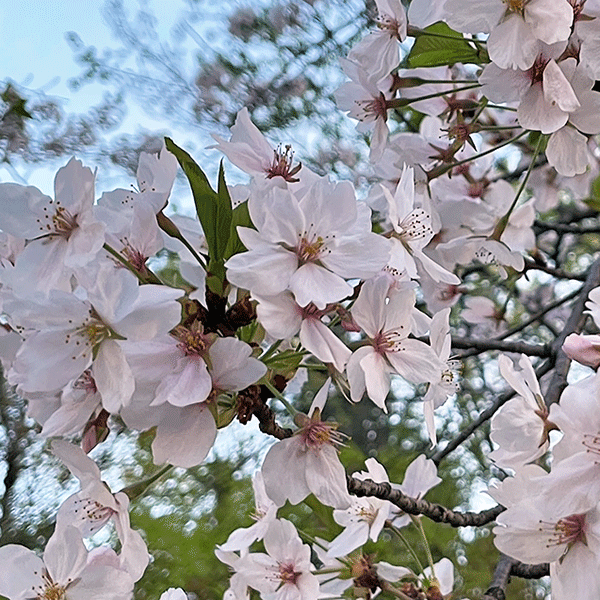
&lt;p&gt;Since that first visit, Kuniko has become my wife, and Shikoku has become my adopted homeland. We have returned more than a dozen times, and astonishingly, Shikoku remains just as I found it more than three decades ago. That's why I'm extremely excited to be leading a small group for GeoEx there this spring, when the cherry blossoms should be in glorious bloom. We'll be venturing along the tranquil coast through traditional fishing villages and deep into the verdant valleys of Iya, where we'll soak in an outdoor hot spring and stay in a beautifully restored 300-year-old thatched roof farmhouse; we'll also trace part of the island's venerable pilgrimage circuit of 88 temples. And we'll begin our trip exploring the back-alley bounties of Kyoto, with visits to tiny temples and craft shops that embody the essence of Japan's cultural capital. &lt;/p&gt;
&lt;p&gt;You can&amp;nbsp;read more about Shikoku in&amp;nbsp;my &lt;a href="http://travel.nationalgeographic.com/travel/countries/shikoku-japan-traveler/"&gt;&lt;em&gt;National Geographic Traveler&lt;/em&gt; article&lt;/a&gt;.&amp;nbsp;&lt;/p&gt;
&lt;p&gt;And you can&amp;nbsp;read more about the GeoEx trip in&amp;nbsp;&lt;a href="http://www.geoex.com/trips/japan-journey-don-george"&gt;Journey to Ancient Japan&lt;/a&gt;.&lt;/p&gt;</description><pubDate>Mon, 14 Jan 2013 10:55:00 -0800</pubDate></item><item><guid isPermaLink="false">{C0D01A1A-AF27-49BE-B91D-CF3C801A9D07}</guid><link>http://www.geoex.com/blog/2012/12/communing-with-the-moai-on-easter-island</link><title>Communing with the Moai on Easter Island</title><description>&lt;p&gt;I recently returned from a one-week trip to Easter Island, the realization of a dream that began decades ago when I first saw photos of that remote Pacific island&amp;rsquo;s iconic stone heads. Despite all the photos I&amp;rsquo;d pored over in mystery and amazement through the decades, the power of being on the island, among those very stones, was almost inexpressibly immense. The wonder of it all really hit home on the afternoon when this photo was taken. This was my first full day on the island (I&amp;rsquo;d arrived at dinner time the night before), and my first view of standing &lt;em&gt;moai&lt;/em&gt;.&lt;/p&gt;
&lt;p&gt;Toppled moai, like the statue in the foreground, abound on Easter Island (or Rapa Nui, as the indigenous people call it), but only a few selected statues have been laboriously restored to their original perched-on-a-platform position. These 15 figures are at Ahu Tongariki, a spectacular setting on the eastern coast between the sparkling ocean &amp;ndash; whose waves provide constant background music &amp;ndash; and the rocky hill known as The Quarry, where the statues were meticulously hewn out of the stony slopes, and where you can see a succession of suspended-in-mid-creation statues, like a living textbook illustrating the stages of production.&lt;/p&gt;
&lt;p&gt;The pure &lt;i&gt;presence&lt;/i&gt; of these enigmatic figures -- which our guide explained represent significant ancestors, not deities &amp;ndash; is palpably potent. They exude a kind of electric power, almost a spiritual force field, what the Rapa Nui call &lt;i&gt;mana&lt;/i&gt;. &amp;nbsp;Our guide explained that their role was to safeguard the village, which is why they were built facing away from the sea, overlooking the inhabitants. But how were the moai transported across the island, to villages separated from The Quarry by steep hills? Numerous theories abound, but no one is certain.&lt;/p&gt;
&lt;p&gt;This is just one of the many mysteries that energize the air in this middle-of-the-ocean outpost, the most isolated inhabited island on the planet.&lt;/p&gt;
&lt;p&gt;But one thing is certain: A close-up encounter with the moai is like an electrical exchange. Now that I have returned home, I feel the mana still, pulsing in my veins. &lt;/p&gt;
&lt;p&gt;&amp;nbsp;&lt;/p&gt;
&lt;p&gt;&amp;nbsp;&amp;nbsp;&amp;nbsp;&amp;nbsp;&amp;nbsp;&amp;nbsp;&amp;nbsp;&amp;nbsp;&amp;nbsp;&amp;nbsp;&amp;nbsp;&amp;nbsp;&amp;nbsp;&amp;nbsp;&amp;nbsp;&amp;nbsp;&amp;nbsp;&amp;nbsp;&amp;nbsp;&amp;nbsp;&amp;nbsp;&amp;nbsp;&amp;nbsp;&amp;nbsp;&amp;nbsp;&amp;nbsp;&amp;nbsp;&amp;nbsp;&amp;nbsp;&amp;nbsp;&amp;nbsp;&amp;nbsp;&amp;nbsp;&amp;nbsp;&amp;nbsp;&amp;nbsp;&amp;nbsp;&amp;nbsp;&amp;nbsp;&amp;nbsp;&amp;nbsp;&amp;nbsp;&amp;nbsp;&amp;nbsp;&amp;nbsp;&amp;nbsp;&amp;nbsp;&amp;nbsp;&amp;nbsp;&amp;nbsp;&amp;nbsp;&amp;nbsp;&amp;nbsp;&amp;nbsp;&amp;nbsp;&amp;nbsp;&amp;nbsp;&amp;nbsp;&amp;nbsp;&amp;nbsp;&amp;nbsp;&amp;nbsp;&amp;nbsp;&amp;nbsp;&amp;nbsp;&amp;nbsp;&amp;nbsp;&amp;nbsp;&amp;nbsp; ****************************&lt;/p&gt;
&lt;p&gt;Where to stay on Easter Island? There are numerous accommodations in the island&amp;rsquo;s sole town of Hanga Roa, ranging from low-budget sites where you basically rent a patch of grass to pitch your own tent to the lavish Hanga Roa Hotel. I very heartily recommend the extraordinary Explora package program, which features lodging in the Posada de Mike Rapu, an artfully designed and unostentatiously cossetting retreat 10 minutes by car from town, plus a full suite of services and amenities, including three meals a day (with Chilean wines and tasty pisco sours) and an island-encompassing selection of half-day and full-day walking and biking tours led by excellent and impassioned guides. For more information: &lt;a href="http://www.explora.com/explora-rapa-nui/"&gt;Explora Rapa Nui&lt;/a&gt;. &lt;/p&gt;</description><pubDate>Mon, 31 Dec 2012 00:00:00 -0800</pubDate></item><item><guid isPermaLink="false">{E71A8402-B9CB-42EC-9159-8726B271EA14}</guid><link>http://www.geoex.com/blog/2012/12/in-search-of-spices-in-kandy</link><title>Serendipity's Sketchbook: In Search of Spices in Kandy</title><description>&lt;p&gt;&lt;em&gt;Candace Rose Rardon is an American writer, photographer and artist currently living in India. She sketches as she travels, and these sketches, combined with the stories behind them, charmingly capture those fleeting, layered moments that are the stepping stones of travel. Recce will be presenting her on-the-road sketches-and-stories -- her sketchbook of serendipities -- in the months to come.&lt;/em&gt;&lt;/p&gt;
&lt;p&gt;I made one mistake upon coming to Sri Lanka: I brought my expectations. I brought images of ancient temples, sun-drenched beaches, and &amp;ndash; what excited me the most &amp;ndash; rolling spice plantations, where I could already see myself wandering down rows of cinnamon and coffee and cocoa trees.&lt;/p&gt;
&lt;p&gt;Not long after arriving in the hill station of Kandy, I set out for the Peradeniya Royal Botanical Gardens, just a couple of miles outside town &amp;ndash; spurred on by a line in my guidebook: There would be a spice garden.&lt;i&gt; &lt;/i&gt;But what I found instead was an unkempt walled square and&amp;nbsp;lone spice plants scattered haphazardly throughout, a clove tree here, a towering nutmeg tree there.&lt;/p&gt;
&lt;p&gt;It fell far short of the picture of those rolling plantations I had in my mind.&lt;/p&gt;
&lt;p&gt;Briefly set back, I turned to the map of Peradeniya in my hand. There was an orchid house, national herbarium, and several palm avenues &amp;ndash; but I felt drawn to visit a certain bamboo garden. It was home to the Giant Bamboo of Burma, the largest known variety of the plant that can reach 90-130 feet in height and ten feet in diameter. Young shoots, I read, grow at the rate of one foot a day.&lt;/p&gt;
&lt;p&gt;There, beneath a grove of bamboo, their leafy tips bowed like heads in prayer, I opened my sketchbook.&lt;/p&gt;
&lt;p style="line-height: 115%;"&gt;One of the garden&amp;rsquo;s supervisors, a small man named V.J., wearing an olive green uniform, soon paused behind me. He asked to see the rest of my drawings and I walked him through a year&amp;rsquo;s worth of sketches, from countries like Portugal, Croatia, India, and now Sri Lanka.&lt;/p&gt;
&lt;p style="line-height: 115%;"&gt;"In all those places you go and artist?" he asked, and I smiled at his use of "artist" as a verb. We chatted a bit more as I finished my sketch, V.J. pointing out his modest, green-shuttered home below the bamboo. The last thing I added was a title: &lt;i&gt;Bamboo Garden &amp;ndash; Peradeniya &amp;ndash; Kandy, Sri Lanka.&lt;/i&gt;&lt;/p&gt;
&lt;p style="line-height: 115%;"&gt;It wasn&amp;rsquo;t the spice garden I&amp;rsquo;d expected to find here, but I was unexpectedly okay with that.&lt;/p&gt;
&lt;p style="line-height: 115%;"&gt;&amp;nbsp;&lt;/p&gt;
&lt;p style="line-height: 115%;"&gt;&lt;i&gt;&lt;/i&gt;&lt;/p&gt;</description><pubDate>Sat, 29 Dec 2012 00:00:00 -0800</pubDate></item><item><guid isPermaLink="false">{211E96D2-58C6-46DE-901B-231CC36833BF}</guid><link>http://www.geoex.com/blog/2012/12/on-a-quest-in-kyoto</link><title>On a Quest in Kyoto </title><description>&lt;p style="border-bottom: #7a92a1; border-left: medium none; padding-bottom: 0in; margin: 15pt 0in 1.5pt; padding-left: 0in; padding-right: 0in; background: white; border-top: medium none; border-right: medium none; padding-top: 0in;"&gt;When my wife Kuniko and I flew to Japan four autumns ago, our primary goals were to pick up our daughter, who had been studying at a university in Tokyo for a year, and to visit Kuniko's family on the island of Shikoku. &lt;/p&gt;
&lt;p style="border-bottom: #7a92a1; border-left: medium none; padding-bottom: 0in; margin: 15pt 0in 1.5pt; padding-left: 0in; padding-right: 0in; background: white; border-top: medium none; border-right: medium none; padding-top: 0in;"&gt;But I arrived with one more mission, which had been entrusted to me by the erstwhile head of Geographic Expeditions, Jim Sano. When he heard that we were visiting Japan, Jim asked if we would be going to Kyoto. Kuniko's brother lives in Osaka, not far from Kyoto, and we were planning to rendezvous with him for a couple of days before continuing on together to Shikoku, so I said yes.&lt;/p&gt;
&lt;p style="border-bottom: #7a92a1; border-left: medium none; padding-bottom: 0in; margin: 15pt 0in 1.5pt; padding-left: 0in; padding-right: 0in; background: white; border-top: medium none; border-right: medium none; padding-top: 0in;"&gt;''Great!'' Jim said. ''There's a wonderful little shop in Kyoto that specializes in woodblock prints. It's in the covered shopping area near the river. Everyone knows it. Could you go there and look for some woodblock prints that might make good covers for the catalogue?"&lt;/p&gt;
&lt;p style="border-bottom: #7a92a1; border-left: medium none; padding-bottom: 0in; margin: 15pt 0in 1.5pt; padding-left: 0in; padding-right: 0in; background: white; border-top: medium none; border-right: medium none; padding-top: 0in;"&gt;Now Jim Sano is a man I hold in the very highest regard, a man I would happily slay dragons for, much less buy woodblock prints. ''Of course!'' I said.&lt;/p&gt;
&lt;p style="border-bottom: #7a92a1; border-left: medium none; padding-bottom: 0in; margin: 15pt 0in 1.5pt; padding-left: 0in; padding-right: 0in; background: white; border-top: medium none; border-right: medium none; padding-top: 0in;"&gt;And so a quest was born.&lt;/p&gt;
&lt;p style="border-bottom: #7a92a1; border-left: medium none; padding-bottom: 0in; margin: 15pt 0in 1.5pt; padding-left: 0in; padding-right: 0in; background: white; border-top: medium none; border-right: medium none; padding-top: 0in;"&gt;After four fulsome days in Tokyo exploring my daughter's favorite hang-outs, we took the characteristically clean, comfortable and efficient Shinkansen to Osaka, where we had planned to stay two nights before setting out early the following morning for Shikoku.&lt;/p&gt;
&lt;p style="border-bottom: #7a92a1; border-left: medium none; padding-bottom: 0in; margin: 15pt 0in 1.5pt; padding-left: 0in; padding-right: 0in; background: white; border-top: medium none; border-right: medium none; padding-top: 0in;"&gt;The next day my wife and daughter went clothes-shopping in Osaka, and I went woodblock print-hunting in Kyoto.&lt;/p&gt;
&lt;p style="border-bottom: #7a92a1; border-left: medium none; padding-bottom: 0in; margin: 15pt 0in 1.5pt; padding-left: 0in; padding-right: 0in; background: white; border-top: medium none; border-right: medium none; padding-top: 0in;"&gt;Jim hadn't remembered the name of the shop, so I had done some searching on the Internet. My cyber-sleuthing turned up one good candidate:&amp;nbsp; a sleek-looking woodblock print shop called Art Shop Ezoshi, which had a handsome web site and what looked to be a large inventory of both traditional and modern woodblock prints. The only disconnect was that even though it was located not far from the river in Gion, a very traditional quarter and a suitable location for a woodblock print-selling shop, it was not in a covered shopping area.&lt;/p&gt;
&lt;p style="border-bottom: #7a92a1; border-left: medium none; padding-bottom: 0in; margin: 15pt 0in 1.5pt; padding-left: 0in; padding-right: 0in; background: white; border-top: medium none; border-right: medium none; padding-top: 0in;"&gt;I&amp;nbsp;took the train from Osaka to Kyoto station, got out and looked around. Suddenly the folly of my quest hit me. Here I was in a city of&amp;nbsp;1.5 million people &amp;mdash;&amp;nbsp;many of whom were streaming around me at that very moment &amp;mdash; with one day to locate a specific woodblock print shop and find some suitable catalogue covers. I was the Don Quixote of woodblock print-shopping.&lt;/p&gt;
&lt;p style="border-bottom: #7a92a1; border-left: medium none; padding-bottom: 0in; margin: 15pt 0in 1.5pt; padding-left: 0in; padding-right: 0in; background: white; border-top: medium none; border-right: medium none; padding-top: 0in;"&gt;I found an information desk in the train station, brushed off my somewhat rusty Japanese,&amp;nbsp;and asked the woman there how to get to the covered shopping area near the river.&lt;/p&gt;
&lt;p style="border-bottom: #7a92a1; border-left: medium none; padding-bottom: 0in; margin: 15pt 0in 1.5pt; padding-left: 0in; padding-right: 0in; background: white; border-top: medium none; border-right: medium none; padding-top: 0in;"&gt;She cocked her head a bit and a worried look shaded her eyes.&lt;/p&gt;
&lt;p style="border-bottom: #7a92a1; border-left: medium none; padding-bottom: 0in; margin: 15pt 0in 1.5pt; padding-left: 0in; padding-right: 0in; background: white; border-top: medium none; border-right: medium none; padding-top: 0in;"&gt;''Which river?" she said.&lt;/p&gt;
&lt;p style="border-bottom: #7a92a1; border-left: medium none; padding-bottom: 0in; margin: 15pt 0in 1.5pt; padding-left: 0in; padding-right: 0in; background: white; border-top: medium none; border-right: medium none; padding-top: 0in;"&gt;Ah, I thought. &lt;em&gt;Which river.&lt;/em&gt; Here was a possibility that had not presented itself to my innocent brain. &lt;/p&gt;
&lt;p style="background: white;"&gt;From previous visits to Kyoto I thought I knew the area that Jim was referring to, and I remembered that there was a Starbucks very prominently situated right on the river near the shopping area.&lt;/p&gt;
&lt;p style="background: white;"&gt;''The one near the Starbucks,'' I said.&lt;/p&gt;
&lt;p style="background: white;"&gt;She looked at me with increasing worry. ''There are many Starbucks,'' she said.&lt;/p&gt;
&lt;p style="background: white;"&gt;''Ah, yes,'' I said. ''Um, I'm looking for a shop that sells traditional woodblock prints.'' &lt;/p&gt;
&lt;p style="background: white;"&gt;I could tell that she wished her coffee break had come ten minutes earlier so that some other colleague could be dealing with this hapless foreigner.&lt;/p&gt;
&lt;p style="background: white;"&gt;''Just a minute, please,'' she said, with a slight bow. &lt;/p&gt;
&lt;p style="background: white;"&gt;She skipped into a nearby office where I could see her huddling with a klatsch of colleagues, each of whom took turns glancing with barely disguised astonishment in my direction.By the time she came back, I had decided to postpone the search for the covered shopping area and try Ezoshi first. ''I spoke with my colleagues,'' she began, ''but we are not sure which shopping area you are seeking.''&lt;/p&gt;
&lt;p style="background: white;"&gt;I unfurled print-outs of the Ezoshi web site and showed them to her. ''That's OK,'' I said. ''Thank you for trying. Could you tell me how to get to this shop?" She looked at the print-out, and relief swept like sunshine across her face.&lt;/p&gt;
&lt;p style="background: white;"&gt;''Oh, yes!'' she said. "Gion. Shinmonzendori. This is the old antiques area. You exit through those doors'' - she pointed behind her - ''and look for the bus number 4A. You should get off at the intersection of Shijo and Kawaramachi streets.''&lt;/p&gt;
&lt;p style="background: white;"&gt;Eventually I danced my way through a Busby Berkeley choreography of flowing people and buses to the 4A stop, got on the bus and asked the driver to tell me when we reached the&amp;nbsp;Shijo-Kawaramachi stop. Twenty minutes later, he nodded kindly at me and I disembarked. A few minutes of walking took me to the river and then across it to an area where green willows bowed gently over glittering canals and narrow slick-stoned alleys were framed with weathered wooden shops. I passed enticing closet-sized eateries and an exquisite cobbler's shop where strips of leather were displayed like museum pieces and an elderly artist in an apron crafted shoes the old-fashioned way. I picked up his card and vowed to come back someday.&lt;/p&gt;
&lt;p style="background: white;"&gt;I paused at a storefront stall to buy a green tea soft ice cream, then wandered by shop after shop showcasing ancient tansu chests, ceramics, and lacquerware. Finally I came upon Ezoshi, an elegant two-floor store with a wide selection of traditional and modern woodblock prints. I was especially moved by some of the 20th-century works, which showed a delicacy and grace that I thought had disappeared at least a century before. But even though they did have some copies of the traditional works of 18th- and 19th-century masters like Hokusai and Hiroshige, I didn't find what I was looking for.&lt;/p&gt;
&lt;p style="background: white;"&gt;I&amp;nbsp;asked the young attendant if she knew of any woodblock print shops located in a covered shopping area by the river. She cocked her head slightly. ''I'm not sure, but you could try the area called Teramachi. It's a covered shopping area just across the river. You could try there.''&lt;/p&gt;
&lt;p style="background: white;"&gt;So I set out for Teramachi. But I had only walked a few doorways when I spotted a foot-wide stone pathway lined by green plants winding alluringly away from the street. Near the beginning of the path was a small wooden sign with the neatly ink-brushed words ''Caf&amp;eacute; Gallery.'' I was hungry and intrigued, so I followed the pathway. It wound inward about 15 feet and then turned to the left toward a sliding doorway.&lt;/p&gt;
&lt;p style="background: white;"&gt;As I approached, a woman in a dusky lavender kimono with her gray hair in a neat bun brushed with a quick bow by me.&lt;/p&gt;
&lt;p style="background: white;"&gt;I slipped into an elegant spare space with six stools set at a sleek counter. Three traditional Noh theater masks were displayed behind the counter. There was no other adornment.&lt;/p&gt;
&lt;p style="background: white;"&gt;An elderly woman with a kind, lined face welcomed me with a hearty &lt;em&gt;''Irasshaimase!,''&lt;/em&gt; presented a one-page handwritten menu with a precise grace, as if it were a tea ceremony bowl, and asked what I would like. I ordered a coffee and a chocolate cake, then complimented her on the beautiful shop and asked how long it had been there. &lt;/p&gt;
&lt;p style="background: white;"&gt;''Fifteen years,'' she said. ''It was started by the woman who was leaving just as you walked in. She's on her way to Tokyo to meet with a director. She's one of the most famous masters of Noh mask painting in Japan.''&lt;/p&gt;
&lt;p style="background: white;"&gt;She asked what I was doing in Japan and I told here I was on a &lt;em&gt;satogaeri&lt;/em&gt; &amp;mdash; a going-back-to-the-birthplace visit &amp;mdash; with my wife.&lt;/p&gt;
&lt;p style="background: white;"&gt;''Oh, really!'' she said. ''I have an international marriage in my family, too. My daughter is married to a Frenchman and they live in Normandy. He is 20 years older than her! They restore ancient homes. My daughter loves antiques &amp;mdash; I think maybe that's why she loves her husband,'' she said with a wink.&lt;/p&gt;
&lt;p style="background: white;"&gt;"Excuse me a moment,'' she said suddenly and shuffled into another room. Minutes later she re-emerged bearing a yellowed issue of the Asia edition of Time magazine. The magazine was opened and she pressed it into my hands. ''Look at this,'' she said. It was an article about the ancient art of Noh mask making. ''That's the owner of this shop,'' she said, pointing to the well-thumbed page. &lt;/p&gt;
&lt;p style="background: white;"&gt;We talked about how Kyoto still nurtures old artistic traditions and how it retains a graciousness and calm that much of the rest of Japan has lost.&lt;/p&gt;
&lt;p style="background: white;"&gt;Then I remembered my quest. "I'm looking for a woodblock print shop in a covered shopping area near the river," I said. "Do you have any idea &amp;mdash;?"&lt;/p&gt;
&lt;p style="background: white;"&gt;''Go to Teramachi,'' she said. ''It's just across the bridge. Maybe a 10-minute walk. Good luck!'' And she bowed me out the door.&lt;/p&gt;
&lt;p style="background: white;"&gt;As I approached Teramachi, I saw the Starbucks I had been thinking of, perched incongruously among traditonal Japanese restaurants with platforms overlooking the Kamo River, where diners on fine summer nights can sit outside, eat grilled fish and watch dusk color the sky like a kimono obi.&lt;/p&gt;
&lt;p style="background: white;"&gt;I entered the thronging neighborhood of covered shops and stopped at a coffeehouse. ''Do you know a woodblock print shop near here?" I asked. The twentysomething waitresses looked at each other and shook their heads. They called over the slightly older twentysomething manager. ''I'm sorry, but I'm afraid I don't know of such a shop,'' he said, with grave politeness.&amp;nbsp;&amp;nbsp;&lt;/p&gt;
&lt;p style="background: white;"&gt;I asked at an electronics store. I asked at a shoe boutique.&lt;/p&gt;
&lt;p style="background: white;"&gt;Then a little Japanese lantern went on in my head and I realized I should choose the people I asked according to the nature of my question. I found a kimono shop and walked into a hushed world of glorious textures and colors and forms. The wizened proprietress was sitting at a low desk in the back, sipping green tea from a blue and white porcelain cup.&lt;/p&gt;
&lt;p style="background: white;"&gt;''Excuse me,'' I said. ''I'm sorry that I'm not shopping for a kimono, but I'm actually looking for a woodblock print shop. Do you know of an &lt;em&gt;ukiyo-e&lt;/em&gt; shop in this area?"&lt;/p&gt;
&lt;p style="background: white;"&gt;She paused and looked astutely at me. &lt;em&gt;''Saaaahhhhhhh,''&lt;/em&gt; she exhaled in that Japanese way of saying, "That's a tough one &amp;mdash; let me think about this for a bit." She looked off into space, then back at me again. ''I think there is such a shop. Yes, of course, I'm sure it's still there. I think you mean the shop called Daishodo. They specialize in woodblock prints.''&lt;/p&gt;
&lt;p style="background: white;"&gt;''Ah, that's wonderful!'' I said. ''Can you tell me how to get there?"&lt;/p&gt;
&lt;p style="background: white;"&gt;She looked at me appraisingly again. ''Let me see.'' A hand absently brushed her cloud of white hair. ''Ah...'' She searched the air. ''OK!'' she suddenly said. ''I'll take you there.''&lt;/p&gt;
&lt;p style="background: white;"&gt;She abruptly stood up, walked me to the entrance of her shop, turned a neat hand-printed sign on the door to say ''Closed'' and strode out into the thoroughfare. ''This is a good excuse for me to take a little walk,'' she said with a laugh. And off we went.&lt;/p&gt;
&lt;p style="background: white;"&gt;She led me twisting and turning through the lively streets &amp;mdash; sales being shouted here, jingles spilling out storefronts there, people shopping everywhere &amp;mdash; for almost 20 minutes. As we walked, she told me about the festivals. ''Fall is the best time to be here,'' she said. ''I love the Jidai festival. They parade all the ancient clothes and cultural items. The history of the city comes to life before your eyes! You must come back. And the color of the &lt;em&gt;momiji&lt;/em&gt; in the hills! So beautiful. Oh, every year I am as excited to see it as if it were the first time.'' &lt;/p&gt;
&lt;p style="background: white;"&gt;She told me she had been in business for four decades. ''Kyoto's changed a lot in that time,'' she said, shaking her head. ''It's much busier and noisier now. But still there are neighborhoods where the old Kyoto survives. People still care about tradition here, and craft. Some of the finest artists in Japan still have their workshops right around here,'' and she swept one arm elegantly over the covered streets as if she were the proud curator of old Kyoto.&lt;/p&gt;
&lt;p style="background: white;"&gt;At the end of the next block, she said, ''I think it's right around here.'' And when we reached the end of that block, she said, ''It must be the next one.''&lt;/p&gt;
&lt;p style="background: white;"&gt;After a few more such blocks, just when I was beginning to feel like I had led this poor kind woman on a wild woodblock chase, suddenly she pointed excitedly. ''There it is! Daishodo!'' She pulled my arm urgently across the street. ''Is this the place you were looking for?"&lt;/p&gt;
&lt;p style="background: white;"&gt;Beautiful woodblock prints hung artfully in the front window and I could see that the shop was crammed floor to ceiling with delicate colorful exquisite &lt;em&gt;ukiyo-e&lt;/em&gt; &amp;mdash; just what I was looking for.&lt;/p&gt;
&lt;p style="background: white;"&gt;I thanked her as profusely as I could, bowing as low as I dared. She bowed in return and said with a crinkly smile and a twinkle in her eye, ''It was my pleasure! Enjoy your stay in old Kyoto!''&lt;/p&gt;
&lt;p style="background: white;"&gt;I walked into woodblock wonderland: shelf after shelf after shelf of landscapes, geishas, bird studies, city scenes, country scenes &amp;mdash; and the travel landscapes I was looking for. Two floors of them! &lt;/p&gt;
&lt;p style="background: white;"&gt;After a heavenly hour of looking, I emerged with five beautiful woodblock prints. &lt;/p&gt;
&lt;p style="background: white;"&gt;And even better, I emerged with a renewed sense of the kindness and grace that imbue the streets and shops and citizens of Kyoto even now.&lt;/p&gt;
&lt;p style="background: white;"&gt;Travel quests are like that: You start out searching for one treasure, and end up finding something entirely different &amp;mdash; and richer than you'd ever imagined &amp;mdash; along the way.&lt;/p&gt;
&lt;p&gt;&amp;nbsp;&lt;/p&gt;</description><pubDate>Mon, 24 Dec 2012 00:00:00 -0800</pubDate></item><item><guid isPermaLink="false">{F034AD92-1F6C-4E4C-B597-47B0691FB1FB}</guid><link>http://www.geoex.com/blog/2012/12/the-character-of-australia</link><title>The Character of Australia</title><description>&lt;div style="border-bottom: #a5a878 1.5pt solid; border-left: medium none; padding-bottom: 0in; padding-left: 0in; padding-right: 0in; background: white; border-top: medium none; border-right: medium none; padding-top: 0in;"&gt;&lt;i&gt;Jan Morris has written more than 30 books about her travels around the world, ranging from the masterful essay collections "Journeys," "Destinations," and "Among the Cities" to such classics as "Pax Britannica," "The World of Venice," "The Matter of Wales," and ''Trieste and the Meaning of Nowhere.'' She is a Fellow of the Royal Society of Literature and a Commander of the Order of the British Empire. Morris has been fascinated by Australia since her first visit half a century ago; her book ''Sydney'' was published in 1992. We asked her: What are the defining - and enduring -- allures of Australia for you; how did you first discover them and how have they changed over time?&lt;/i&gt;&lt;/div&gt;
&lt;p style="background: white;"&gt;Australia! It deserves an exclamation mark by any standards, and for me its epitome must always be Sydney, which has at once astonished, excited, repelled, and fascinated me ever since I first landed there one summer day back in the 1950s.&lt;/p&gt;
&lt;p style="margin: 0in 0in 12pt; background: white;"&gt;Astonishment was my original reaction. I had no idea there was any town on earth like Sydney then, inconceivably remote, almost fictionally provincial, unimaginably coarse-fibred, and incorrigibly chauvinist, in both senses of the word. The first essays I wrote about it haunted me for years, as complaining readers from Down Under chased me around the world with their letters of indignation.&lt;br /&gt;
&lt;br /&gt;
Excitement took over, though, as Sydney and I both grew older, until half a century and more later I realized it to be one of the most stimulating of all the world's great cities. Its setting is almost incomparable, its history is appallingly interesting, its people are delightfully accessible, and no city is more vividly alive. And in the years of our acquaintance it has lost every last provincial trace, and flowered as a showpiece of cosmopolitanism. &lt;/p&gt;
&lt;p style="margin: 0in 0in 12pt; background: white;"&gt;I cannot claim, though, even now, that I actually like the place. Here that element of the repellent creeps in. For all its urbanity and famous bonhomie Sydney strikes me as a very hard town, a slightly mean town, not the sort of town I would prefer to have a heart attack in. It is big in witty gossip, entertaining rivalry, chutzpah, and display, but still not overflowing, I feel, with the milk of human kindness. &lt;/p&gt;
&lt;p style="background: white;"&gt;But then again, its hardness is part of its fascination. Like all of Australia, to my mind, it is haunted by the vast, dry, empty continent that lies behind it, by the still enigmatic presence of the native peoples who preceded its creation and -- who knows? -- may well outlive it, and by the raffish, bold, irrepressible legacy of the convicts who long ago made it what it is. Is there any other city on earth so full of disparate elements, clashing, prodding, tugging this way and the other at one's emotions?&lt;br /&gt;
&lt;br /&gt;
Australia! To this day I am astonished, excited, repelled, and ever-fascinated by the thought of it. &lt;/p&gt;
&lt;p&gt;&amp;nbsp;&lt;/p&gt;</description><pubDate>Thu, 20 Dec 2012 00:00:00 -0800</pubDate></item><item><guid isPermaLink="false">{A41C6261-DFFD-455E-BA51-63A10449C064}</guid><link>http://www.geoex.com/blog/2012/12/seduced-by-china</link><title>Seduced by China</title><description>&lt;p style="background: white;"&gt;&lt;i&gt;Simon Winchester is the author of such best-selling books as ''A Crack in the Edge of the World,'' ''Krakatoa,'' ''The Professor and the Madman,'' and ''The Map That Changed the World.'' A native of England , he has lived in Africa, India and Hong Kong and currently divides his time between an island in Scotland and a farm in western Massachusetts . He has written for Conde Nast Traveler, Smithsonian, and National Geographic, and is currently working on a book about China .&lt;/i&gt;&lt;/p&gt;
&lt;p style="background: white;"&gt;Vast. Ancient. Imperturbable. Time and again these three words would present themselves to me whenever I wandered across China - and they did so no matter how infuriatingly difficult or appalling the conditions of my journeying.&amp;nbsp; From the very moment I first arrived, back on a cold and dusty Peking dawn thirty years ago, to the day that I am writing this, leaving on a jet-plane from the now-glittering Armani-and-Coke metropolis of Changsha, it was those three words, those three concepts, that underwrote all that I have to come to know and feel and love about the place.&lt;/p&gt;
&lt;p style="background: white;"&gt;And oh! was that first morning &lt;i&gt;cold&lt;/i&gt; - bitter and harsh, with the fine wind-blown sand of Mongolia stinging the air, and Chinese soldiers huddled in great green padded coats at every airport gate. The city people, all in jackets of blue drab, walked or cycled in a kind of silent languor; a few black cars moved slowly along Changan Avenue beneath the immense portrait of Chairman Mao. The hotel was gray and gaunt and deathly quiet, and there was only hot water and green tea and cheap Shandong beer to drink with our noodles. &lt;/p&gt;
&lt;p style="background: white;"&gt;What a sorry place, I think we all felt. A sad, shabby, ruined place, a fallen giant, an experiment all gone wrong.&lt;/p&gt;
&lt;p style="background: white;"&gt;&lt;i&gt;And yet,&lt;/i&gt; I thought. &lt;i&gt;And yet&lt;/i&gt;. &lt;/p&gt;
&lt;p style="background: white;"&gt;The telling moment came the following morning, half an hour before dawn, when everything changed. This was the moment for which an old British diplomat had made me wake so early. ''Watch them when they raise their flag,'' he had said to me, conspiratorially, at lunch one day before I left London . ''Watch &amp;mdash; and see!''&lt;/p&gt;
&lt;p style="background: white;"&gt;That bitter dark morning &amp;mdash; the eastern sky showing just a hint of lightening gray &amp;mdash; opened with the crash of the unlocking of the vast gates, and a sudden synchronized clatter as the honor guard swept out from the main south gate of the Forbidden City. Forty identically tall soldiers goose-stepped across the avenue, white belts shining, bayonets glinting in the floodlights, and they wheeled up toward the huge flagpole at the northern side of Tian'anmen Square . &lt;/p&gt;
&lt;p style="background: white;"&gt;As a military band surged its way through &lt;i&gt;The March of the Volunteers&lt;/i&gt;, so the great red flag was slowly hoisted until, when a soldier held it head-high, he tossed it violently out into the biting wind so that it caught and flew, streaming into the breeze for every one of the seconds it took to reach the top. And then, as the last strains of the anthem died away, and there was silence once again, I looked about me into the slowly illuminating square.&lt;/p&gt;
&lt;p style="background: white;"&gt;There gazing in rapture up at the flag &amp;mdash; and with reverence towards Mao too, it has to be said &amp;mdash; were hundreds upon hundreds of silent watchers, their faces and eyes and colors displaying the rich complexity of a mighty nation. There were Uighurs who had come here after six days of rail travel from the far northwest; there were tall Manchus from up by the Russian frontier; there were small Burmese-looking women from Yunnan, Tujia tribesmen from Hunan, dark-skinned Cantonese from the Pearl River delta &amp;mdash; and scores of ordinary Han Chinese too. And yet here they seemed annealed into one mass of pride and defiance &amp;mdash; each for perhaps the only time in their lives in Peking, the central city of the nation they knew as the Middle Kingdom, playing their small appointed parts in the daily official celebration of their enormous republic.&lt;/p&gt;
&lt;p style="background: white;"&gt;Yes, enormous &amp;mdash; vast seemed almost too modest a word. The distances they had come were prodigious &amp;mdash; Kashgar was almost in Europe, Hainan was in the tropics, the Black Dragon River was frozen for much of the year. The rulers who lived in such secret seclusion behind the high red walls of the Forbidden City commanded - as they had commanded, in some form or other, for two thousand uninterrupted years &amp;mdash; over a truly great nation. So its extent was vast; it rule was ancient; and from the look of the people and the soldiers and the institutions and habits and writings and all the inventions of China that presented themselves, there was a stolid, uncaring, take-the-long-view disdainful imperturbability about them too. So yes, even on that long-ago morning, the three words held true: The place is Vast; the culture is Ancient; the people utterly Imperturbable.&lt;/p&gt;
&lt;p style="background: white;"&gt;And today, three decades on, the same holds true &amp;mdash; no matter the scale, no matter the circumstance. I am writing this flying down from Changsha , a city of which most in the West have never heard &amp;mdash; and yet it has a population of six million people! Its university, at which Mao was once a student, is without contest the second oldest in the world. And its people have no interest in the waywardness of the West or the trivia of outside institutions: They are themselves, aloof and sure, stolid and eternal. &lt;/p&gt;
&lt;p style="background: white;"&gt;Yes, whether it is Changsha or China , the trinity of adjectives remain for me &amp;mdash; touchstones that remind me just why I love the Middle Kingdom, have from the very start, and always, always will.&lt;/p&gt;
&lt;p style="background: white;"&gt;&lt;b&gt;For more information on Simon Winchester and his oeuvre of some 20 books, visit &lt;a href="http://www.simonwinchester.com/" target="_blank"&gt;simonwinchester.com.&lt;/a&gt; &lt;/b&gt;&lt;/p&gt;
&lt;br /&gt;
&lt;br /&gt;
&lt;p&gt;&amp;nbsp;&lt;/p&gt;</description><pubDate>Fri, 14 Dec 2012 00:00:00 -0800</pubDate></item><item><guid isPermaLink="false">{38BA5C8F-AABC-4576-B350-9435426DEA92}</guid><link>http://www.geoex.com/blog/2012/12/on-the-mayal</link><title>On the Mayal</title><description>&lt;p class="CT-ChapterTitle" style="margin: 10pt 0in 20pt;"&gt;&lt;em&gt;Mary Jo McConahay is a veteran, award-winning journalist and documentary filmmaker. Her most recent book is &lt;/em&gt;Maya Roads: One Woman&amp;rsquo;s Journey Among the People of the Rainforest&lt;em&gt;. Visit her website at &lt;a href="http://www.mayaroads.com"&gt;www.mayaroads.com&lt;/a&gt;.&lt;/em&gt;&lt;/p&gt;
&lt;p class="AuBio-AuthorBio" style="margin: 16pt 0in 10pt;"&gt;Yellow-headed swallows dipped in and out of thick mist resting on the river. That fog probably followed the water&amp;rsquo;s curve for miles, I thought, maybe the whole length of Belize. I wouldn&amp;rsquo;t see a thing from the boat.&lt;/p&gt;
&lt;p class="GT-generaltext"&gt;&amp;nbsp;Atop a bank overlooking the Macal, I stood with my arms crossed, waiting for full dawn, feeling miffed.&amp;nbsp;The fog had burned off along shore, but the water wouldn&amp;rsquo;t let it go. As I watched, a chunk of the white stuff seemed to break sideways and soar above the river, a white king vulture erupting as if born of the mist.&amp;nbsp;It tacked and flew close over my head. I saw its magnificent wings trimmed smartly in black, each feather distinct. Shaken from myself, I watched the bird become ever smaller in blue sky, like a rocket launched into space.&amp;nbsp;&lt;/p&gt;
&lt;p class="GT-generaltext"&gt;&amp;ldquo;Just you?&amp;rdquo; came a voice from below.&lt;/p&gt;
&lt;p class="GT-generaltext"&gt;A young man, very young but no longer a boy, stood tall and tanned, barefoot on the sand.&amp;nbsp;He was talking to me.&amp;nbsp;I nodded.&lt;/p&gt;
&lt;p class="GT-generaltext"&gt;&amp;ldquo;Good,&amp;rdquo; he said. &amp;ldquo;We be light.&amp;rdquo;&lt;/p&gt;
&lt;p class="GT-generaltext"&gt;At the water&amp;rsquo;s edge sat a feeble-looking craft about ten feet long, maybe a near antique, a fiberglass canoe scratched and dull with age. This tableau below me, I supposed, was what I had purchased at the hotel desk the night before: &amp;ldquo;River Trip, Laid Back, No Frills, Local Guide.&amp;rdquo;&lt;/p&gt;
&lt;p class="GT-generaltext"&gt;The young man&amp;rsquo;s smile wasn&amp;rsquo;t mocking, but he was enjoying something, all right. &amp;ldquo;Yo best be comin&amp;rsquo; down then,&amp;rdquo; he said. Had I been staring at him?&lt;/p&gt;
&lt;p class="GT-generaltext"&gt;&amp;nbsp;On the beach, I extended my hand, and he took it softly. &amp;ldquo;Do you want to see the receipt?&amp;rdquo; I asked. &lt;/p&gt;
&lt;p class="GT-generaltext"&gt;&amp;ldquo;Henry,&amp;rdquo; he said. His long, dark hair was braided into a thousand tresses, each secured at the bottom with a single cocoa-colored bead. I wondered who did it for him, then wondered why I wondered.&lt;/p&gt;
&lt;p class="GT-generaltext"&gt;&amp;ldquo;So Henry,&amp;rdquo; I said, more curtly than necessary. &amp;ldquo;Do you want the receipt?&amp;rdquo;&lt;/p&gt;
&lt;p class="GT-generaltext"&gt;He shook his head no. The smile became even wider, but it was kind. Bright teeth. Full lips. He lifted the bow of the boat and raised his eyes to the aft, a signal I should push.&amp;nbsp;I slipped off my sandals and dropped them into the canoe. When Henry tried to help me board, I waved him away. Lowering myself to the middle plank seat, however, I lost my balance and almost tipped us both into the drink. He didn&amp;rsquo;t meet my eyes then. I felt spared, but mad at myself as we pushed off from shore.&lt;/p&gt;
&lt;p class="GT-generaltext"&gt;&amp;ldquo;Yo wantin&amp;rsquo; a ride on da river, Miss Lady,&amp;rdquo; he said to my back. The engine sputtered. &amp;ldquo;Yo want to re-lax.&amp;rdquo;&lt;/p&gt;
&lt;p class="GT-generaltext"&gt;He was right about that, but I didn&amp;rsquo;t like hearing it from someone I had known for five minutes. Younger. Who spoke oddly. I had not dropped biology for years of studying literature without carrying around some proper respect for the language and&amp;mdash;admittedly&amp;mdash;some misplaced disdain for those who did not.&lt;/p&gt;
&lt;p class="GT-generaltext"&gt;We floated under San Ignacio&amp;rsquo;s tremulous, one-lane bridge. The rumble of tires on old metal rolled in my ears, beat on my head from inside the skull. I closed my eyes. &lt;i&gt;Re-lax&lt;/i&gt;. Indeed.&lt;/p&gt;
&lt;p class="GT-generaltext"&gt;&amp;ldquo;Like a thunder,&amp;rdquo; Henry said. And I didn&amp;rsquo;t want anyone reading my mind, either.&lt;/p&gt;
&lt;p class="GT-generaltext"&gt;As we left the town behind, the harsh sounds of the bridge faded too, exactly like thunder receding. The small engine&amp;rsquo;s soft putter became as much a part of the atmosphere as the birdcalls. In the mid-distance, three white egrets swooped low on wide, smooth wings, synchronized like a team of competitive divers.&lt;/p&gt;
&lt;p class="GT-generaltext"&gt;I turned around and saw Henry perched on an aft plank painted gray-pink, right hand on the tiller. His khaki pants were cut off above the knee, about halfway up thighs that looked strong as the trunks of young mahoganies. I suppose I had turned around to get my bearings, but I am not sure. Henry steadied the tiller with an elbow as he pulled his shirt off over his head. He was slim, tight across the stomach.&lt;/p&gt;
&lt;p class="GT-generaltext"&gt;&amp;ldquo;Da sun, yo know,&amp;rdquo; he said.&lt;/p&gt;
&lt;p class="GT-generaltext"&gt;&amp;ldquo;Da sun,&amp;rdquo; I said. Then quickly, &amp;ldquo;Yes, the sun,&amp;rdquo; and turned to face forward again.&lt;/p&gt;
&lt;p class="GT-generaltext"&gt;Sharp-billed kingfishers perched on boughs that reached low over the water. Sometimes one spread its wings and leapt to another branch, bright red breast like a shooting dart. A blue heron, neck feathers still adolescent brown, posed on a green canoe, the boat tied up empty, its owner unseen. They bobbed gently together, blue heron, green canoe.&lt;/p&gt;
&lt;p class="GT-generaltext"&gt;I don&amp;rsquo;t know how long we&amp;rsquo;d been floating when I realized the sun had burned away almost all the mist. We came upon a rock that looked covered with brown lichen, and slowed. I dared to turn around once more, and as I did, Henry cupped his hand, scooped up water, and broadcast it over the rock; the brown mass burst into a cloud of tiny insects, thousands of vibrating wings sounding a high-pitched hum. Answering some signal known only to them, they tightened ranks in mid-air, then settled again as one upon another rock, silent and seamless as a prayer rug.&lt;/p&gt;
&lt;p class="GT-generaltext"&gt;I could let go a little&amp;mdash;why not? I gave Henry a congratulatory nod of the head. He grinned, proud of the lovely trick.&lt;/p&gt;
&lt;p class="GT-generaltext"&gt;For an hour, Henry rowed from the forward plank. I watched his arm muscles strain now and then, but mostly he pushed in the current without effort. Once, when he pointed to the nearby shore, I focused my eyes and picked out iguanas in the trees. They were about four feet long, the kind called &amp;ldquo;green iguanas,&amp;rdquo; but which turn brown with age to match the mottled boughs on which they stretch in the sun. I startled myself; I recognized the animals, even though so many years had passed since I&amp;rsquo;d studied them and their brothers, recognized them even though I had never seen the real thing outside a zoo or a lab. The iguanas might have lain there a million years, I thought, crested backs and long dinosaur tails motionless as high noon.&lt;/p&gt;
&lt;p class="GT-generaltext"&gt;Below them, spiny-tailed wishwillies scavenged the beach for food. They were the iguanas&amp;rsquo; low-caste cousins, smaller, nervous-looking, and perpetually scurrying. Tree iguanas were herbivores, I knew, and wishwillies carnivores. I didn&amp;rsquo;t need Henry&amp;rsquo;s description of their repulsive behavior but laughed despite myself when he delivered it.&lt;/p&gt;
&lt;p class="GT-generaltext"&gt;&amp;ldquo;When one person is buried an&amp;rsquo; everbody leave da grave, dem wishwillie go an&amp;rsquo; haf dem a party sure ever time.&amp;rdquo;&lt;/p&gt;
&lt;p class="GT-generaltext"&gt;I wondered what else was out there, what lived from the river, what existed in that porous green jungle wall. &amp;ldquo;Any monkeys or crocodiles?&amp;rdquo; &lt;/p&gt;
&lt;p class="GT-generaltext"&gt;Yellow fever &amp;ldquo;wipe out da monkeys,&amp;rdquo; said Henry, and hunters &amp;ldquo;ice da crocs&amp;rdquo; on this stretch of the waterway. But farther along where the Macal joins the Belize River, &amp;ldquo;they exist,&amp;rdquo; he said.&amp;nbsp;&lt;/p&gt;
&lt;p class="GT-generaltext"&gt;&amp;ldquo;I do believe da crocodile come back heah someday again,&amp;rdquo; Henry said dreamily, as if wishing it so.&lt;/p&gt;
&lt;p class="GT-generaltext"&gt;For no reason I can give, besides the fact that we shared a capsule in time and space, floating hours together now on a river turning warm, I touched Henry&amp;rsquo;s arm to get his attention. &lt;/p&gt;
&lt;p class="GT-generaltext"&gt;&amp;ldquo;I do too,&amp;rdquo; I heard myself say. &amp;ldquo;Wish da crocs come back.&amp;rdquo;&lt;/p&gt;
&lt;p class="GT-generaltext"&gt;No response.&lt;/p&gt;
&lt;p class="GT-generaltext"&gt;&amp;ldquo;I studied all this, you know,&amp;rdquo; I said. &amp;ldquo;I studied all this once.&amp;rdquo;&lt;/p&gt;
&lt;p class="GT-generaltext"&gt;My thoughts came fast now, thoughts long frozen defrosting faster than I could catch them. I wanted to suggest out loud that maybe it was not too late, that I could return to immersing myself in plants and animals, that I could just as well teach science to middle school students as teach them the form of the short story by way of Edgar Allan Poe. I wanted to talk.&lt;/p&gt;
&lt;p class="GT-generaltext"&gt;Instead, I let myself drift along, taking in the colors of a river that flowed as ineluctably as fate, its course determined long ago. Matte orange bromeliads. Lustrous orange butterflies. Look how the bromeliads tied themselves to the trees, but didn&amp;rsquo;t live off them; they weren&amp;rsquo;t parasites. Rather they lived from the dying leaves and other vegetable matter that floated into their petals, soft pastel cups which cradled rainwater and condensation. Insects died there and were digested.&amp;nbsp;I remembered.&lt;/p&gt;
&lt;p class="GT-generaltext"&gt;A commotion in the bush, maybe a jaguarundi, sent small birds fluttering out of the canopy. White spider lilies grew in clusters along the bank, slender tentacles reaching out&amp;mdash;for what?&amp;mdash;from the heart of each flower.&lt;/p&gt;
&lt;p class="GT-generaltext"&gt;&amp;nbsp;Henry&amp;rsquo;s traveling kit didn&amp;rsquo;t include shoes, but did include rum. It was dark, and tasty.&lt;/p&gt;
&lt;p class="GT-generaltext"&gt;&amp;ldquo;Do we want to take a swim?&amp;rdquo; he asked. &lt;/p&gt;
&lt;p class="GT-generaltext"&gt;Later, we lay on the shore. Because Henry wore no shirt, it was difficult not to stare at his left nipple, pierced with a shape wrought in gold. It was meant to be noticed, and he looked pleased when I asked. A marijuana leaf, he said.&lt;/p&gt;
&lt;p class="GT-generaltext"&gt;&amp;ldquo;I thought it was a bird,&amp;rdquo; I said.&amp;nbsp;&lt;/p&gt;
&lt;p class="GT-generaltext"&gt;&amp;ldquo;Well, it make me feel like a bird.&amp;rdquo;&lt;/p&gt;
&lt;p class="GT-generaltext"&gt;He would not be a mere boatman forever, Henry said, but surely manage his own fleet of half a dozen canoes someday. He knew the plants and animals on the river, taking seriously his job as a guide. &amp;ldquo;And I read,&amp;rdquo; he said.&lt;/p&gt;
&lt;p class="GT-generaltext"&gt;About those things he didn&amp;rsquo;t know for certain, he said, he had &amp;ldquo;informed&amp;rdquo; opinions. The sudden and mysterious fall of the great pre-Columbian Maya Empire, the question archaeologists and epigraphers have debated for decades?&amp;nbsp;&lt;/p&gt;
&lt;p class="GT-generaltext"&gt;&amp;ldquo;No one know where the Maya disappear to,&amp;rdquo; he said. &amp;ldquo;One day they just pick up they bags an&amp;rsquo; say, &amp;lsquo;I&amp;rsquo;m goin&amp;rsquo; home.&amp;rsquo;&lt;/p&gt;
&lt;p class="GT-generaltext"&gt;I curled my toes into soft sand. All around us, wild purple bougainvillea emerged from the bush, circling the trunks of huge trees. This was bougainvillea at the Creation, I thought, lush and brazen, embracing giants, not dwarfing itself to accommodate a tame trellis as it might at home. I felt Henry&amp;rsquo;s hand on my bare shoulder and followed his gaze to a pair of dragonflies with pearly blue necks. The sun shone on their black filigree wings as their bodies moved and went still, moved and went still, copulating on the bow of the boat. It was full midday, but there under the jungle canopy, on a beach practically hidden from the river, the searing air only warmed, like the temperature that opens a bloom.&lt;/p&gt;
&lt;p class="GT-generaltext"&gt;I drew myself up on one elbow, and reaching over, fingered the gold leaf on Henry&amp;rsquo;s chest. &amp;ldquo;Does that hurt?&amp;rdquo; I asked.&lt;/p&gt;
&lt;p class="GT-generaltext"&gt;&amp;ldquo;I do feel it,&amp;rdquo; he said.&amp;nbsp;&lt;/p&gt;
&lt;p class="GT-generaltext"&gt;I dropped my hand, but Henry stretched his arms above his head and closed his eyes. &amp;ldquo;You keep doin&amp;rsquo; that,&amp;rdquo; he said.&lt;/p&gt;
&lt;p class="GT-generaltext"&gt;It was natural we would make love, I suppose, as natural as the possibility that the river journey would pull me back into imagining a different present for myself. &lt;/p&gt;
&lt;p class="GT-generaltext"&gt;We motored all the way on the return, to beat the dark, and spoke only twice.&lt;/p&gt;
&lt;p class="GT-generaltext"&gt;&amp;ldquo;I can come to da hotel,&amp;rdquo; Henry said. &amp;ldquo;My uncle own it.&amp;rdquo;&lt;/p&gt;
&lt;p class="GT-generaltext"&gt;&amp;ldquo;Maybe not,&amp;rdquo; I said.&lt;/p&gt;
&lt;p class="GT-generaltext"&gt;Some time later, I heard tinkling sounds, as if from small bells. I searched both sides of the river for what it might be but did not turn around in the boat.&lt;/p&gt;
&lt;p class="GT-generaltext"&gt;&amp;ldquo;Da goats,&amp;rdquo; Henry finally said to my back, and I could tell he had a knowing, contented look on that fine face. I didn&amp;rsquo;t understand why speakers in these parts said &amp;ldquo;goats&amp;rdquo; for sheep, but I didn&amp;rsquo;t ask.&lt;/p&gt;
&lt;p class="GT-generaltext"&gt;&amp;nbsp;&lt;/p&gt;
&lt;p class="aubio-authorbio"&gt;&lt;em&gt;Reprinted with permission from &lt;/em&gt;Best Women&amp;rsquo;s Travel Writing: Volume 8&lt;em&gt;, edited by Lavinia Spalding, published by Travelers&amp;rsquo; Tales, an imprint of Solas House, Inc. Copyright &amp;copy; 2012 Solas House, Inc.&amp;nbsp; &lt;/em&gt;&lt;/p&gt;</description><pubDate>Mon, 10 Dec 2012 00:00:00 -0800</pubDate></item><item><guid isPermaLink="false">{04357114-BA20-467F-AA9C-6A36385701E6}</guid><link>http://www.geoex.com/blog/2012/12/without-a-plan-in-pokhara</link><title>Serendipity's Sketchbook: Without a Plan in Pokhara</title><description>&lt;p style="line-height: 115%;"&gt;&lt;em&gt;Candace Rose Rardon is an American writer, photographer and artist currently living in India. She sketches as she travels, and these sketches, combined with the stories behind them, charmingly capture those fleeting, layered moments that are the stepping stones of travel. Recce will be presenting her on-the-road sketches-and-stories -- her sketchbook of serendipities -- in the months to come.&lt;/em&gt; &lt;/p&gt;
&lt;p style="line-height: 115%;"&gt;I had never arrived in a new country with less of a plan. &lt;/p&gt;
&lt;p style="line-height: 115%;"&gt;Since I was spending four months in India, a visit to its northern neighbor, Nepal, seemed unquestionable &amp;ndash; but when I arrived one September for a week, walking across the border at the dusty village of Sunauli, I was completely and utterly plan-less.&lt;/p&gt;
&lt;p style="line-height: 115%;"&gt;Twenty-four hours later, I found myself on the shores of Pokhara&amp;rsquo;s Phewa Lake at sunset. To my right, something white and bright caught my eye: two snow-capped tips of the Annapurna range, illuminated by a few last golden rays. And in front of me, layer upon layer of blue hills folded into themselves, surrounding the valley like the walls of a fortress.&lt;/p&gt;
&lt;p style="line-height: 115%;"&gt;There was an incredible stillness to the scene, a stillness I wasn&amp;rsquo;t quite comfortable with in my plan-less state. Rows of wooden boats lined the shore, brought to rest at the end of the day, water drying off their washed-out primary hues. Children perched on piles of stones, fishing rods suspended above the water, and I, too, found a seat, sketchbook centered on my lap.&lt;/p&gt;
&lt;p style="line-height: 115%;"&gt;&amp;ldquo;Nice picture,&amp;rdquo; a voice said behind me. I turned around to see a boy, dressed in a red t-shirt and dark green shorts. He told me that his name was Uttam, he was 14 years old and he lived about a 20-minute walk from town. I invited him to sit down next to me, and gave him a sheet of paper from my sketchbook and a pen to draw with.&lt;/p&gt;
&lt;p style="line-height: 115%;"&gt;We sat there together, Uttam and I, until the sky turned dark and the air cool. Before leaving, I asked if he would sign my sketch, just below my own name. Months later, I would read Peter Matthiessen&amp;rsquo;s &lt;i&gt;The Snow Leopard&lt;/i&gt; and be challenged by his mountaintop epiphany &amp;ndash; &amp;ldquo;I am here to be here&amp;rdquo; &amp;ndash; coincidentally also penned in Nepal.&lt;/p&gt;
&lt;p style="line-height: 115%;"&gt;If I&amp;rsquo;d had such a revelation in Pokhara, I would have repeated it often: I am here in Pokhara to be here. I am here to have my first glimpse of the Himalayas. I am here to meet a young boy named Uttam.&lt;/p&gt;
&lt;p style="line-height: 115%;"&gt;And maybe that was the only plan I needed.&lt;/p&gt;
&lt;p style="line-height: 115%;"&gt;&amp;nbsp;&lt;/p&gt;
&lt;p style="line-height: 115%;"&gt;&lt;i&gt;&lt;/i&gt;&lt;/p&gt;</description><pubDate>Sat, 01 Dec 2012 00:00:00 -0800</pubDate></item><item><guid isPermaLink="false">{D31196C8-6E13-4658-A8C4-5490BA63EABB}</guid><link>http://www.geoex.com/blog/2012/11/blessings-of-bali</link><title>Postcard from Ubud: The Blessings of Bali</title><description>&lt;p&gt;&lt;em&gt;Last week, the travel website Gadling posted a Thanksgiving-themed essay by me about an unexpected sequence of revelations I experienced last month at the end of a one-week stay on the wonder-filled Indonesian island of Bali. Travel is full of gifts like these, serendipities that surprise us when we are open to them, and I am always grateful when the gods of the road bestow them. Here's how my account began:&lt;/em&gt;&lt;/p&gt;
&lt;p&gt;Last month, I spent a week on the Indonesian island of&amp;nbsp;Bali as a guest of the Ubud Writers &amp;amp; Readers Festival. This was my first visit to that blessed place since I'd fallen in love with it 34 years ago.&lt;br /&gt;
&lt;br /&gt;
Like me, the island had lost some of its innocence in the intervening years. Unlike my earlier trip, when the Balinese I met had simply welcomed me with wide eyes and hearts, this time most immediately asked me if I'd been there before. When I answered, "Yes, 34 years ago," their eyes opened wide for a different reason and they smiled and shook their heads. "Oh, Bali has changed much since then!" they'd laugh, though many of them couldn't say exactly how because they hadn't even been born 34 years before.&lt;br /&gt;
&lt;br /&gt;
Of course, to my eyes too, Bali had changed. The streets were much busier, clogged with trucks and motor scooters, than I remembered, and the towns were more built up; the road from Denpasar to Ubud was lined with many more buildings and fewer rice paddies than I recalled.&lt;br /&gt;
&lt;br /&gt;
But in a deeper sense, the spirit of the place seemed hardly changed at all. During a few free days of wandering, I passed a number of festival processions flowing through the streets. Every day I was enchanted as I had been three decades before by the sweet, simple &lt;em&gt;canangsari &lt;/em&gt;offerings &amp;ndash; hand-sized compositions of colorful flowers on green coconut leaves, some graced with a cracker &amp;ndash; that were meticulously placed outside my door and on bustling sidewalks, off-the-beaten-path foot trails, temple thresholds and business entrances alike. And while I realize I know nothing about the difficulties of being Balinese &amp;ndash; the need to scrupulously follow rigorous traditions, for example, or the unpredictabilities of relying on a tourism economy &amp;ndash; the people I met exuded a gentleness, tranquility, contentment and sense of sanctity in the everyday that was as exemplary, expanding and restorative for me as it was 34 years before.&lt;br /&gt;
&lt;br /&gt;
But it wasn't until my last day in Ubud that Bali's soul-binding offerings really came to life for me.... &lt;/p&gt;
&lt;p&gt;&lt;em&gt;To read more about my revelations, click &lt;/em&gt;&lt;a href="http://www.gadling.com/2012/11/22/unexpected-offerings-on-a-return-to-bali/"&gt;&lt;em&gt;here&lt;/em&gt;&lt;/a&gt;&lt;em&gt;.&lt;/em&gt; &lt;/p&gt;
&lt;div&gt;&lt;/div&gt;</description><pubDate>Wed, 28 Nov 2012 00:00:00 -0800</pubDate></item><item><guid isPermaLink="false">{24243D0D-1556-4049-A0CA-39A7847C6198}</guid><link>http://www.geoex.com/blog/2012/11/patagonia-mirror-image-with-penguins</link><title>Patagonia: Mirror Image, with Penguins</title><description>&lt;p style="margin: 15pt 0in 1.5pt; background: white;"&gt;&lt;i&gt;Tim Cahill is one of America's most renowned adventurers and travel writers. He is the author of nine books, including such revered titles as "Jaguars Ripped My Flesh," "Pecked to Death by Ducks," "Road Fever," "A Wolverine is Eating My Leg," "Pass the Butterworms," and "Hold the Enlightenment." A founding editor of Outside magazine, he has written hundreds of articles for Outside, National Geographic Advenure, Esquire, The New York Times Book Review, and other national publications, and has co-written three Imax screenplays, two of which were nominated for Academy Awards. He lives in Montana.&lt;/i&gt; &lt;/p&gt;
&lt;p style="background: white;"&gt;&amp;nbsp;&lt;/p&gt;
&lt;p style="background: white;"&gt;The single question a travel writer most often hears is: What is your favorite destination?&amp;nbsp; I think most of us who deal with the question as a matter of course have formulated some easy answer.&amp;nbsp; I generally say something like, ''Well, it's like asking about a favorite meal.&amp;nbsp; It's hard to specify.&amp;nbsp; Sometimes only a greasy burger will do; sometimes it's got to be pheasant under glass.''&lt;/p&gt;
&lt;p style="background: white;"&gt;Except when Don George asks you, he keeps poking until he gets an answer.&amp;nbsp; So, yes, Don, my favorite place on earth, aside from where I live, is Patagonia, by which I mean the southern cone of South America, which includes parts of Chile and Argentina.&amp;nbsp; (There are more exact definitions, but when people say Patagonia &amp;mdash; unless they're some fussy geographer &amp;mdash; that's what they mean.)&lt;/p&gt;
&lt;p style="background: white;"&gt;I like Patagonia because it is big and lonely and flat and windswept and barren, except where it is big and mountainous with glaciers glittering against a pale blue sky, or where it is green and grassy with tidewater glaciers dropping through the greenery into the sea.&lt;/p&gt;
&lt;p style="background: white;"&gt;The places I like best are the parts of Patagonia that have contrived to be very much like the place where I live, in Montana, on the somewhat dry fire-prone east side of the Rocky Mountains.&amp;nbsp; The southern hemisphere mirror image of my home landscape is located in Argentina on the semi-arid east side of the Andes Mountains.&amp;nbsp;&amp;nbsp; In both places you will find fat cattle in the fields, big dumb trout in the rivers, glaciers on the shoulders of the mountains, people on fast horses, and vistas that stretch on out toward eternity.&amp;nbsp; Folks seem to be cut from the same cloth: They tend to be self-sufficient, taciturn, apt to tell a few tall tales, and ready to grill any amount of meat &amp;mdash; which is the only thing they really brag about.&lt;/p&gt;
&lt;p style="background: white;"&gt;It is no surprise that this area of South America is where Butch Cassidy, The Sundance Kid and Etta Place took up ranching when they fled from the United States under some pressure from the law and the telegraph.&amp;nbsp; The countryside could stand in for the American West in any movie.&amp;nbsp; In fact, the town nearest their ranch, Cholila, was home to a number of outlaws from the United States who'd settled there for the same reasons Butch and Sundance did.&amp;nbsp; The gringo outlaws held the upper hand in the town for a time, due entirely to their skill with handguns.&amp;nbsp; Argentines are notorious knife fighters, but the man who brings a knife to a gun fight is a fool.&amp;nbsp; And the good folks of Cholila were no fools.&amp;nbsp; They soon hired a gun-slinging sheriff from Texas to help clean up their town.&amp;nbsp; The family still lives in Cholila.&amp;nbsp; I met one young man who claimed relation to the sheriff.&amp;nbsp; He had blond hair, blue eyes, spoke only Spanish, and said his surname was Parks.&lt;/p&gt;
&lt;p style="background: white;"&gt;Not far from Cholila proper, down a gravel road, is the ranch where Butch and Sundance lived: a couple of log cabins in a state of ramshackle collapse.&amp;nbsp; The famous outlaws, I was told, were good citizens at home.&amp;nbsp; (Some of the old Welsh settlers disagree.)&amp;nbsp; If they robbed anyone or anyplace, they traveled a far piece to do it.&amp;nbsp; About 800 miles south, in Rio Gallegos, they were said to have robbed the bank on February 5&lt;sup&gt;th&lt;/sup&gt;, 1905.&lt;/p&gt;
&lt;p style="background: white;"&gt;I drove from Cholila to Rio Gallegos, which is at the bottom of South America, situated across the strait from the island of Tierra del Fuego.&amp;nbsp; On my drive, I might have been looking at the flatlands of eastern Montana &amp;mdash; except that every now and again, I'd look out my car window and see an ostrich-like creature running over the plains at a goodly place.&amp;nbsp; The Lesser Rhea is a jolting surprise, especially if your mind is somewhere in Montana.&lt;/p&gt;
&lt;p style="background: white;"&gt;Rio Gallegos is a small town, with a small square, and the bank that Butch and Sundance are said to have robbed was still there a few years ago when I visited.&amp;nbsp; I imagined the daring daylight holdup, full-on Western movies-style: bandana-covered faces, six guns and horses, a familiar scene from any number of movies.&amp;nbsp; Except that not far away, there is a large colony of Magellanic penguins.&amp;nbsp; So ... a daring daylight robbery with six guns, horses, and &lt;i&gt;penguins underfoot&lt;/i&gt;.&lt;/p&gt;
&lt;p style="background: white;"&gt;That's what I like about Patagonia: It is a bizzaro version of the American West.&lt;/p&gt;
&lt;p style="background: white;"&gt;Sometimes I tell people about the ostrich-like creatures, the penguins, the freakish and eccentric shapes of the ragged looming mountains.&amp;nbsp; I don't really tell them that I love parts of Patagonia because they look precisely like Montana.&amp;nbsp; I'm a travel writer.&amp;nbsp; I should have more exotic tastes in destinations.&amp;nbsp; But every time I leave for Patagonia, I feel like I'm going home.&amp;nbsp; &lt;/p&gt;
&lt;p style="background: white;"&gt;&amp;nbsp;&lt;/p&gt;
&lt;p style="text-align: right; background: white;"&gt;&lt;b&gt;&amp;nbsp;&amp;nbsp; &lt;/b&gt;&lt;/p&gt;
&lt;p&gt;&amp;nbsp;&lt;/p&gt;
&lt;p&gt;&amp;nbsp;&lt;/p&gt;</description><pubDate>Tue, 20 Nov 2012 00:00:00 -0800</pubDate></item><item><guid isPermaLink="false">{D903FA39-28A0-490E-BF28-48F22A852A7A}</guid><link>http://www.geoex.com/blog/2012/11/serendipitys-sketchbook-jaisalmer</link><title>Serendipity's Sketchbook: Fantabilities in Jaisalmer's Fort</title><description>&lt;p style="line-height: 115%;"&gt;&lt;b&gt;&lt;/b&gt;&lt;/p&gt;
&lt;p style="line-height: 115%;"&gt;&lt;em&gt;Candace Rose Rardon is an American&amp;nbsp;writer, photographer and artist currently living in India. She sketches as she travels, and these sketches,&amp;nbsp;combined with the stories behind them,&amp;nbsp;charmingly capture those&amp;nbsp;fleeting, layered moments that are the stepping stones of travel. Recce will be presenting her on-the-road sketches-and-stories -- her sketchbook of serendipities -- in the months to come.&lt;/em&gt; &lt;/p&gt;
&lt;p style="line-height: 115%;"&gt;There are a few things this sketch shows: the palace&amp;rsquo;s intricate cupolas and balustrades, nearly impossible to capture in full detail on paper; the pigeons perching like hideaways among the eaves; and the monochromatic shade of gold that cloaks all of Jaisalmer&amp;rsquo;s hilltop fort, positioned at the far western edge of India in the Thar Desert.&lt;/p&gt;
&lt;p style="line-height: 115%;"&gt;But what it doesn&amp;rsquo;t show is my own perch on the terrace of 8 July Caf&amp;eacute;, overlooking one of the fort&amp;rsquo;s main squares. It doesn&amp;rsquo;t show how the red-and-white umbrella above my table fails to shade my fresh lime soda from the heat, and the heavy drops of condensation subsequently sliding down the side of my glass.&lt;/p&gt;
&lt;p style="line-height: 115%;"&gt;And it doesn&amp;rsquo;t show my new friend Sylvie sitting across from me, her nose ring glinting, her bright brown eyes hidden behind John Lennon-style shades as she tells me about the word she and a friend once invented.&lt;/p&gt;
&lt;p style="line-height: 115%;"&gt;"It&amp;rsquo;s called what?" I ask again, thinking I&amp;rsquo;d heard her wrong.&lt;/p&gt;
&lt;p style="line-height: 115%;"&gt;"Fantability. Like when something&amp;rsquo;s halfway between a fantasy and a possibility."&lt;/p&gt;
&lt;p style="line-height: 115%;"&gt;I met Sylvie only two weeks before on the other side of the country, in the old hill station of Shillong. We were both there for something called the Rickshaw Run, an unsupported adventure that sends participants journeying 2,000 miles across India in three-wheeled auto-rickshaws. Sylvie was there to take part in the run with her boyfriend Nick; I was there to photograph and write about them doing so.&lt;/p&gt;
&lt;p style="line-height: 115%;"&gt;And so the very fact that both of us are sitting here now, alternately basking and baking beneath the desert sun, seems like its own kind of fantability &amp;ndash; that Sylvie and Nick should complete such a journey, that I should find myself working for the trip&amp;rsquo;s organizers, and that our intersecting paths should allow our connection.&lt;/p&gt;
&lt;p style="line-height: 115%;"&gt;There are a few things this sketch shows &amp;ndash; and I&amp;rsquo;m grateful for the fantability of life leading us to Jaisalmer that gave me the chance to show them.&lt;/p&gt;
&lt;p style="line-height: 115%;"&gt;&lt;em&gt;Candace Rose Rardon is a travel writer, photographer, and sketch artist with a passion for documenting the world. She recently completed a Masters in Travel Writing from London's Kingston University. Visit her website at &lt;/em&gt;&lt;a href="http://www.candaceroserardon.com/"&gt;&lt;em&gt;http://www.candaceroserardon.com/&lt;/em&gt;&lt;/a&gt;&lt;em&gt;.&amp;nbsp;&lt;/em&gt;&lt;em&gt; &lt;/em&gt;&lt;/p&gt;</description><pubDate>Tue, 13 Nov 2012 00:00:00 -0800</pubDate></item><item><guid isPermaLink="false">{8E101F62-5BE9-407D-AD6B-DAA7266152AE}</guid><link>http://www.geoex.com/blog/2012/11/report-from-bhutan</link><title>Report from Bhutan: An Auspicious Beginning</title><description>&lt;p&gt;"Expect the unexpected in Bhutan," advised&amp;nbsp;trip leader Tsewang upon picking&amp;nbsp;up our&amp;nbsp;&lt;a href="http://www.geoex.com/trips/bhutan-hikers-paradise"&gt;Hiker's Paradise&lt;/a&gt; group at the Paro airport. Within 20 minutes, almost as if he'd arranged it especially to illustrate his point,&amp;nbsp;we found&amp;nbsp;ourselves amidst&amp;nbsp;a&amp;nbsp;spectacular,&amp;nbsp;unusual, and hard-to-predict&amp;nbsp;Buddhist ceremony.&amp;nbsp;Tsewang had just caught wind of it before our arrival and&amp;nbsp;whisked us&amp;nbsp;straight&amp;nbsp;from the airport. &lt;/p&gt;
&lt;p&gt;Joining&amp;nbsp;the crowds of locals, decked in&amp;nbsp;their brightly colored traditional &lt;em&gt;gho&lt;/em&gt; (for men) and &lt;em&gt;kira&lt;/em&gt; (for women), we zigzaged our way up a prayer flag-lined path&amp;nbsp;to the&amp;nbsp;massive Paro Dzong and then across the hillside&amp;nbsp;overlooking the&amp;nbsp;Paro&amp;nbsp;Valley to the center of activity.&amp;nbsp;A five-story tall&amp;nbsp;and equally wide &lt;i&gt;thongdrel&lt;/i&gt; (a&amp;nbsp;cloth-on-cloth appliqu&amp;eacute; work) was being unfurled and consecrated.&amp;nbsp;Generally when these &lt;em&gt;thongdrels&lt;/em&gt; are&amp;nbsp;displayed, it's only&amp;nbsp;for a couple of hours one&amp;nbsp;day&amp;nbsp;a year, so the fact that we were catching this was, in Tsewang's words, "an auspicious start to the&amp;nbsp;trip."&lt;/p&gt;
&lt;p&gt;Hundreds of villagers lined up to pay homage and visit with their friends and neighbors. They welcomed us warmly into the&amp;nbsp;convivial atmosphere with big smiles and shy greetings.&amp;nbsp;Children waved to&amp;nbsp;us,&amp;nbsp;said hello, and mugged for our cameras.&amp;nbsp;Monks chanted&amp;nbsp;and Chief Abbot Je-Khempo (making a rare appearance) delivered a blessing and explained that some 40 artisans had worked together to create this inspiring hanging. We&amp;nbsp;soaked it all in,&amp;nbsp;in awe of&amp;nbsp;the scene around us and&amp;nbsp;of our&amp;nbsp;good&amp;nbsp;luck.&amp;nbsp;Tonight as we settle down for our first night in the Land of the Thunder Dragon, we're looking forward to more of the unexpected.&amp;nbsp;&lt;/p&gt;
&lt;br /&gt;
&lt;br /&gt;
&lt;br /&gt;
&lt;br /&gt;
&lt;p&gt;&amp;nbsp;&lt;/p&gt;
&lt;br /&gt;
&lt;br /&gt;</description><pubDate>Tue, 06 Nov 2012 00:00:00 -0800</pubDate></item><item><guid isPermaLink="false">{B7BEFE48-33DE-4F78-90AC-3E42641FDAC2}</guid><link>http://www.geoex.com/blog/2012/11/conversation-ruth-reichl-part-two</link><title>A Conversation with Ruth Reichl: Part Two</title><description>&lt;p&gt;&lt;i&gt;How did you decide where to go on that trip? How did you plan your itinerary?&lt;/i&gt; &lt;/p&gt;
&lt;p&gt;Well, I was very lucky. I had a Belgian friend who had been living in Bangkok for quite a while. So I wrote him and said, &amp;ldquo;Zack, I want to come to Thailand. What do I do?&amp;rdquo; And he said, &amp;ldquo;You should stay here. You need to go up to Chang Mai and to Phuket.&amp;rdquo; But also it was partly decided by going to every food magazine (&lt;i&gt;Food and Wine, Cuisine, Bon Appetite&lt;/i&gt;) and saying, &amp;ldquo;Can I write articles?&amp;rdquo; A lot of it was for the articles that various magazines wanted. &lt;/p&gt;
&lt;p&gt;The hardest article was from either &lt;i&gt;Cuisine&lt;/i&gt; or &lt;i&gt;Food and Wine&lt;/i&gt;: they wanted an article about eating in a Japanese home. Nobody in those days wanted an article on Thailand&amp;mdash;it was very hard to sell&amp;mdash;which is why I went to Japan. I financed that trip by selling all of these articles on Japan and then doing a bunch of articles on Thailand on spec, because no one was interested in 1982 in Thai food. Not one publication in America. So somebody wanted an article on what it was like to eat in a Japanese home -- but I couldn't get myself invited to a Japanese home. &lt;/p&gt;
&lt;p&gt;&lt;em&gt;It's very hard to do!&lt;/em&gt;&lt;/p&gt;
&lt;p&gt;It was very difficult. Finally I went to the Japanese national tourist office and said, &amp;ldquo;You have to help me with this,&amp;rdquo; and they sent me home with somebody who worked there. &lt;/p&gt;
&lt;p&gt;&lt;i&gt;When you go to Thailand, let's say, are the markets a huge part of your trip wherever you go? Is that a big thing you search for?&lt;/i&gt;&lt;/p&gt;
&lt;p&gt;Markets are a huge part of my life, wherever I am, so much so that I actually went out to the Hunts Point Market here in New York at three in the morning last week. I had never been out there and I wanted to see what it was like.&lt;/p&gt;
&lt;p&gt;Markets are for me the most important part of any trip; I love them. I think you learn so much about a culture from markets. Asian markets tend to be really wonderful. That market in Bangkok is so extraordinary. In the TV show I did, &lt;i&gt;Adventures with Ruth&lt;/i&gt;, we always went to markets; it's where you learn the culture.&lt;/p&gt;
&lt;p&gt;&lt;em&gt;It's like a classroom.&lt;/em&gt;&lt;/p&gt;
&lt;p&gt;It &lt;i&gt;is&lt;/i&gt; like a classroom.&lt;/p&gt;
&lt;p&gt;&lt;i&gt;When we talk about markets is there a particular market that immediately pops into your head that you can picture yourself walking through?&lt;/i&gt;&lt;/p&gt;
&lt;p&gt;There are a lot of them, the Boqueria in Barcelona, which is so spectacular. But probably the most interesting market that I ever went to (other than maybe Tsukiji, the fish market in Tokyo) is the market in Luang Prabang in Laos. That culture eats everything. I saw things in the market that I've never seen anywhere else: every part of the water buffalo from the bile&amp;mdash;there are bags of bile&amp;mdash;to the skin (both with and without the hair). &lt;/p&gt;
&lt;p&gt;&lt;i&gt;Depends on what you're making?&lt;/i&gt;&lt;/p&gt;
&lt;p&gt;Everything is eaten, and every kind of insect, spider, bark (tree bark is an important part of one of their national stews). A million different kinds of chilies. It's a real insight into how wasteful we are. I came back from Laos a different kind of cook. At &lt;i&gt;Gilt Taste&lt;/i&gt;, where I'm working now, we did a whole series called &lt;i&gt;Eat Shoots &amp;amp; Leaves &lt;/i&gt;which is about carrot peels, corn husks, corn silk, and all of the things that you normally throw out. Because I came back from Laos thinking, &amp;ldquo;Why do you throw anything out? This is all edible.&amp;rdquo; In researching this, we got recipes using ginger peels and recipes for broccoli stalks. Why do we routinely throw out the carrot tops? Makes no sense at all. I came back from that trip thinking, &amp;ldquo;We eat stupidly here.&amp;rdquo;&lt;/p&gt;
&lt;p&gt;In my business we talk about how we eat too high on the food chain and we should be eating what people used to call the &lt;i&gt;trash fish&lt;/i&gt; instead of the &lt;i&gt;big fish&lt;/i&gt;. We do the same thing with fruits and vegetables; we are remarkably wasteful. One of the things you learn going through the markets in Laos is exactly how wasteful we are. &lt;/p&gt;
&lt;p&gt;&lt;i&gt;You don't strike me that you're daunted by any of these things. When you saw the hair and the&lt;b&gt; &lt;/b&gt;ox hide&lt;b&gt; &lt;/b&gt;that was not a problem; you thought, &amp;ldquo;What could I do with that?&amp;rdquo;&lt;/i&gt; &lt;/p&gt;
&lt;p&gt;One of the things that I think I've gotten from traveling so much, and especially when I was little, is that I don't think I have the kind of disgust mechanism that is built into most American life. One of my favorite articles that I commissioned at &lt;i&gt;Gourmet&lt;/i&gt; was when Fuchsia Dunlop, the great Chinese cookbook writer, brought three master Chinese chefs to the United States to do a demonstration at the Culinary Institute of America. And I said, &amp;ldquo;Will you take them to the French Laundry and Chez Panisse and just see their response?&amp;rdquo; And they of course thought that the food was ridiculous. First they get raw oysters&amp;mdash;the Chinese don't eat raw food. They looked at salad and thought it was ludicrous. And cheese&amp;mdash;why would you eat rotten milk? For me the takeaway from that is: Why is a piece of cheese more acceptable to us than fermented tofu? Why is it not disgusting to eat the leg of a pig? Where do you draw the line? In this TV show I did in Laos one of the things we did was go out and collect ant eggs and make ant egg salad, which in fact, involves eating a lot of ants as well. Unfortunately some of them are alive and they're biting you as you're eating them. In Laos we also ate silk worm larvae and tea made out of silk worm droppings. It&amp;rsquo;s in your mind the idea that it is disgusting. &lt;/p&gt;
&lt;p&gt;&lt;i&gt;Have you ever had a food that repelled you or a meal that was just awful?&lt;/i&gt; &lt;/p&gt;
&lt;p&gt;Oh I have had a lot of meals that were just awful. And a lot of them are here in America actually. My husband is a TV news producer and once he was doing a story somewhere in the Midwest and after two days of having me go &amp;ldquo;Oh! Ew! Oh!&amp;rdquo; and pushing away all of this chain food, he looked at me and said, &amp;ldquo;I am &lt;i&gt;never&lt;/i&gt; bringing you to America again!&amp;rdquo; &lt;/p&gt;
&lt;p&gt;&lt;i&gt;What is it that inspires your travels when you leave America?&lt;/i&gt; &lt;/p&gt;
&lt;p&gt;It can be all kinds of things. The last big trip I took was when Ferran Adri&amp;agrave; called me and said, &amp;ldquo;I'm closing the restaurant; you've never been to the Costa Brava, you did the first article about me in the United States and you have to come before we close.&amp;rdquo; So I gathered a group of friends and said, &amp;ldquo;Let's go to El Bulli.&amp;rdquo; So that inspired that; that trip was so much fun. It was a group of women that went and we decided we would make it a yearly trip, so two weeks from now we are going off to eat in London and in Paris. &lt;/p&gt;
&lt;p&gt;&lt;i&gt;Can we all join you?&lt;/i&gt;&lt;/p&gt;
&lt;p&gt;If you're willing to up the reservations. Getting these reservations in Paris is so difficult!&lt;/p&gt;
&lt;p&gt;&lt;i&gt;Wow. So you're going to go to Paris and then to London?&lt;/i&gt; &lt;br /&gt;
&lt;br /&gt;
We're going to eat in London for two and a half days and then take the Chunnel to Paris and eat for another three days and then come home. &lt;/p&gt;
&lt;p&gt;&lt;i&gt;And it's &amp;ldquo;work.&amp;rdquo;&lt;/i&gt;&lt;/p&gt;
&lt;p&gt;Oh, it's not work, it's not work. One of the last great trips that I took was for one of the last issues of &lt;i&gt;Gourmet&lt;/i&gt; which was the Paris issue. I had thought, &amp;ldquo;It's so too bad that you can't eat in Paris for five dollars a day anymore.&amp;rdquo; But I wonder what the modern equivalent of five dollars a day is? We kept having these meetings and thinking about some young person we would send to eat. One day in this meeting I said, &amp;ldquo;You know,&lt;i&gt; I &lt;/i&gt;want to do that.&amp;rdquo; I went with my beloved travel editor, Bill Sertl, and we spent a week staying in really cheap hotels and spending as little money as we could, only going to museums on the days that they were free. We made an arbitrary cut-off that we would not spend more than 32 euros for a meal, wine included. We would only take the Metro. It was so much fun and the food was so delicious. Anybody who tells me that you can't travel inexpensively... you can. &lt;/p&gt;
&lt;p&gt;&lt;i&gt;That's great.&lt;/i&gt;&lt;/p&gt;
&lt;p&gt;And it was great. Actually, we had done another Paris issue eight years earlier; we had done it in a real Cond&amp;eacute; Nast way. This was a new way of traveling for me: you go first class, stay in all the best hotels, eat three-star meals...money is no object. I have to say that I had more fun on the cheap version than the other one. &lt;/p&gt;
&lt;p&gt;&lt;i&gt;Is there a meal that stands out from the cheap version?&lt;/i&gt;&lt;/p&gt;
&lt;p&gt;We had really, really great food just about everywhere; we researched it pretty carefully before we went. We ate a lot in outlying places. One meal we ate was in a wine store where they do a communal table; I think it was 20 euros a person and you serve yourself and it's just a bunch of strangers sitting in the middle of this wine store, and you buy the wine off the shelves and just pay them what it cost. We met all of these strangers and it was wonderful.&lt;/p&gt;
&lt;p&gt;&lt;i&gt;You have this amazing spirit. I just get the feeling that you enjoy everything.&lt;/i&gt;&lt;/p&gt;
&lt;p&gt;My husband says I was born with too much serotonin. I'm kind of a glass half-full kind of a person.&lt;/p&gt;
&lt;p&gt;&lt;i&gt;That's a nice way to be. Do you find that, looking back on your life, was there a moment when the glass wasn't half full?&lt;/i&gt;&lt;/p&gt;
&lt;p&gt;Oh yeah. I had a really unhappy adolescence and college. A friend of mine once said I was the most depressing person she had ever met. It's like I met my first husband and life's been great ever since. &lt;/p&gt;
&lt;p&gt;&lt;i&gt;Is there a particularly magical memory that you have of travel and of food?&lt;/i&gt;&lt;/p&gt;
&lt;p&gt;Oh, there are so many of them. One of the magical memories that I wrote about in &lt;i&gt;Comfort Me With Apples&lt;/i&gt; was following this man that I was in love with to Paris and being there with him, having only been there on the cheap, on only three dollars a day. I was living in Berkeley at the time and he was so un-Berkeley; he was so, &amp;ldquo;Let's go to the Tour d&amp;rsquo;Argent! Let's go to nightclubs and drink Veuve Cliquot!&amp;rdquo;&lt;/p&gt;
&lt;p&gt;Paul Feig who is going to do the movie of &lt;i&gt;Garlic and Sapphires&lt;/i&gt; keeps saying, &amp;ldquo;We're going to have those Paris moments in there!&amp;rdquo; He wants to go to Paris and experience them. But also, one of the great things about having been a restaurant critic for 30 years I feel like I've earned the right to go in and be me. So now when I go into restaurants... I was in LA last year with my son who had never been to Spago and he said, &amp;ldquo;Can we go to Spago?&amp;rdquo; And Wolf -- I spent a year of my life writing a piece about him -- is an old friend and they set out to make a meal that Nick would never forget. And it was four hours of extraordinary food with incredible wine pairings. Also, I did an onstage conversation like this with Grant Achatz of Alinea a few days ago and I'd never had so much fun at a restaurant. I laughed my way through that meal. He makes balloons out of pulled taffy, so they float up. He's thinking of food as an experience, as theater, and that was magical. &lt;/p&gt;
&lt;p&gt;&lt;i&gt;To ask a somewhat silly question with an ultimate serious purpose: What is the meaning of food for you?&lt;/i&gt;&lt;br /&gt;
&lt;br /&gt;
Well, to be really serious about it I truly believe that cooking is what sets us apart from other animals. We cook, they don't. We are cooking animals. Richard Wrangham, the anthropologist, made a very serious argument that cooking is how we evolved from apes and that it's how the brain evolved and it's how we were socialized. I gave this lecture at Yale sort of on this subject about what it means to be a creature that cooks and that hunts communally. It sort of means that you have to be able to conceive a future. The idea of going out and killing something to bring it home to cook means that you're actually thinking in a way that animals don't. So there's that. I also think that, realistically, it is the economic driver of the world. In the end we can live without everything, just about everything, except food.&lt;/p&gt;
&lt;p&gt;The fact that we have not paid attention to food in this country is coming home to roost in truly dreadful ways. We have a crisis of obesity and an epidemic of diabetes. We've done this horrible experiment of industrialized food on an entire generation who are now sick and allergic. I think that any society ignores food at its peril. You look at what it's done to the oceans and the devastation at the Hunts Point Market. At the fish market the other night all of the men were saying, &amp;ldquo;Nothing's coming out of the ocean anymore.&amp;rdquo; And we've done that in a generation. It's horrific. There are worse things down the road. We started out as a nation of farmers and we forgot that. Even going into World War II we were still a nation of farmers. And we became a nation of agricultural industry.&lt;/p&gt;
&lt;p&gt;And on top of that&amp;mdash;you shouldn't have asked me this question because I could answer it for about three hours &amp;mdash;I truly think that one of the most important functions is that, especially in modern life when we are all so busy, sitting around the table is one of the few times that we actually sit down and talk to one another and pay attention to one another in a relaxed fashion. And I can guarantee you that if you ask my son the most important moment of his life as a child, it was when I stopped being a restaurant critic and we started having family dinner every night. Because you can come home and you can talk about quality time but if you say to your kid, &amp;ldquo;What did you do?&amp;rdquo; he'll say, &amp;ldquo;Nothing.&amp;rdquo; You sit down at the table and you don't ask a question, but if you say, &amp;ldquo;This is what I did today,&amp;rdquo; and your spouse talks about what he or she did today, suddenly your kids are telling you -- they've become part of that conversation and there is very good evidence that family meals are very important in the development of children. And I think it's no less true that it's important to the development of friendships and that we are losing something enormously important when we lose meals.&lt;/p&gt;
&lt;p&gt;&lt;i&gt;It's like a sacred communion convened around food; food is an essential part of that.&lt;/i&gt;&lt;/p&gt;
&lt;p&gt;Yeah, as M.F.K. Fisher said, &amp;ldquo;There is a communion of more than our bodies when we share food.&amp;rdquo; &lt;/p&gt;
&lt;p&gt;&lt;i&gt;That does remind me of that question that I wanted to ask you which was: If I said to you, I will pay for a dinner party, you can have it anywhere you want, you're the cook, and you can invite four people. Who would you invite, where would you have it, and what would you cook?&lt;/i&gt;&lt;/p&gt;
&lt;p&gt;I would of course invite a bunch of people I would like to meet or who are great conversationalists. I would invite Bob Dylan because I would love to meet him and I think he's got a really interesting mind. I would invite Gloria Steinem because I've never met her but she is one of my heroines. I would invite Mike Nichols because he is the most interesting conversationalist that I've ever met and a person who is truly passionate about food. And I think I would invite Richard Serra because I think that he is the great artist of our time. &lt;/p&gt;
&lt;p&gt;&lt;i&gt;Whew.&lt;/i&gt;&lt;/p&gt;
&lt;p&gt;I have no idea how this meal would go. Then I would probably, having just seen this wonderful movie &amp;ldquo;Jiro Dreams of Sushi&amp;rdquo;, go to Tokyo and ask Jiro to take me through the Tsukiji market with him and help me buy fish for a perfect sushi meal. Especially because a lot of those fish are not going to exist 10 years from now. &lt;/p&gt;
&lt;p&gt;&lt;i&gt;So you would make a sushi meal.&lt;/i&gt; &lt;/p&gt;
&lt;p&gt;I would make a sushi meal. I would have to learn how to do it; maybe I would just make sashimi because I'm not sure I could master the rice.&lt;/p&gt;
&lt;p&gt;&lt;i&gt;Right. It takes 10 years to master the rice.&lt;/i&gt; &lt;/p&gt;
&lt;p&gt;It does. But you look at that movie and that fish is so gorgeous and I do love great sushi. And &lt;i&gt;you're&lt;/i&gt; paying for it!&lt;br /&gt;
&lt;br /&gt;
&lt;i&gt;Right! And where would you have it?&lt;/i&gt;&lt;/p&gt;
&lt;p&gt;I would have it&amp;hellip; Well okay, if I'm dreaming?&lt;/p&gt;
&lt;p&gt;&lt;i&gt;Yes, the sky&amp;rsquo;s the limit.&lt;/i&gt; &lt;/p&gt;
&lt;p&gt;When I was in Japan I went to this wonderful kaiseki restaurant in Kyoto that had these little separate houses, and the one that I was in was over a spring. So we would sit there in this beautiful little separate house and I would serve sushi to these interesting people. &lt;/p&gt;
&lt;p&gt;&lt;i&gt;What a great image!&lt;/i&gt;&lt;/p&gt;
&lt;p&gt;It's a fantasy.&lt;/p&gt;
&lt;p&gt;&lt;i&gt;I like it. I'll try to make it happen&amp;mdash;I'll do my best.&lt;/i&gt;&lt;/p&gt;
&lt;p&gt;&lt;i&gt;Do you have any regrets? &lt;/i&gt;&lt;/p&gt;
&lt;p&gt;Well, I'm sorry &lt;i&gt;Gourmet&lt;/i&gt; magazine closed. &lt;/p&gt;
&lt;p&gt;&lt;i&gt;Right&amp;mdash;we all are.&lt;/i&gt;&lt;/p&gt;
&lt;p&gt;And I regret that I didn't see it coming so I couldn't forestall it. But no, other than that, no. &lt;/p&gt;
&lt;p&gt;&lt;i&gt;And is there something left, some intense longing to do something you haven't done, to eat something or go somewhere or do something?&lt;/i&gt;&lt;/p&gt;
&lt;p&gt;Oh, there are so many places that I haven't traveled that I'm dying to go. I haven't been to Africa, I'm dying to go to Kerala, I haven't been there and every time I've eaten food from there it completely amazes me. I want to go back to Thailand, Japan, China, and Australia. There is not enough time.&lt;/p&gt;
&lt;p&gt;&lt;i&gt;I know a company that can take you there&amp;hellip;. And you're continuing your memoir? &lt;/i&gt;&lt;/p&gt;
&lt;p&gt;I have just turned in my first novel and I've been working on the novel and a cookbook which sort of comes off my Twitter feed. &lt;/p&gt;
&lt;p&gt;&lt;i&gt;A cookbook that comes off of your Twitter feed?&lt;/i&gt;&lt;/p&gt;
&lt;p&gt;Well, I tweet every day and this cookbook is actually the year after &lt;i&gt;Gourmet&lt;/i&gt; closed. It starts with the closing of &lt;i&gt;Gourmet&lt;/i&gt;. And it's sort of how I got back into cooking and it saved my life, as cooking always does. But I tweet every day, so it's like the tweet from the day is the backstory of what was happening and then it&amp;rsquo;s the recipe for what I was treating about. &lt;/p&gt;
&lt;p&gt;&lt;i&gt;Oh wow, that's great.&lt;/i&gt;&lt;/p&gt;
&lt;p&gt;So I'm doing that. And then when these are both completely done, I will start the next memoir which is about this insane luxury. When I went to Cond&amp;eacute; Nast I didn't know that people lived like that. I think it's probably a vanished world but it was amazing. So I'm going to do the memoir of &lt;i&gt;Gourmet&lt;/i&gt;.&lt;/p&gt;
&lt;p&gt;&lt;i&gt;That will be fun; that will be a lot of fun.&lt;/i&gt;&lt;/p&gt;
&lt;p&gt;&lt;i&gt;&lt;/i&gt;&lt;/p&gt;
&lt;p&gt;&lt;i&gt;I just want to say, you're so iconic and you're such a force in the world yet you're so personable and humble and incredibly engaging. How have you retained that groundedness? You are iconic, so how do you keep being such a nice person?&lt;/i&gt;&lt;/p&gt;
&lt;p&gt;Thank you. It helps very much to be married to someone who is a hard news guy. So it's very easy at &lt;i&gt;The&lt;/i&gt; &lt;i&gt;New York Times&lt;/i&gt; to get your head very puffed up. Right after I wrote the now-iconic &lt;i&gt;Le Cirque&lt;/i&gt; review, Michael went off to buy a bunk bed for Nick. He was at this store and the woman said, &amp;ldquo;Well, we can deliver it in four days.&amp;rdquo; Michael was doing some investigative reports so he said, &amp;ldquo;I won't be there but you can call my wife and this is her number.&amp;rdquo; And the woman at the store said, &amp;ldquo;Oh! You're married to that woman!&amp;rdquo; Michael came home so disgusted and he said, &amp;ldquo;What is wrong with people in New York? You'd think you'd done something important!&amp;rdquo; And he really feels that way which in many ways is grounding. It's like there are really important things going on in the world.&lt;/p&gt;
&lt;p&gt;Partly that, and the other answer I would say is that one of my favorite interviews is when Dick Cavett interviewed Katherine Hepburn and he said, &amp;ldquo;Well what do you really think of yourself?&amp;rdquo; And she said, &amp;ldquo;I'm so boring. Do you think &lt;i&gt;you're&lt;/i&gt; boring? To yourself you're always boring. You're just you.&amp;rdquo; That's what I think: &amp;ldquo;I'm so boring.&amp;rdquo; &lt;/p&gt;
&lt;p&gt;&lt;i&gt;Well, I just want to say that I don't think you're boring at all. The work you've done is incredibly important. There's really no question about it and the principles you're articulating tonight are hugely important.&lt;/i&gt;&lt;/p&gt;
&lt;p&gt;I feel like I was really lucky to be interested in food at a time when nobody was. It was just a matter of timing. I've been writing a piece for &lt;i&gt;Smithsonian &lt;/i&gt;magazine about Julia Child's kitchen. So I've done a lot of thinking about Julia, who was another person who fell into that. She did it because she was in love, really. You know, she also recognized how lucky she was to have found something that really interested her just at the time, at the right moment. If that happens to you, you're just lucky. &lt;/p&gt;
&lt;p&gt;&lt;i&gt;I just want to say that it is so inspiring to me and so moving to me to see you loving what you do so much and doing it so well, so beautifully and sharing that gift with all of us. So thank you for tonight and thank you for everything you've done.&lt;/i&gt; &lt;/p&gt;</description><pubDate>Thu, 01 Nov 2012 00:00:00 -0700</pubDate></item><item><guid isPermaLink="false">{82462142-116A-4CB2-80FF-BA8978C7B651}</guid><link>http://www.geoex.com/blog/2012/10/conversation-ruth-reichl</link><title>A Conversation with Ruth Reichl: Part One</title><description>&lt;p&gt;&lt;em&gt;Ruth Reichl is one of America's most acclaimed and influential food writers and editors. She&amp;nbsp;was the editor in chief of Gourmet Magazine for ten years until its closing in 2009. Before that she was the restaurant critic of the The New York Times (1993-1999), and both the restaurant critic and food editor of the Los Angeles Times (1984-1993). As co-owner and cook of the collective restaurant The Swallow from 1974 to 1977, she played a part in the culinary revolution that took place in Berkeley, California. She is the author of the&amp;nbsp; best-selling memoirs&lt;/em&gt; Tender at the Bone&lt;em&gt;,&lt;/em&gt; Comfort Me with Apples&lt;em&gt;,&lt;/em&gt; Garlic and Sapphires,&lt;em&gt; and&lt;/em&gt; For You Mom, Finally.&lt;em&gt; Ms. Reichl has been honored with 6 James Beard Awards (one for magazine feature writing and one for multimedia food journalism in 2009; two for restaurant criticism, in 1996 and 1998; one for journalism, in 1994; and Who&amp;rsquo;s Who of Food and Beverage in America, 1984) and with numerous awards from the Association of American Food Journalists. The remarks below are excerpted from a conversation that took place at the 92nd Street Y in New York City&amp;nbsp;in 2012.&lt;/em&gt;&lt;/p&gt;
&lt;p&gt;&amp;nbsp;&lt;/p&gt;
&lt;p&gt;&lt;em&gt;Don George: First of all, Ruth, I just want to say what an honor and thrill it is to share the stage with you.&lt;/em&gt; &lt;/p&gt;
&lt;p&gt;Ruth Reichl: Well, likewise.&lt;/p&gt;
&lt;p&gt;&lt;i&gt;Like many of us here, I&amp;rsquo;m tremendously grateful to you for the intelligence and the sensual exuberance that you have brought to writing about food and culture. You truly have broadened and deepened my appreciation of eating, and of the intersection of food and culture here and around the world. You have enriched my life through that. And so, on behalf of all of us here tonight, I want to start off by saying thank you very, very much for doing that.&lt;/i&gt;&lt;/p&gt;
&lt;p&gt;&lt;i&gt;&lt;/i&gt;&lt;/p&gt;
&lt;p&gt;&lt;i&gt;Like the sponsors of our conversation tonight, Geographic Expeditions, you deeply believe in the value of doing something well and of taking some risks, and you believe in the riches that result when you do that. So I thought I would begin tonight with a double-tined question inspired by the notion of life-changing adventures.&lt;/i&gt;&lt;/p&gt;
&lt;p&gt;&lt;i&gt;&lt;/i&gt;&lt;/p&gt;
&lt;p&gt;&lt;i&gt;The first tine is: I believe that everybody has had a trip that changed their life. I&amp;rsquo;m wondering if you had a trip that changed your life.&lt;/i&gt;&lt;/p&gt;
&lt;p&gt;I have many, actually. And I guess the first one was when my parents sent me off to French boarding school. You know, it was horrible. My mother picked me up one day in the middle of the year. I was going to Hunter High School, it was February, and she said, &amp;ldquo;We&amp;rsquo;re going to Montr&amp;eacute;al for the weekend.&amp;rdquo; And I never came home.&lt;/p&gt;
&lt;p&gt;&lt;i&gt;That&amp;rsquo;s a long weekend!&lt;/i&gt;&lt;/p&gt;
&lt;p&gt;It was a very long weekend. I didn&amp;rsquo;t speak French, and I was a little Jewish girl in a French Catholic school. And as a New Yorker who&amp;rsquo;d always gone to public school, I was very aware of all of these immigrant kids who came into our classes and didn&amp;rsquo;t speak English. And now I was the immigrant kid who didn&amp;rsquo;t speak the language and it was miserable&amp;mdash;beyond miserable. But in the course of the next four months not only did I learn French but I literally learned an entire other culture. It was a huge shock because at Hunter High School we were treated like adults and wore our own clothes, but in France, in those days, you were pretty much a child until you were 18. We wore these little girl uniforms in these little blue-pleated jumpers. We were sent out to play in the yard, in Montr&amp;eacute;al where it felt like 115 degrees below zero, where it was so cold. We had to go out every day and they expected us to play jump rope and I thought I was an adult. And the whole way of teaching was completely different, and of course the food was completely different, and then of course I met all of these French kids who I went home with. My best friend Beatrice had this formal relationship with her parents &amp;ndash; she actually &lt;i&gt;vousvoyered&lt;/i&gt; them - which was incomprehensible to someone who grew up in a small Greenwich Village apartment. And it was truly life-changing in every way, and part of it was language. I feel like learning another language is like getting a fourth dimension. You suddenly understand the world in another way, so much so that I opted to go back the next year. &lt;/p&gt;
&lt;p&gt;That was the first really life-changing one; and the next one I would say, that really was the food one, was when my husband and I got married. We got married basically so that we could collect all of the presents, take them all back and have enough money to go to Europe. Which we did. In those days you could travel on nothing and one of the things that is so sad to me is that my son will never have that experience. We stayed in Europe, the two of us, on $2000. But we slept on trains, we ate in the streets, we stayed in hostels, and part of the time we stayed with a professor &lt;a name="_GoBack"&gt;o&lt;/a&gt;f ours who was living first in Crete and then in Italy. I really learned food in a whole new way. Staying with Milton in Crete, we went out and beat the olives off of the trees to get olive oil and I went to the market every day and discovered all of these new flavors and discovered that, because Doug was an artist, Milton made me feel that I should explore food the way that Doug was exploring everything that he saw. He made me feel as if I should feel the same way about food since I liked it so much. I came home and looked at New York in a whole new way. Suddenly I was wandering down the Lower East Side, little Italy and Chinatown with new eyes and a new desire to taste all of these new flavors.&lt;/p&gt;
&lt;p&gt;&lt;i&gt;So that&amp;rsquo;s where the food seed was planted and blossomed later on.&lt;/i&gt;&lt;/p&gt;
&lt;p&gt;You know, I always loved food and we traveled a lot when I was as a kid. Oh! The other life-changing experience was when I was eight years old and my parents took me to Mexico and Guatemala. We went to Merida and our guide in Merida had a daughter who was just my age. And my mother, who was a little nuts, had this idea that it would be really good thing for me to stay with Mosita and her family while they went on to Guatemala. And these were very poor people, so we bought a hammock and I remember this plate. We went to the market and we bought this magenta metal plate and a cup, and there I was with Mosita and her family: another truly life-changing event. &lt;/p&gt;
&lt;p&gt;&lt;i&gt;You were eight years old!&lt;/i&gt;&lt;/p&gt;
&lt;p&gt;I have to say, I was only there for a couple of days because then I got sick and they had to take me with them to Guatemala, to my mother's deep regret.&lt;/p&gt;
&lt;p&gt;&lt;i&gt;So, those were definitely huge life-changing experiences.&lt;/i&gt;&lt;/p&gt;
&lt;p&gt;Yeah!&lt;/p&gt;
&lt;p&gt;&lt;i&gt;The complement to that that I wanted to ask was, Is there a meal that changed your life? &lt;/i&gt;&lt;/p&gt;
&lt;p&gt;Oh, there are so many meals that changed my life. I could answer this in a hundred different ways, but the one that immediately comes to mind is when we were in Hania on Crete. We walked up this mountain with Milton and we got to this little hut. There was this huge mountain of onions as tall as this little stone hut. We sat down on this little porch and this old woman came out and she gave us wine that she had made and olive oil that she had pressed and bread that she had baked in the stone oven and onions. She went out and gathered some wild herbs on the hillside and sprinkled them in the olive oil. Then she said, &amp;ldquo;I'll be back,&amp;rdquo; and went down the mountain and went fishing. We sat there, eating this olive oil, drinking the wine and eating the bread; then she came back up with the fish, built a fire, and cooked this fish. Then we had for dessert yogurt from her own sheep. It was the locavore moment of all locavore moments. It was the perfect food for that place. And I consciously thought, &amp;ldquo;I'll never have another meal like this. This is the food of this place and I have to savor every minute of it because I will never have this again. I can have grilled fish but it will never be like this again.&amp;rdquo;&lt;/p&gt;
&lt;p&gt;A couple of years later I moved to Berkeley and that whole Berkeley food movement was part of this notion of, &amp;ldquo;What can we have here? What do we have here that is like that? Can't we get those flavors here?&amp;rdquo; It was life-changing for me in that notion of, &amp;ldquo;We're not thinking about food in the right way.&amp;rdquo;&lt;/p&gt;
&lt;p&gt;I came out of the Julia Child atmosphere where Julia's idea was that if you could just learn the techniques you could make the food. For me this was the moment of thinking, &amp;ldquo;It's not about technique. It's the products and there is another way. There's that French&lt;b&gt; &lt;/b&gt;&lt;i&gt;haute cuisine&lt;/i&gt;&lt;b&gt; &lt;/b&gt;thing but then there's also this thinking of, &amp;ldquo;Let's just get really good products and leave them alone.&amp;rdquo; That was a real life-changing meal.&lt;/p&gt;
&lt;p&gt;&lt;i&gt;That moment where everything you ate was basically taken from the immediate world right around you. Probably very simply prepared.&lt;/i&gt;&lt;/p&gt;
&lt;p&gt;Totally simply prepared! Nothing fancy at all; it was all just alive. In China they have this notion of wok chi: you get it out of the wok quickly and eat it really fast before it goes away. This is kind of an expanded notion of that. You want the food that is of this season, this place, just left alone.&lt;/p&gt;
&lt;p&gt;&lt;i&gt;That was a pretty revolutionary idea at that time.&lt;/i&gt; &lt;/p&gt;
&lt;p&gt;Totally. First of all, we were in the throes of industrial food. But when Alice Waters started getting farmers to raise food for her and sent Paul Johnson out to talk to local fishermen instead of going through the middle man, that all really resonated with me. Then there was a mad moment, which everybody has forgotten, but, these people up in Booneville, California, opened this restaurant called The New Booneville Hotel. Their notion was that they would raise everything that they served. It was mad. It's kind of what Dan Barber is doing at Stone Barns at Blue Hill, only he's got Rockefeller money behind him and all of the new technology. This was in the late-70s, these people with the inspired crazy brilliant idea which just made so much sense to me.&lt;/p&gt;
&lt;p&gt;&lt;i&gt;That was the setting for the famous medieval Thanksgiving. Do you remember that still?&lt;/i&gt;&lt;/p&gt;
&lt;p&gt;Oh my god, it's like at every Thanksgiving Michael talks about how it was the first Thanksgiving we were together and I just thought, &amp;ldquo;Well, we'll go,&amp;rdquo; and Vernon had this notion that he had read this medieval recipe that you could kill a turkey and pluck it so quickly and get it into the oven before it went into rigor mortis. He decided to do that. They literally took this turkey out of the oven and the knife just bounced off of it because it was so stiff. It was completely uncuttable. We sat there for hours waiting for something to eat; it was a nightmare. &lt;/p&gt;
&lt;p&gt;&lt;i&gt;You needed a medieval hatchet or something.&lt;/i&gt; &lt;/p&gt;
&lt;p&gt;I have since learned that fish, chicken, whatever&amp;mdash;you want it to be at its best right as it's coming out of rigor mortis, but you want it to go into rigor mortis. &lt;/p&gt;
&lt;p&gt;&lt;i&gt;Really?&lt;/i&gt;&lt;/p&gt;
&lt;p&gt;Yes. I remember hearing this when I was out at Long Island. There is a wonderful chicken farm in East Hampton and Mr. Iacono said he kills them one day and you don't eat it that day. He won't even sell it to you for at least a day; he wants it to go in and out of rigor. &lt;/p&gt;
&lt;p&gt;&lt;i&gt;That&amp;rsquo;s good to know! In your food journey, was there a moment when you realized this is what you wanted to do with your life?&lt;/i&gt;&lt;/p&gt;
&lt;p&gt;Not really. I mean, if I had thought that it was possible I would have known that's what I wanted to do with my life, but it never crossed my mind. I would sit down and think, &amp;ldquo;What are the things that I like to do?&amp;rdquo; I liked to read, I liked to cook and I liked to write. In those days the idea of being a restaurant critic certainly wasn't on anyone's radar -- that that's what I could do with my life. I wasn't a trained cook; I just liked to cook. So it never occurred to me until I was living in New York and working for my father&amp;mdash;which I hated&amp;mdash;and couldn't find a job. You know, you are so puffed up with your own sense of self-importance in graduate school that I came to New York with a masters in art history and thought I would go to the Museum of Modern Art and they would say, &amp;ldquo;Oh yes, we have a curator's job open for you.&amp;rdquo;&lt;/p&gt;
&lt;p&gt;&lt;i&gt;As in, &amp;ldquo;We've been waiting for you!&amp;rdquo;&lt;/i&gt; &lt;/p&gt;
&lt;p&gt;Yes. Of course I couldn't find a job in art history. All anyone would ask me was, &amp;ldquo;How fast can you type?&amp;rdquo; All of our friends were coming to stay with us. We were living in a loft on the Lower East Side. One day a friend of mine said, &amp;ldquo;You're such a good cook, you ought to write a cookbook.&amp;rdquo; And it had never crossed my mind, but we were back from this trip to Europe and I was walking the Lower East Side all of the time, going in and out of all of these old Jewish stores, the little Italian markets and going into Chinatown. I would pick up something and ask people, &amp;ldquo;What do you do with this?&amp;rdquo; And all of these people&amp;mdash;mostly old people&amp;mdash;were so happy to give me recipes. I was collecting these recipes, going home and cooking for the pure pleasure of it. So when Pat said, &amp;ldquo;Why don't you write a cookbook?&amp;rdquo; I was a book designer, working in publishing, and so I spent the weekend writing an outline and I just thought, &amp;ldquo;I'll just put anything I want down in this book.&amp;rdquo; So I wrote this outline, mocked up a chapter, and took it to my favorite editor and said, &amp;ldquo;Well, what would you think if I wrote a cookbook? Who should I take it to?&amp;rdquo; And she said, &amp;ldquo;Well give it to me and let me look at it.&amp;rdquo; A week later she called me back and said, &amp;ldquo;We'll publish it.&amp;rdquo; And they gave me a $10,000 advance, which was plenty of money for me to quit my job and spend the year writing this cookbook.&lt;/p&gt;
&lt;p&gt;Then people thought I was a food writer&amp;mdash;it just kind of happened. It's that piece of luck; it couldn't happen again today. Today people would say, &amp;ldquo;Where'd you learn to cook?&amp;rdquo; and &amp;ldquo;Who's tested your recipes?&amp;rdquo; This was before the cookbook revolution. Suddenly by sheer accident I was a food writer.&lt;/p&gt;
&lt;p&gt;&lt;i&gt;Whew, that's amazing &amp;ndash; but not exactly a clear career path others could follow.&lt;/i&gt;&lt;/p&gt;
&lt;p&gt;True, it was absolutely amazing. But a clear path you &lt;i&gt;can&lt;/i&gt; follow is to do work you love. You only have one life and it's too short to waste it doing things you hate. &lt;/p&gt;
&lt;p&gt;&lt;i&gt;I don't know any travel writers who started out to become a travel writer. They all had something else they wanted to do but they loved writing and they loved travel and somehow it ended up being there. That's exactly what you're talking about.&lt;/i&gt;&lt;/p&gt;
&lt;p&gt;It's magical, right? You get to travel and write about it. What could be better? I would've been happy with that path too. Very. &lt;/p&gt;
&lt;p&gt;&lt;i&gt;When you look back now are you shocked by the path that your life has taken?&lt;/i&gt;&lt;/p&gt;
&lt;p&gt;I feel so lucky. I never thought that I would get to be me. But I am. I'm stunned.&lt;/p&gt;
&lt;p&gt;&lt;i&gt;What was the moment when you realized you were you?&lt;/i&gt; &lt;/p&gt;
&lt;p&gt;I guess when I came to &lt;i&gt;The New York Times&lt;/i&gt;. Up until then I had lived in Berkeley and then when I started being a restaurant critic all of my friends were so critical. &amp;ldquo;You're doing what!?&amp;rdquo; &lt;/p&gt;
&lt;p&gt;&lt;i&gt;Like you'd sold out?&lt;/i&gt;&lt;/p&gt;
&lt;p&gt;Yes, like I'd sold out. Then I ended up at The&lt;i&gt; L.A. Times&lt;/i&gt; and it was so much fun I didn't even think about how fun it was. I kept thinking, &amp;ldquo;There's going to be a point where I'll grow up and do the really important thing I'm supposed to do in my life.&amp;rdquo; My parents kept saying, &amp;ldquo;When are you going to stop writing about food and do something worthwhile?&amp;rdquo;&lt;/p&gt;
&lt;p&gt;Then when I got the food section of&lt;i&gt; &lt;/i&gt;The&lt;i&gt; L.A. Times&lt;/i&gt; I got to go beyond restaurants and start looking at where food is in the culture. I got to really start thinking about that. What should a food section be? Why is food important? I was talking to people about traveling and bringing their stories back and I had a very expansive idea of what a food section ought to be. It ought to be about social policy and politics and travel and agriculture. Suddenly it hit me that my parents could talk about how stupid it was and I suddenly thought, &amp;ldquo;This matters.&amp;rdquo; It was the first time I really thought seriously beyond, &amp;ldquo;Oh food is delicious, interesting, and fun.&amp;rdquo; Then it became serious to me&amp;mdash;something that I'd never articulated before&amp;mdash;and that this is a real way of looking at the world. This is a really important part of life. &lt;/p&gt;
&lt;p&gt;&lt;i&gt;And you were at a moment in the evolution of publishing and the food industry when it was really possible to do what you really wanted to do?&lt;/i&gt;&lt;/p&gt;
&lt;p&gt;Yes I was. It was the golden age of newspapers and magazines when they were still making a lot of money. The&lt;i&gt; L.A. Times&lt;/i&gt; was trying especially hard to beat &lt;i&gt;The New York Times&lt;/i&gt; at its own game and they were willing to take chances and spend money. So when I said, &amp;ldquo;We are going to walk every block of Chinatown and write about every store,&amp;rdquo; they didn't say, &amp;ldquo;That's crazy and you're going to spend three months of your staff's time to do this,&amp;rdquo; they just said, &amp;ldquo;Really great idea,&amp;rdquo; and &lt;i&gt;The New York Times &lt;/i&gt;has never really done that. &lt;/p&gt;
&lt;p&gt;&lt;i&gt;And the food industry was just coming into its own. Food as a social phenomenon was just being talked about&amp;hellip;&lt;/i&gt;&lt;/p&gt;
&lt;p&gt;That is so recent, really. I gave a talk to the newspaper editorial writers&amp;mdash;to their convention&amp;mdash;six years ago. I was exhorting them to please pay attention to food and they were kind of shocked. I gave this long very passionate speech about how we&amp;rsquo;re at this crisis point in America with the industrialization of our food and what was happening to agriculture. This was before Michael Pollan's book had come out. It was shocking news at that time. There was no way you could give that kind of speech today because food is so much on everybody's agenda. &lt;/p&gt;
&lt;p&gt;&lt;i&gt;Do you feel like you played a pivotal role in that?&lt;/i&gt;&lt;/p&gt;
&lt;p&gt;&amp;nbsp;I&amp;nbsp;wish I did, but no, I don't feel that. &lt;/p&gt;
&lt;p&gt;&lt;i&gt;I think you're being humble.&lt;/i&gt;&lt;/p&gt;
&lt;p&gt;I mean, if I played a pivotal role, it was as an editor at The&lt;i&gt; L.A. Times &lt;/i&gt;where we did pay attention to these things. Certainly at &lt;i&gt;Gourmet&lt;/i&gt; where I went and said, &amp;ldquo;We have to do more; the travel has to be more interesting than how to just go spend a lot of money and stay in luxurious places. We really have to talk about what is great about travel; we have to change the way we write about travel and we have to change the way we write about food and talk about what's happening in the farms&amp;mdash;there is a crisis happening in the farms&amp;mdash;and we have to talk about all of these problems.&amp;rdquo; My publisher said, &amp;ldquo;You can't do that. Nobody who reads &lt;i&gt;Gourmet&lt;/i&gt; wants to read those things.&amp;rdquo; Twelve years ago that was a shocking idea that we would take all of this seriously, that it wouldn't be frivolous. And now everybody expects that. I think I had a role in redefining what an epicurean magazine could be.&lt;/p&gt;
&lt;p&gt;&lt;i&gt;Right. Absolutely. Stepping back for a moment, when you were a restaurant critic for The Times, were you daunted by the responsibility of that job?&lt;/i&gt;&lt;/p&gt;
&lt;p&gt;Well, I'll tell you the moment when I realized what that job meant. I've written in &lt;i&gt;Garlic and Sapphire &lt;/i&gt;about being on the plane. But I had another real moment which I didn't write about, which is my first day when I was at &lt;i&gt;The Times&lt;/i&gt;. I'm at my little cubicle and my phone rings, I pick it up and this voice says, &amp;ldquo;Ruth?&amp;rdquo; And I instantly recognize it as my friend Mohammed from Morocco, who I had befriended because he spoke no English. On his first day at the University of Michigan he became a very good friend of mine. And he said, &amp;ldquo;I was just on the plane to Mecca to do the Hajj and I read that you had become the restaurant critic of &lt;i&gt;The New York Times&lt;/i&gt;.&amp;rdquo; And I thought, &amp;ldquo;Oh my god. They are reading this on the plane to Mecca. This is beyond &lt;i&gt;anything&lt;/i&gt;.&amp;rdquo; And I suddenly realized I had not only a voice in New York (as I had a voice in LA because of The&lt;i&gt; L.A. Times&lt;/i&gt;) but suddenly people all over the world were going to be reading these reviews.&lt;/p&gt;
&lt;p&gt;A few days later I get a call from Warren Christopher, who was then the Secretary of State, wanting to talk to me about restaurants and where he should eat when he came to New York. Important people started calling me saying, &amp;ldquo;I'd like to meet you,&amp;rdquo; and I suddenly got very scared of making a mistake. The flip side of having this voice is that if you make a mistake, you fall very far. And I would be so frightened every time. I mean, this was before the Internet. Reviews on &lt;i&gt;The Times&lt;/i&gt; when I first came out were in the Culture section every Friday, not in the Living section. And so, it would go to press about 2 o&amp;rsquo;clock Thursday night, so it was too late to change anything at 2 a.m. And every Thursday night I would wake up on the dot of two with the mistake that I had just made, knowing that I had just made some terrible mistake and that my life was over. I said this to Frank Rich once, who was then the theater critic, and Frank said, &amp;ldquo;Oh yeah, I know that feeling. I wake up at two too, and what I say to myself is, &amp;lsquo;You idiot! What made you write that Shakespeare wrote &lt;i&gt;Romeo and Juliet&lt;/i&gt;!?&amp;rsquo; &amp;rdquo; I mean, you make yourself so crazy that you could convince yourself that you never even went to the restaurant you just reviewed. &lt;/p&gt;
&lt;p&gt;&lt;i&gt;Did you ever make a mistake?&lt;/i&gt;&lt;/p&gt;
&lt;p&gt;I made one. I only had to have one correction during the whole time I was at &lt;i&gt;The Times&lt;/i&gt;. It wasn't a food mistake; I reviewed a restaurant and they had these horrible paintings on the wall and I [wrote], &amp;ldquo;They have these ersatz Hudson River paintings.&amp;rdquo; And I was so enamored with the word &lt;i&gt;ersatz&lt;/i&gt;. And I would have never said &amp;ldquo;fake&amp;rdquo; but ersatz&amp;hellip;. The restaurant called the next day and said, &amp;ldquo;We have letters of authentication. Every one of those is an authentic nineteenth-century Hudson River painting.&amp;rdquo; And we had to run a correction. &lt;/p&gt;
&lt;p&gt;&lt;i&gt;That art history degree&amp;mdash;what happened?&lt;/i&gt;&lt;/p&gt;
&lt;p&gt;I know. I couldn't have just said &amp;ldquo;awful&amp;rdquo;? &lt;/p&gt;
&lt;p&gt;&lt;i&gt;One of the things that I just absolutely love in your writing&amp;mdash;and I was just reading yesterday&amp;mdash;the description you wrote of a Japanese noodle place called &lt;strong&gt;Honmura An&lt;/strong&gt;.&lt;/i&gt; &lt;/p&gt;
&lt;p&gt;Ah, I lament the loss of this restaurant almost daily. I miss it.&lt;/p&gt;
&lt;p&gt;&lt;i&gt;You had a way of writing about that meal that was not just about the food; it was about the simplicity of its d&amp;eacute;cor, the attentiveness of the service, the quality of the ingredients. You really talked about that meal as if it were a trip to Japan, basically. My question is, How do you do that? How do you bring that intelligence and passion?&lt;/i&gt;&lt;/p&gt;
&lt;p&gt;Well, again, this is travel. I spent a month in Japan; going to&lt;i&gt;&lt;strong&gt; &lt;/strong&gt;&lt;/i&gt;Honmura An took me right back to Kyoto. For me it really was what was wonderful about that restaurant, and this is one of the things that really good restaurants can do is: It &lt;i&gt;was&lt;/i&gt; like going to Japan. The only restaurant I know that is like that now is Masa, which is enormously expensive, but when you go in there you are having a very Japanese experience in every way. So what I was trying to do with that was to say, &amp;ldquo;Look around. Pay attention to these details.&amp;rdquo; They had the most extraordinary flower arrangements, and it wasn't like a thing of tulips. It would be some kind of out-of-season branch that they had brought in from somewhere that was bursting into bloom that would be in bloom outside three weeks from now. Such a Japanese aesthetic thing to do. &lt;/p&gt;
&lt;p&gt;Soba noodles are extremely difficult to make well because buckwheat has no gluten; to make a really good soba noodle the idea is to put in as little flour as you possibly can&amp;mdash;just enough to hold the noodle together. If you do it right they're kind of alive. And the &lt;i&gt;dashi&lt;/i&gt; that they made was wonderful and everything that you held in your hand, every surface that you touched, was truly Japanese. I wanted people to be aware of that, because that's what great restaurants do. They give you not just food, but an experience. &lt;/p&gt;
&lt;p&gt;&lt;i&gt;Exactly. They embody a culture, a history.&lt;/i&gt;&lt;/p&gt;
&lt;p&gt;I was very grateful that I had spent this time in Japan because it's the kind of thing where you can't learn that from a book. You have to be there and immerse yourself in the culture. &lt;/p&gt;
&lt;p&gt;&lt;i&gt;Yes, exactly. And it made me think that you must be an amazing traveler because you had absorbed all of that in Japan and you had applied it to the restaurant here.&lt;/i&gt; &lt;/p&gt;
&lt;p&gt;Well, I feel very lucky that because I became a food writer I got to learn a lot on the job. So when I wanted to know about Japanese food I figured out a way to get enough articles in Japan so I could pay for a trip to Japan and go and absorb that culture. The first time I tasted Thai food in Hollywood it was like, &amp;ldquo;Where has this food been all of my life? I love these flavors!&amp;rdquo; I knew I had to go to Thailand. And I knew that I had to know what it was really like. Is this an Americanized version? What's it like in Thailand?&lt;/p&gt;
&lt;p&gt;I got to Thailand in the middle of a storm and it took seven hours to go from the airport to the hotel because the roads were all flooded. I was in heaven. Everything that the food had been the place was. It was electric. I just loved it and thought, &amp;ldquo;Oh so there is some kind of correspondence between the flavors and the place.&amp;rdquo;&lt;/p&gt;
&lt;p&gt;&amp;nbsp;&lt;/p&gt;
&lt;p&gt;&amp;nbsp;Read "A Conversation with Ruth Reichl: &lt;a href="http://www.geoex.com/blog/2012/11/conversation-ruth-reichl-part-two"&gt;Part Two&lt;/a&gt;."&lt;/p&gt;
&lt;p&gt;&amp;nbsp;&lt;/p&gt;
&lt;p&gt;&amp;nbsp;&lt;/p&gt;</description><pubDate>Tue, 30 Oct 2012 00:00:00 -0700</pubDate></item><item><guid isPermaLink="false">{527C2C49-2E58-49DD-B220-66A479DFF867}</guid><link>http://www.geoex.com/blog/2012/10/tibet-april-orcutt</link><title>Tibetan Bargain with a Twist</title><description>&lt;p&gt;&amp;ldquo;Please! Please!&amp;rdquo; the Tibetan woman pleaded, her young son trailing behind her. She approached me in the ancient market of Lhasa, the capital of Tibet, holding an orange beaded necklace that hung around her neck and smiling sweetly as she implored me to buy it.&lt;/p&gt;
&lt;p&gt;I didn&amp;rsquo;t want orange beads. I was on an extended solo trip through Asia and, wanting to travel as long as possible, had to be judicious with my spending.&lt;/p&gt;
&lt;p&gt;&amp;ldquo;No, thank you,&amp;rdquo; I said.&lt;/p&gt;
&lt;p&gt;&amp;ldquo;Please!&amp;rdquo; she said. It must have been the only word she knew in English.&lt;/p&gt;
&lt;p&gt;&amp;ldquo;No. &lt;i&gt;Tu-jay-chay&lt;/i&gt;.&amp;rdquo; It was the only word I knew in Tibetan. &amp;ldquo;Thank you.&amp;rdquo;&lt;/p&gt;
&lt;p&gt;&amp;ldquo;Please!&amp;rdquo; &lt;/p&gt;
&lt;p&gt;China had opened Tibet for independent travel only three months before so my Western face was a novelty. Or maybe she sensed that I love unusual jewelry.&lt;/p&gt;
&lt;p&gt;&amp;ldquo;Please!&amp;rdquo;&lt;/p&gt;
&lt;p&gt;She was insistent yet endearing with her lovely smile and that mischievous twinkle in the eye that characterizes Tibetans. Red and brown yarn twisted through long black hair piled onto her head, and in front a few strands threaded through four small turquoise beads. A rough black sash with pockets hung over her pink-striped blouse and gray skirt, and a small pouch secured with string peeked out above it. Her son, who was about nine, stood silently at her side, a threadbare brown jacket over his red shirt and an unsure look on his face peering below the brim of his gray cap.&lt;/p&gt;
&lt;p&gt;Again I said, &amp;ldquo;No,&amp;rdquo; to beads &amp;ndash; but I pointed to the bracelets on her wrist.&lt;/p&gt;
&lt;p&gt;She removed one: a strip of twisted brass, twisted again with copper and silver, and shaped into a rustic cuff.&lt;/p&gt;
&lt;p&gt;&amp;ldquo;One yuan,&amp;rdquo; I said, holding up my index finger. It was a ridiculously small sum. About 50 U.S. cents.&lt;/p&gt;
&lt;p&gt;&amp;ldquo;Oh!&amp;rdquo; She was shocked. Or she feigned shock. I saw that twinkle in her eye. She held up 10 fingers, no, 10 again &amp;ndash; 20.&lt;/p&gt;
&lt;p&gt;&amp;ldquo;Twenty yuan?!&amp;rdquo; I stepped back. That was 10 bucks &amp;ndash; a fortune in backpacker-travel-money. &amp;ldquo;Oh, no, no!&amp;rdquo; I said. &amp;ldquo;Two yuan,&amp;rdquo; two fingers.&lt;/p&gt;
&lt;p&gt;She pretended to be horrified. Then she indicated &amp;ldquo;18 yuan.&amp;rdquo;&lt;/p&gt;
&lt;p&gt;This dance continued, each of us alternately pretending to be offended at the other&amp;rsquo;s offer and tendering a new price. We grinned, laughed, and settled on six yuan.&lt;/p&gt;
&lt;p&gt;That was fun, and I loved the bracelet. I pointed to another and off came the twisted brass, copper, and silver design, smoothed into one solid piece. We repeated our game, faster this time and with fewer dramatics and even more smiles, our eyes meeting with laughter, but we got to the same place, six yuan. &lt;/p&gt;
&lt;p&gt;Next I bought a silver ring. Our opening offers were not so far apart this time, and we completed our transaction quickly.&lt;/p&gt;
&lt;p&gt;Behind us, Lhasa&amp;rsquo;s denizens, nomads, and worshipers from across Tibet ambled around the &amp;ldquo;Old Town&amp;rdquo; section of Lhasa &amp;ndash; the Barkhor, the maze of dirt alleys twisting among 700-year-old stone buildings encircling the most important Buddhist temple in Tibet, the Jokhang. Many Tibetans twirled brass prayer wheels, small cylinders revolving on a shaft, each spin offering a prayer for compassion. For more than 13 centuries Tibetan pilgrims have reverently circled the Jokhang Temple, always clockwise, always with the temple off their right shoulder, each half-mile circuit a prayer.&lt;/p&gt;
&lt;p&gt;I gestured toward the procession, and my new Tibetan friend, her son, and I joined the throng. We strolled through the alleys, smiling, laughing and looking at stalls full of bells, prayer flags, saddle blankets for yaks and hand-loomed fabric in stripes of fuchsia, ocher, indigo, and emerald.&lt;/p&gt;
&lt;p&gt;Pilgrims stretched out full body-length on the dirt road, marked where their extended hands touched, stood up, moved their feet to where their hands were and repeated the process as they circled the temple and the Barkhor. Some used the same grueling technique to circumambulate Mt. Kailas, the holiest mountain in Tibet &amp;ndash; a distance of 33 miles. We looked at each other and nodded with respect toward the pilgrims.&lt;/p&gt;
&lt;p&gt;Her son&amp;rsquo;s eyes, wide-open, followed a man who whirled a paper cone around the inside edge of a circular metal pan, accumulating white spun sugar with each twist. I bought cotton candy for the three of us, and the boy beamed.&lt;/p&gt;
&lt;p&gt;My friend led us toward the Jokhang, past a dozen Tibetans prostrating themselves at its entrance, and into its candle-lit darkness with the scent of juniper incense blended with the pungent odor of burning yak butter, the rancid aroma that permeates Tibetan temples. For two hours we silently turned dozens of prayer wheels, again and again. We were the energy source spinning golden cylinders engraved with prayers and sending those prayers to the heavens.&lt;/p&gt;
&lt;p&gt;Rejoining the circuit, we stopped at a Tibetan merchant&amp;rsquo;s table. The merchant spoke English. He had left Tibet as a child many years before, and now that China had opened the border with Nepal, he had returned as a businessman.&lt;/p&gt;
&lt;p&gt;&amp;ldquo;Your friend&amp;rsquo;s name is Gele,&amp;rdquo; he said. &amp;ldquo;She has a 16-year-old daughter, who is on a pilgrimage to Mt. Kailas. Gele is a recent widow, and she&amp;rsquo;s trying to move from Chamdo in eastern Tibet to Kathmandu in Nepal.&amp;rdquo; She had traversed half of her 1,000-mile voyage. I said I was impressed.&lt;/p&gt;
&lt;p&gt;Gele reached into her pouch and brought out a one-inch, camel-shaped brass pendant. Its plain surface was worn smooth, and a hand-braided string looped through a hole in its center. &amp;ldquo;She said this was made by the gods and dropped from the sky,&amp;rdquo; the shopkeeper said. &amp;ldquo;I can tell it is very old.&amp;rdquo; &lt;/p&gt;
&lt;p&gt;The magical story intrigued me &amp;ndash; I bought the amulet for a few yuan, a price I thought was too low, but she wouldn&amp;rsquo;t go higher.&lt;/p&gt;
&lt;p&gt;&amp;ldquo;She says you&amp;rsquo;ve helped her a great deal on this journey because you&amp;rsquo;ve bought so much of her jewelry, and now she has money to travel.&amp;rdquo; I asked him to tell her how much I treasured her jewelry.&lt;/p&gt;
&lt;p&gt;He said she wanted to meet the next day so I asked where and at what time. He said not to worry. &amp;ldquo;She will find you. These people are very clever.&amp;rdquo; &lt;/p&gt;
&lt;p&gt;She did find me. Again we circumambulated the Barkhor three or four times. &lt;/p&gt;
&lt;p&gt;I pointed to her squared-off brass ring with a small turquoise stone in the center. She took it off. It was rustic with rough edges &amp;ndash; sturdy with geometric patterns engraved around the stone. And I wanted to help her with her trek &amp;ndash; although the distances were shorter, her travels were more monumental than mine. If I had to cut my trip short by a few days, I would survive. It was she who was beginning a new life or would be if she could get herself and her son to Nepal. I would offer her earlier starting price.&lt;/p&gt;
&lt;p&gt;I held up 10, then 10-again fingers. &amp;ldquo;Twenty yuan,&amp;rdquo; I said.&lt;/p&gt;
&lt;p&gt;She shook her head. No, no, no. She held up one finger.&lt;/p&gt;
&lt;p&gt;&amp;ldquo;What?&amp;rdquo; I asked. I held up one finger. &amp;ldquo;One yuan?&amp;rdquo;&lt;/p&gt;
&lt;p&gt;She nodded.&lt;/p&gt;
&lt;p&gt;&amp;ldquo;Oh, no, no,&amp;rdquo; I said, shaking my head. &amp;ldquo;Twenty! Twenty yuan!&amp;rdquo; Ten-plus-10 fingers.&lt;/p&gt;
&lt;p&gt;One finger.&lt;/p&gt;
&lt;p&gt;Twenty fingers.&lt;/p&gt;
&lt;p&gt;I held out 20 one-yuan bills. She took one. I gave her the others. She pushed them away. &lt;/p&gt;
&lt;p&gt;"No!&amp;rdquo; I said. &amp;ldquo;You must take more!&amp;rdquo; We laughed. But she wouldn&amp;rsquo;t take more. In bargaining throughout the world I&amp;rsquo;d never encountered such a thing &amp;ndash; she was refusing my higher price. Surely she could use the money. But she had enough for her needs. I was stunned &amp;ndash; I could only look at her and smile in amazement.&lt;/p&gt;
&lt;p&gt;We walked again, watching the pilgrims, smelling the juniper incense, hearing the prayer wheels spin. Then Gele &lt;i&gt;gave &lt;/i&gt;me her last bracelet.&lt;/p&gt;
&lt;p&gt;&lt;em&gt;April Orcutt is a contributor to TravelandLeisure.com (the website for Travel+Leisure magazine), the Los Angeles Times and the San Francisco Chronicle. Her stories &amp;ndash; often along with her photographs &amp;ndash; have also been published in National Geographic Traveler, MSNBC.com, Yahoo.com, the Chicago Tribune, New York&amp;rsquo;s Newsday and many other American and Canadian newspapers and websites. Her travel essays have run in newspapers and six anthologies, and April won the Gold award in the Personal Comment category of the 2011 Lowell Thomas Travel Journalism Competition.&lt;/em&gt;&lt;/p&gt;</description><pubDate>Fri, 26 Oct 2012 00:00:00 -0700</pubDate></item><item><guid isPermaLink="false">{F6C5B308-AEF9-4536-9DB8-72103B0932D8}</guid><link>http://www.geoex.com/blog/2012/10/welcome-recce</link><title>Welcome to the New Recce</title><description>&lt;p&gt;Dear friend of Recce,&lt;br /&gt;
&lt;br /&gt;
Thank you very much for your ongoing interest in our online literary travel offerings. I'm very excited to announce that beginning today those offerings will be brought to you on a much more timely basis as a new blog on the redesigned GeoEx website. &lt;br /&gt;
&lt;br /&gt;
The Recce blog - &lt;a href="/blog" title="www.geoex.com/blog"&gt;www.geoex.com/blog &lt;/a&gt;- is launching with a half dozen of our best features from past issues. Going forward, you'll see that while our format has changed, our commitment to bringing you the highest quality content remains the same. Recce will continue to present a robust mix of original essays and tales from acclaimed and up-and-coming writers, exhilarating excerpts from the best new travel books, provocative interviews with travel pioneers, and illuminating portfolios from distinguished photographers. In addition, we'll be expanding our content to include dispatches, photos and videos from GeoEx staffers' and travelers' adventures in the field.&lt;br /&gt;
&lt;br /&gt;
I'm tremendously excited about this new phase in Recce's own adventure, and I hope very much that you'll join us on this editorial odyssey. As always, I value your feedback immensely and I look forward to hearing from you.&lt;br /&gt;
&lt;br /&gt;
For now, please join me in a metaphorical toast to our ongoing adventures: Cheers!&lt;br /&gt;
&lt;br /&gt;
With all best wishes,&lt;br /&gt;
&lt;br /&gt;
&lt;br /&gt;
Don George &lt;br /&gt;
Editor in Chief&lt;/p&gt;
&lt;p&gt;&amp;nbsp;&lt;/p&gt;</description><pubDate>Tue, 16 Oct 2012 00:00:00 -0700</pubDate></item><item><guid isPermaLink="false">{D78C5AB8-1290-4F3E-A953-D1271AE6D573}</guid><link>http://www.geoex.com/blog/2012/10/conversation-colin-thubron</link><title>A Conversation with Colin Thubron</title><description>&lt;p&gt;&lt;em&gt;Colin Thubron is one of our most masterful and compelling travel writers. In a career that spans 44 years, the British author has written 10 extraordinary travel narratives (as well as 7 novels), each of which weaves history, landscape, and personal portrait into rich tapestries of life in destinations that range from Damascus and Cyprus to Siberia and China. His most recent book,&lt;/em&gt; To a Mountain in Tibet&lt;em&gt;, is&amp;nbsp;as learned and evocative as anything he has written before, and is his most personal book to date&amp;mdash;which makes it for me an even more satisfying and moving literary journey. I have known Thubron for a decade and a half, and the interview that follows comprises conversations we have had through the years.&lt;/em&gt;&lt;/p&gt;
&lt;p&gt;&lt;i&gt;Don George: How did you get started in travel writing? I know you write fiction as well.&lt;/i&gt;&lt;/p&gt;
&lt;p&gt;Colin Thubron: Well, I thought of myself as a writer from childhood, really. I don't know why, I just love words. And so that came long before the love of travel.&lt;/p&gt;
&lt;p&gt;I mean, I was writing ghastly poetry as an eight-year-old. And so it was just like some kids dance and sing automatically, I was delighted by words, even when I didn't know what they meant; I just loved language.&lt;/p&gt;
&lt;p&gt;When other kids in England were reading Bulldog Drummond, I was reading poetry.&lt;/p&gt;
&lt;p&gt;It never occurred to me that I was going to be anything but a writer. &lt;/p&gt;
&lt;p&gt;But obviously when you leave education and before you become a writer, there's this awful gap in which you don't know what to do with yourself, because you're not mature enough, really, to produce a book&amp;mdash;or I certainly wasn't. Yet there's nothing really that prepares you for being a writer. &lt;/p&gt;
&lt;p&gt;I went into publishing, which is a fairly obvious thing, for three or four years. In retrospect, I should have been in a mining company or something&amp;mdash;you know, any other experience would have been better.&lt;/p&gt;
&lt;p style="background: white;"&gt;But then I went to Damascus in the hope that somebody would like this book I was going to write, and I became somewhat obsessed with that part of the Middle East.&lt;/p&gt;
&lt;p&gt;&lt;i&gt;Why Damascus? &lt;/i&gt;&lt;/p&gt;
&lt;p&gt;I had traveled there casually when I was about 20, 21. The Middle East had always fascinated me. Most British people go to the Middle East and fall in love with the Bedouin in the desert. But I fell in love with the urban Arab culture. I was fascinated by those deep layers of civilization that underlay cities like Damascus and Aleppo and Baghdad. I was fascinated by the sheer complexity and richness of it architecturally, historically, in every way.&lt;/p&gt;
&lt;p&gt;I think it was also that whereas Europe is sort of familiar to an Englishman, the Middle East isn't quite. It's not as unfamiliar as Japan or India. So you feel you've got a grasp of it, in a way. After all, it had the Crusades and the Romans and the ancient Greeks, so I mean it's got a lot of things that touch on our own history, not to mention the British meddling after the First World War and all that.&lt;/p&gt;
&lt;p&gt;So you feel that it's familiar, and yet not familiar. For me, it had all the romantic colors of an Oriental country. At the same time I think I dared to approach it because in a way Islam is much more comprehensible to us as a Semitic religion, basically, than, say, Hinduism.&lt;/p&gt;
&lt;p&gt;So I think it was a combination of reasons for going to Damascus: It had this romantic allure and at the same time I felt I could cope with it.&lt;/p&gt;
&lt;p style="background: white;"&gt;Also, there hadn't been a book on Damascus for a hundred years. So the publishing instinct in me probably said there's a gap here. So I went and had a year of messing around, not entirely in Damascus. &lt;/p&gt;
&lt;p&gt;&lt;i&gt;When was that?&lt;/i&gt;&lt;/p&gt;
&lt;p&gt;That was back in '65, '66.&lt;/p&gt;
&lt;p&gt;&lt;i&gt;Did you have a book contract when you went there? &lt;/i&gt;&lt;/p&gt;
&lt;p&gt;No. There was no reason for anybody to give me a contract: I was completely unknown as a writer. No, I just went. You know, it's that sort of compulsion you have. I knew I had to do it.&lt;/p&gt;
&lt;p&gt;So I just sort of trusted to luck, I guess. I suppose I had a certain inner self-confidence because I felt that words were natural to me. And I never seemed to be particularly worried about conditions where I stayed. In Damascus, I stayed with a carpenter and his family on the street called Straight, where St. Paul was healed of blindness, in the heart of the old city. I paid the equivalent of about 20 cents for my board.&lt;/p&gt;
&lt;p&gt;&lt;i&gt;When did your traveling start?&lt;/i&gt;&lt;/p&gt;
&lt;p&gt;Partly in childhood, because my father was in the military and had a year in the States, in Washington. As a schoolchild I was flying back and forth across the Atlantic to go to school in England and holidays in America. Similarly, we were in Canada for three or four years, in Ottawa.&lt;/p&gt;
&lt;p&gt;So there was a taste for it, probably, very early on.&lt;/p&gt;
&lt;p&gt;And then traveling for its own sake does fascinate me. Simply the curiosity one has about the world. And I think a romantic sort of pleasure, too. You know, I always wanted to see the most beautiful and extraordinary places in the world.&lt;/p&gt;
&lt;p&gt;But I didn't particularly connect it with writing. I always thought that I would be a novelist. Maybe in part because the first English poet laureate was&amp;mdash;my mother was of his family, Dryden. You know, John Dryden. And so there was that sort of sitting in the background a bit. And you know how schoolkids always want something that's special about them&amp;mdash;well, this was what was special about me, I had this ancestor who was the first poet laureate. &lt;/p&gt;
&lt;p&gt;Curiously enough, my father is a descendant of Samuel Morse. He's actually half-American. But for a completely unscientific person like me, I shouldn't even admit to that.&lt;/p&gt;
&lt;p&gt;So I had thought of the more obvious literary genres as probably my field. But then my writing and traveling seemed to combine fairly naturally; when I was a child in England, it seemed quite natural to be writing about these places that stimulated me so much.&lt;/p&gt;
&lt;p&gt;After some years in publishing, I eventually wrote that Damascus book. And then because a publisher took it at once and gave me what then seemed quite a handsome advance, I was able to go on to the next book, which was on Lebanon, and then Jerusalem, and then started writing novels, which is what I wanted to do at least as much as travel. And then I did a book on Cyprus.&lt;/p&gt;
&lt;p&gt;Since then I have been trying to alternate the travel books with the novels. The novels are not very natural; they're very internalized. Travel is obviously a fascination with what's out there, another society that you don't understand. And the novels are very much of internal landscapes. I swing obsessively between the two.&lt;/p&gt;
&lt;p style="background: white;"&gt;&lt;i&gt;Over the years you have spoken very eloquently about the commonalities you have discovered among peoples in your travels. If I could ask a na&amp;iuml;ve but I think fundamentally important question: What is common among all people, what unites humankind?&lt;/i&gt;&lt;/p&gt;
&lt;p&gt;Well, it's very difficult to put into words, isn't it, because it's a certain invitation to cliches or to sloppy sentimentality. But I think of Shakespeare, in ''The Merchant of Venice,'' talking about Shylock, who says, ''I may be a Jew, but do I not bleed as you do?" That says it, I think.&lt;/p&gt;
&lt;p&gt;The most alien people that I have traveled amongst are the Japanese and the Chinese. And you find their priorities are different, and their morality, therefore, in some ways is also different. And so different things may hurt them more, or hurt them in different ways.&lt;/p&gt;
&lt;p&gt;But the actual basic relations, again and again, are recognizable. It may be that their family relationships fall into quite different patterns, you know, with honor and obligation and so on, taking a much greater part than with us.&lt;/p&gt;
&lt;p&gt;But nonetheless, when you get down to people's raw human feelings that have been hurt or sad or delighted or whatever it is, there it all is, and one can understand it. &lt;/p&gt;
&lt;p&gt;You know, again and again, you think people are more different than they are.&lt;/p&gt;
&lt;p&gt;I remember a Chinese chap who was in a hopeless state of unrequited love for a girl from whom he'd been separated by politics, really, by the Cultural Revolution. And everything that had separated him was profoundly strange to me&amp;mdash;you know, inasmuch as the Cultural Revolution demanded certain things of different people, that they go one way and go the other.&lt;/p&gt;
&lt;p&gt;And this girl had been posted out to one place and he was stuck back in another far away, and there was no question of them ever being able to come together, because of the way society works in China, and because of their particular backgrounds, that hers was so-called middle class and his was working class, and that had divided them, too. In the Cultural Revolution, he was superior, being working class, and she was inferior, being middle class. With the demise of Mao and so on, the opposite had taken place. &lt;/p&gt;
&lt;p&gt;And all these things had separated them hopelessly in a way that was understandable but quite alien to me. What was not alien at all, however, was his wretchedness at unrequited love, at the inability to be with the woman he loved.&lt;/p&gt;
&lt;p&gt;&lt;i&gt;In the span of years that you've been writing, mass tourism has increased tremendously, and the ability to penetrate the farthest reaches of the globe has been enhanced. How do you feel about that? Do you think it's a good thing, a bad thing? &lt;/i&gt;&lt;/p&gt;
&lt;p&gt;I feel ambivalent about it, as about most things. I suppose on the one hand, as a still-romantic traveler, one loves to come across a place that is uncontaminated by the West, that seems to be just its own culture, and where one meets people not of one's own kind. I just find a kind of visceral delight in that.&lt;/p&gt;
&lt;p&gt;There have been moments in my travels when I felt I was the first person to arrive in a particular place. I think for example of an old dried-up bed of the Oxus River. I went down it, and here were these fortified cities sitting there, just stricken by the fact that the river had turned the opposite direction perhaps 350 years before. I wasn't actually the first person of course&amp;mdash;I felt as if perhaps no one had been there for centuries before me. The romantic in one loves that&amp;mdash;and after all, that's what makes one travel: to look at something different, to find the strange. If everything was the same, I wouldn't bother to go.&lt;/p&gt;
&lt;p&gt;So of course, the meat and drink of the travel writer is what's new.&lt;/p&gt;
&lt;p&gt;At the same time, you know, it's so easy to think of cultures as just there for your pleasure and service, and when these people are dying for their laptops, then you understand that they shouldn't be denied them, and that tourism is probably the vanguard, in many cases, for them to enjoy Western material benefits, which is what they're all going to enjoy, and so it's really churlish to want to keep them in some artificially primitive condition for your enjoyment, sort of like a game park.&lt;/p&gt;
&lt;p&gt;So I feel ambivalent about it. And sometimes you regret the old values going, when they go.&lt;/p&gt;
&lt;p&gt;On the other hand, I do feel that even when the appearances of things begin to converge more, actually, underneath, peoples are enormously different. I mean, I've traveled all over Europe, and the differences are still extreme, even though our cities may look increasingly alike. &lt;/p&gt;
&lt;p&gt;It's a sort of hope for travel writing, in a way, that whereas geographical exploration or discovery may be impossible in the future, nonetheless, you can sort of travel down through the layers of a country, through classes and types, and they will continue to be strange to one another.&lt;/p&gt;
&lt;p&gt;&lt;i&gt;So there will always be a place for travel books.&lt;/i&gt;&lt;/p&gt;
&lt;p&gt;I think so. They'll just take on a different function.&lt;/p&gt;
&lt;p&gt;I think a Victorian traveler, you know, a British Victorian traveler, sent out by the Royal Geographical Society, would today say, ''Well, there's nothing much left to do.''&lt;/p&gt;
&lt;p&gt;Because they brought back the firsthand knowledge that was of empirical usefulness to the society that sent them. The modern travel writer knows he's been preceded by umpteen demographers and sociologists and anthropologists&amp;mdash;but yet, he's still there, and his perceptions may still be important.&lt;/p&gt;
&lt;p&gt;&lt;i&gt;Right. So you're talking now about tastes and textures and sensibilities rather than facts about heights and depths.&lt;/i&gt;&lt;/p&gt;
&lt;p style="background: white;"&gt;That's right. Now it's more to do with people's thoughts on what they see, their interaction with it.&lt;/p&gt;
&lt;p style="background: white;"&gt;And also more to do, I think&amp;mdash;and this perhaps brings us full circle&amp;mdash;with some common sort of experience. Even the generation of travel writers just preceding mine is rather more concerned with the grand view of history, and the beauties of landscape, and the Homeric things. Whereas the contemporary travel writer is much more likely to be downing ouzo with the local inhabitants and railing about politics. It's changed&amp;mdash;and I suppose it will change again. In the meantime, I guess, the best advice is to enjoy the ouzo.&lt;/p&gt;
&lt;p&gt;&lt;b&gt;For more information on Colin Thubron's new book, &lt;em&gt;To&amp;nbsp;a Mountain in Tibet&lt;/em&gt;, click &lt;a href="http://www.amazon.com/Mountain-Tibet-Colin-Thubron/dp/006176826X" title="To a Mountain in Tibet " target="_blank"&gt;here&lt;/a&gt;.&lt;/b&gt;&lt;/p&gt;
&lt;p&gt;&amp;nbsp;&lt;/p&gt;</description><pubDate>Mon, 15 Oct 2012 10:09:00 -0700</pubDate></item><item><guid isPermaLink="false">{AFBF82C3-F199-435F-BEA2-3BC6D5A7A60E}</guid><link>http://www.geoex.com/blog/2012/10/prambanan-moonlight</link><title>Prambanan in the Moonlight</title><description>&lt;p&gt;&lt;em&gt;When&amp;nbsp;the Northern California weather turned warm early last month, stalks of wanderlust&amp;nbsp;began erupting in the garden of my brain. Since I didn't have a Big Trip on the horizon at that time, I found myself rummaging through journals from former Big Trips, to re-embrace some of their heady adventure. In that quest I came across the following remembrance of the Hindu monument of Pambranan, on the Indonesian island of Java; the account seems to capture the quintessential, life-expanding gift of travel&amp;mdash;then and now&amp;mdash;for me.&lt;/em&gt;&lt;/p&gt;
&lt;p&gt;The Indonesian night was so hot and humid that when you walked, the air seemed to part around you, like a curtain of exquisite filaments.&amp;nbsp;&lt;/p&gt;
&lt;p&gt;There was more to the night's dense weave, too&amp;mdash;the liquid harmonies of an unseen gamelan wrapped around you, and the spicy scent of skewered chicken sizzling on a roadside grill, blue smoke curling toward a fat full moon.&lt;/p&gt;
&lt;p&gt;The moon wove a gossamer scene: people in flowing batiks stopping at sidewalk stands, exchanging wadded bills for charred skewers; barefoot youngsters kicking up dust as they skittered through the streets; men and women ambling side by side, chattering in anticipation of the Ramayana performance at Prambanan.&lt;/p&gt;
&lt;p&gt;Two days earlier you had visited Prambanan in the undiffused light of midday &amp;mdash; the forests buzzing with insects, the heat bouncing off the hard-packed road and scythe-cut fields &amp;mdash; and been staggered by the sight of its main temple soaring out of the fields like a stone thunderbolt carved by the gods.&lt;/p&gt;
&lt;p&gt;An American teacher living in Yogyakarta had taken you there, and had told you that the monument was built between the 8th and 10th centuries, when a Hindu dynasty ruled the area.&lt;/p&gt;
&lt;p&gt;He had guided you through the Shiva Mahadeva temple, the most fully restored, tracing the temple's intricate, encircling scenes from the Ramayana.&lt;/p&gt;
&lt;p&gt;And when you had come upon Shiva, the Hindu god of destruction, on a giant lotus petal straight out of Buddhism, you had thought about the Buddhist monument at Borobudur, less than 30 miles away, and about the intricate interlayerings of religious practice and belief you had found in Asia.&lt;/p&gt;
&lt;p&gt;Later, in the cool of the afternoon, you had talked about the layers of Indonesian society, and other layers, too &amp;mdash; in gamelan music, and ikat dyeing, where the threads are dyed before being woven, and the epics themselves, in which the heroes have vices and the villains unexpected integrity.&lt;/p&gt;
&lt;p&gt;Prambanan in the moonlight was an entirely different place, but layered, too &amp;mdash; the top layer a festive scene of shouting kids and laughing families and, somewhere behind that, a more solemn place of ghostly footfalls and consuming faith.&lt;/p&gt;
&lt;p&gt;On the moonlit stage, seductions and battles, entreaties and flights unfolded in an exuberance of color and costume: the stylized movements fierce, precise, poetic; the music as sinuous and sensuous as the dance &amp;mdash; the whole encircling your soul and transporting you.&lt;/p&gt;
&lt;p&gt;You thought about the places you had been in Indonesia &amp;mdash; the rice paddies and horn-shaped houses of Sumatra; the Makassar schooners in Jakarta's old harbor, bound for the Straits of Malacca crammed with flour, cement and timber &amp;mdash; and about Bali still to come, all terraced fields and bright smiles in your mind.&lt;/p&gt;
&lt;p&gt;And for a moment you did not know where you were, how you had gotten there or why &amp;mdash; you were one deep gong in the gamelan of night, one tiny note in a harmony so profound and all-encompassing you could not possibly comprehend it. And for a moment it was enough simply to resonate in the Indonesian moonlight. &lt;/p&gt;
&lt;p&gt;As you resonate in moonlit memory, even now.&lt;/p&gt;
&lt;p&gt;&lt;b&gt;Don George is Editor of &lt;strong&gt;Recce: Literary Journeys for the Discerning Traveler&lt;/strong&gt;. He has been Travel Editor for the San Francisco Examiner &amp;amp; Chronicle and Salon.com, and Global Travel Editor for Lonely Planet Publications. Don has published seven books, including &lt;em&gt;Travel Writing&lt;/em&gt;, &lt;em&gt;The Kindness of Strangers&lt;/em&gt;, and &lt;em&gt;Tales from Nowhere&lt;/em&gt;. Email him at &lt;a href="mailto:don@geoex.com"&gt;don@geoex.com&lt;/a&gt;.&lt;/b&gt;&lt;/p&gt;
&lt;p&gt;&amp;nbsp;&lt;/p&gt;</description><pubDate>Sat, 13 Oct 2012 11:01:00 -0700</pubDate></item><item><guid isPermaLink="false">{AD4B0072-4306-455D-82F9-8970B62DBC7E}</guid><link>http://www.geoex.com/blog/2012/10/abominable-trekker</link><title>The Abominable Trekker</title><description>&lt;p&gt;The Arun Valley, slicing through Eastern Nepal, is the world's deepest river gorge. Back in the 1980s, not many travelers bothered with that remote and undeveloped place. Trekking in Nepal was all about Everest, Annapurna, and the Langtang Himal: places where the mountains had celebrity status, and a hungry hiker could find a good buckwheat pancake. &lt;/p&gt;
&lt;p&gt;In the spring of 1984, I was living in Kathmandu on a Rotary fellowship. Having learned a bit of Nepali, and eager to test my mettle, I flew from Kathmandu to Tumlingtar, where our twin-engine plane shimmied to a stop on the grassy runway. From there I set off north, on foot, intent on tracing the Arun along the length of its gorge &amp;mdash; all the way to the Tibetan border.&amp;nbsp; &lt;/p&gt;
&lt;p&gt;This was in April, and it had been a wet winter. Conditions could change in an instant; my backpack was heavy with gear. After a few hours alone on the muddy, slippery trail, I realized I needed help. &lt;/p&gt;
&lt;p&gt;Stopping in a wayside town, I was able to hire a porter: a friendly teenager named Norbu. Norbu &amp;mdash; meaning ''wish-fulfilling gem'' in Tibetan &amp;mdash; was a Sherpa Spiderman: fleet of foot and incredibly fit. He shouldered my huge pack with ease, and we set off together toward the mountain snows. &lt;/p&gt;
&lt;p&gt;The trail became drier, higher, and more beautiful, carpeted with brilliant red rhododendron petals. Norbu and I trekked up ridges and down verdant valleys, sharing tales. One brilliant morning, over breakfast, he shyly expressed a wish to visit a nearby village called Bala. His grandparents were the headman and headwoman of the hamlet.&amp;nbsp; He hadn't seen them for several years. It would delight them, Norbu said, if we stopped in for a night.&lt;/p&gt;
&lt;p&gt;I readily agreed, with one caveat: We couldn't allow ourselves to be a burden. Eastern Nepal has scant resources, and the long winter was just ending. Food would be scarce. We'd brought rations of noodles and dried meat, and would cook for ourselves.&lt;/p&gt;
&lt;p&gt;''But they'll insist,'' Norbu replied. ''You'll be an honored guest, the first American to visit the village.'' &lt;/p&gt;
&lt;p&gt;''Well.&amp;nbsp; Please make sure they don't overdo it.''&lt;/p&gt;
&lt;p&gt;We arrived in mid-afternoon. Bala was an oasis of tidy, mud-walled homes, nestled between terraced hills. Corn and chili peppers hung from rafters. As predicted, Norbu was greeted like a returning moonwalker. I was the exotic alien he'd brought home. Kids ran over to stare at my nose, tug my beard, and pinch the strange fabric of my high-end expedition parka.&lt;/p&gt;
&lt;p&gt;Despite my earnest and sincere protests, Norbu's grandparents - a wizened couple who lived in Bala's biggest house - insisted on preparing dinner. Norbu suggested, diplomatically, that I stay out of their way.&lt;/p&gt;
&lt;p&gt;Supplied with a flask of the local millet &lt;em&gt;raaksi&lt;/em&gt;, I climbed a nearby hill and watched the sun fall behind the foothills. The more I drank, the better I felt; soon I was feeling very good indeed. It was incredible that I should find myself in this remote Himalayan village, a guest of honor among the local tribespeople. Sometimes, on rare occasions, a traveler feels this way: that your entire life has conspired to bring you to this moment.&amp;nbsp; &lt;/p&gt;
&lt;p&gt;Time passed. I finished the &lt;em&gt;raaksi&lt;/em&gt;. As the last rays of light scraped the clouds and faded from the sky, I heard the rhythmic ringing of a cowbell: the signal that dinner was ready.&amp;nbsp; I picked my way down the hillside, followed a narrow lane between stone walls, and found the house.&lt;strong&gt;&amp;nbsp; &lt;/strong&gt;&lt;/p&gt;
&lt;p&gt;There was no electricity. The large single room of Norbu's grandparents' home was illuminated with yak-butter lamps. Villagers filled the low wooden benches placed along the mud-plastered walls. In the center of the swept dirt floor, facing the open-pit kitchen, was a single wooden chair, cushioned with a hand-loomed carpet: my place of honor. &lt;/p&gt;
&lt;p&gt;I sat down, and the room fell silent. Norbu's grandmother, wearing her finest Tibetan &lt;em&gt;chuba&lt;/em&gt;, turned from the hearth and approached me. She carried a large copper tray, a traditional Nepali wedding gift. Upon the tray was a mountain of rice, served with fragrant &lt;em&gt;daal&lt;/em&gt; lentil stew. She'd prepared a side dish of &lt;em&gt;tarkaari&lt;/em&gt; &amp;mdash; boiled greens and potatoes - as well as a small bowl of spicy &lt;em&gt;achaar&lt;/em&gt;. I detected hints of cumin and&lt;em&gt; timur&lt;/em&gt;, the tongue-numbing Sichuan pepper. Atop this already bountiful offering was a fried egg, a rare treat in these subsistence villages. But my heart nearly broke when I saw the crowning touch: a drumstick and thigh. The family had killed and roasted one of their few, precious chickens in our honor. &lt;/p&gt;
&lt;p&gt;With great ceremony, Norbu's grandmother set the heavy tray on my lap. All eyes were upon me. I looked around, giddy from the &lt;em&gt;raaksi&lt;/em&gt; and the altitude. A hundred thoughts raced through my head: self-consciousness, fascination, a childlike astonishment. &lt;/p&gt;
&lt;p&gt;Norbu, seated beside his grandfather, grinned at me. I grinned back. My head felt large and warm. What a place to be. And what were my friends in California up to right now? Eating breakfast? Sleeping? Watching "Hill Street Blues"? That world seemed so far away. Distracted, without thinking, I crossed my legs. &lt;/p&gt;
&lt;p&gt;The copper tray overturned, and crashed to the dirt floor. &lt;/p&gt;
&lt;p&gt;For an infinite moment, time stood still. The room was a tableau of shocked faces &amp;mdash; none more shocked than my own. Had this unspeakable thing actually happened? Had my entire life conspired to bring me to &lt;em&gt;this&lt;/em&gt; moment?&amp;nbsp; I leaped to my feet, incredulous, overcome with shame. ''&lt;em&gt;Naraamro&lt;/em&gt;!'' I cried, staring down at the steaming mess. ''&lt;em&gt;Maaph garnus&lt;/em&gt;! This is terrible! I'm sorry!''&lt;/p&gt;
&lt;p&gt;Norbu's grandfather stood up calmly, and walked toward me. He placed a firm hand on my shoulder, and turned toward his stunned guests. ''&lt;em&gt;Ramro chaa&lt;/em&gt;,'' he stated calmly. ''It's fine. It's good. In fact it's &lt;em&gt;wonderful&lt;/em&gt;. Isn't it?" He scanned the room. ''&lt;em&gt;Isn't it?"&lt;/em&gt; Tentatively, heads nodded. The guests began to breathe again. &lt;/p&gt;
&lt;p&gt;Suddenly, I understood. Here I was: a fabulously wealthy Westerner, an emissary from the most powerful country on Earth. I'd blundered into Bala, and been greeted with reverence &amp;mdash; even awe. But in truth I was merely a pale-faced &lt;em&gt;kuhire&lt;/em&gt;: a foreign klutz who couldn't hold his &lt;em&gt;raaksi&lt;/em&gt;. &lt;/p&gt;
&lt;p&gt;The Joan Osbourne song echoed in my ears:&lt;/p&gt;
&lt;p&gt;&lt;em&gt;What if God was one of us&amp;nbsp; /&amp;nbsp; Just a slob like one of us .&lt;/em&gt;&lt;/p&gt;
&lt;p&gt;With my oafish faux pas, I'd shattered the mystique. We were all equals now &amp;mdash; no matter how much my Gore-Tex parka had cost. &lt;/p&gt;
&lt;p&gt;I left the house, and found Norbu. ''What should I do? Do we leave now?"&lt;/p&gt;
&lt;p&gt;''Are you crazy? Don't even think of leaving. Go to your tent,'' he commanded. ''And wait. They're going to do it all over again.'' &lt;/p&gt;
&lt;p&gt;And they did &amp;mdash; with one enormous difference. This time, we all ate together. &lt;/p&gt;
&lt;p&gt;&lt;b&gt;Jeff Greenwald is the author of several travel books, including &lt;em&gt;Shopping for Buddhas&lt;/em&gt;,&lt;em&gt; The Size of the World&lt;/em&gt;, and &lt;em&gt;Scratching the Surface&lt;/em&gt;. He has written for &lt;em&gt;The New York Times Magazine&lt;/em&gt;, &lt;em&gt;National Geographic Adventure&lt;/em&gt;,&lt;em&gt; Outside&lt;/em&gt;, and Salon. He also serves as Executive Director of Ethical Traveler, a global alliance of politically active travelers. Jeff's most recent book, published last fall, is &lt;a href="http://tinyurl.com/2c4zyy5" title="Snake Lake" target="_blank"&gt;&lt;em&gt;&lt;strong&gt;Snake Lake&lt;/strong&gt;&lt;/em&gt;&lt;/a&gt;, a memoir of his experiences and epiphanies during the tumultuous year of 1990 in Nepal. For more on his travels and creations, visit his &lt;a href="http://www.jeffgreenwald.com/" title="Jeff Greenwald" target="_blank"&gt;website&lt;/a&gt;. &lt;/b&gt;&lt;/p&gt;
&lt;p&gt;&amp;nbsp;&lt;/p&gt;</description><pubDate>Thu, 11 Oct 2012 10:46:00 -0700</pubDate></item><item><guid isPermaLink="false">{8070A0C2-4663-4E44-B035-4779387CDAC3}</guid><link>http://www.geoex.com/blog/2012/10/conversation-pico-iyer</link><title>A Conversation with Pico Iyer</title><description>&lt;p&gt;&lt;i&gt;On January 26, GeoEx had the honor of launching Pico Iyer's North American tour for his new book,&lt;/i&gt; The Man Within&amp;nbsp;My Head&lt;i&gt;, with an onstage conversation at the Herbst Theatre in San Francisco. Hosted by Recce editor Don George, the evening turned into an exhilarating exploration of places and lessons cherished by both of these peripatetic writers, who have been friends for two decades. We are pleased to present here an edited transcript of their extraordinary conversation.&lt;/i&gt; &lt;/p&gt;
&lt;p&gt;&lt;em&gt;Don George: It's a great pleasure, Pico, to see you, and, as always, it's a great honor for me to share the stage with you.&lt;/em&gt;&lt;br /&gt;
&lt;br /&gt;
Pico Iyer: Thank you.&lt;br /&gt;
&lt;br /&gt;
&lt;em&gt;We were remarking earlier that we haven't seen each other in two years, but it feels like only yesterday. I wanted to begin this evening&amp;mdash;speaking of the passage of time&amp;mdash;by showing you a picture and asking you what you see in that picture. I wish I could show all of you in the audience this picture, but since I can't, I'm going to describe it. It's the author photo on the back cover of the jacket of Pico's first book, &lt;/em&gt;Video Night in Katmandu&lt;em&gt;, which was published in 1988. There's a very handsome young man with a lot of hair. So, Pico, here you are. What do you see when you look at that picture?&lt;/em&gt;&lt;br /&gt;
&lt;br /&gt;
Loss, impermanence, but freshness too. You probably know that one of my prejudices is that I think all writers write the same book again and again, but we try to cover it up by wearing different clothes or adopting different voices, but fundamentally we have the same single question driving or guiding us though our lives. When I see this book, I probably see something very different from you because at some level I'm just writing the same book again and again, more imperfectly each time. It's interesting how first books are more revealing because they only come from the obsessions that have gathered slowly. In this case it was 27 years before I actually wrote it.&lt;br /&gt;
&lt;br /&gt;
&lt;em&gt;You really feel that you're basically rewriting the same book?&lt;/em&gt;&lt;br /&gt;
&lt;br /&gt;
I think we're all defined by our upbringings and the central tensions of our upbringing. For this book I traveled very quickly through 10 countries in Asia. I was watching how so many of the people I met in Asia were transfixed by California, by San Francisco, by images of modernity and freedom and affluence&amp;mdash;the things that they didn't always have very much of&amp;mdash;and I saw that other people in Asia, people like Don and myself, were drawn there by antiquity and continuity and even simplicity&amp;mdash;the things we don't always have. This was a book about the dance of dreams or illusions or projections between them.&lt;br /&gt;
&lt;br /&gt;
My most recent book (&lt;i&gt;The Man Within My Head)&lt;/i&gt;, which Don is cradling there, is about how when I was a little boy I went back and forth six times a year between my parents' house in '60s California, where the students down the street were burning down the Bank of America, razing to the ground all the foundations of society as we knew it, &lt;i&gt;and &lt;/i&gt;the very opposite world, my boarding school in England, which was set up in the year 1440. We had to wear full morning dress to class every day. We had to write poems in dead languages&amp;mdash;ancient Greek and Latin. At an early stage, I was really defined by the movement between those two places. I didn't belong to either of them. I could bring an outsider's eye to each of them and I was fascinated by the way that their notions of each other collided in the middle of the Atlantic. So it's not a surprise that I wrote this [first] book, and it's probably not a surprise that 24 years later I come back to really that same movement back and forth, and the way that so many of us, especially in a city like San Francisco and at a time like now, are creating our homes in the space between places.&lt;br /&gt;
&lt;br /&gt;
Home is not so much attached to a piece of soil these days but almost to a piece of soul. If you were to go to a university or a high school in San Francisco, probably 40 percent of the kids there would say, ''I'm from Vietnam and my boyfriend is from Iran and I want to go to Costa Rica and I've spent most of my life in Dubai.'' Their sense of home will be a work in progress that they'll probably never complete, and a matter of piecing together all these different places into a kind of stained-glass whole. I suppose that sometimes when I've written about myself, it's only because it seems to me to speak for a much larger phenomenon, that this is the age of living in a state of passage. That's much more than you bargained for when you asked me about that photo, isn't it?&lt;br /&gt;
&lt;br /&gt;
&lt;em&gt;I didn't see that when I looked at it actually. Wow.&lt;/em&gt;&lt;br /&gt;
&lt;br /&gt;
Sorry!&lt;br /&gt;
&lt;br /&gt;
&lt;em&gt;No, that's good! I'm curious: Do you think the person in that photo is more or less innocent than the Pico today?&lt;br /&gt;
&lt;/em&gt;&lt;br /&gt;
Well...on the plane from Seattle this morning I read that travel makes one wiser, but less happy. I think there's a truth to that. A part of me misses the recklessness I see in that boy [in the &lt;i&gt;Video Night&lt;/i&gt; photo], the heedlessness, the readiness to go places that I would be anxious about now, the freshness of discovery of the world. I think innocence is a lovely word to invoke because I think that's what travel gives us&amp;mdash;the eyes of a child again, the eyes of wonder, and the eyes of first discovery. Certainly they came naturally to me then.&lt;br /&gt;
&lt;br /&gt;
I think the other maybe less expected difference between this picture and the haggard one on the back of this recent book is that when you're a kid you think you know everything, and the more time goes on, the more you see how little you know about anything. The sentences in this [first] book are delivered with a really bratty confidence, like a kind of a smart Alec, wise guy. You know, ''I know everything in the world because I'm 28 years old.'' And this book, this recent one, is haunted by a sense of not knowing a thing, and that being the beauty of life but also the confoundingness of it.&lt;br /&gt;
&lt;br /&gt;
My mother turned 80 last year and so I threw a little party for her. Some of her friends said, ''Why don't you interview her? Why don't you be her Don George at the end of her party&amp;mdash; At first I thought this was a strange thing for a birthday party, but I raised the idea with her&amp;mdash;she's an adventurous soul, she's up for anything&amp;mdash;and she said yes. I asked her, as I would always be too shy to ask her in other circumstances, ''What's the main thing you've learned in your life&amp;mdash; She said, ''That you can never know another person.'' It really made an impression, first because I never even imagined my mother would say that and I didn't know she thought about that. Secondly, to me as her son, it was her way of saying that she doesn't know me and that she probably doesn't know my father. I was so glad to have had the excuse and the occasion of a formal interview to get something out of my mother that will stay with me for the rest of my life. It did make me think that life is a gradual process of unknowing and unlearning and casting off from shore. I could pass such confident judgments in that first book because I'd never really left my home base. I was stuck inside my assumptions and my prejudices, and I probably still am now, but I'm a little more conscious of the fact that they're lingering and I try to be a little more alert to not being hostage to my own prejudices.&lt;br /&gt;
&lt;br /&gt;
&lt;em&gt;That's beautiful. You really encapsulated what I was thinking about the difference between these two books and the journey of your life as a writer. You have stripped off layers and layers and layers as you go along, but as you strip off layers, you realize better and better what you don't know, how little you actually know. That's fascinating to me because in a way it means if you keep on writing at some point you're just not going to know anything.&lt;br /&gt;
&lt;/em&gt;&lt;br /&gt;
We've already attained that stage, Don Partly I think it's the difference between spring and autumn. One of the really poignant things about Graham Greene is that he always presented himself as a very undiluted, skeptical man without innocence and without conviction, and mocking the innocence. You can always tell that that mockery comes from envy. He wishes he could be young again. There's a great Richard Thompson song in which he says, ''I wish I could be a fool for you again.'' And for all of us who've advanced into Act 4, or Act 7, of a relationship, a part of us wishes that we were still the guileless open-eyed person of Act 1. Graham Greene at the very end of his life said there's wisdom in age and it's all about wishing you weren't so wise. Yet autumn can see spring a lot better than spring can see autumn.&lt;br /&gt;
&lt;br /&gt;
I've always been fascinated by autumn. It's my favorite season in the country that we both share as our secret home, Japan, because it can take in the whole cycle, because it knows everything is impermanent, and because it knows that the impermanence itself is rather permanent. All the leaves are falling, the cold is approaching, it's getting darker, and the days are shortening, and that is all necessary to get back to spring. Whereas spring has a much more linear sense; it believes everything is moving in a forward direction. When I was a kid, I thought/expected I would know much more at 50 than I do at 20. Now I can see the progress moves cyclically rather than in a linear way, and follows the seasons rather than a manmade assembly line.&lt;br /&gt;
&lt;br /&gt;
It's a bit of the difference between the New World and the Old World. As we talk about this, the dance between spring and autumn is probably the dance between East and West. When I'm in Japan, I'm very conscious of California being a land of eternal summer, which is why our Japanese wives and so many of our Japanese friends long to be here. But it's also the reason that people like you and I love to go to Japan, for that much larger picture, the roundedness. There are seasons in California, but there is the hope that you're always pushing forward, whereas in Japan there's a certain sanity for knowing that you're ultimately going to come back to your grandparents' place. For all the external changes in the world, for all the ways in which you're shifting fashions with each passing month in Japan, ultimately you come back to the ancient verities. The new is only as important and valuable as the old that underwrites it. You notice this with technology, that we can only make the best use of our cell phones if we have something antique and depthless and wise inside us, if we have something rather old inside us. Otherwise we get caught on a rollercoaster that we never really wanted to get on and we don't know how to get off. We find ourselves in this state of acceleration where we can't really do justice to the new things that come into our lives. This is not where I expected our conversation on travel to be going, but maybe this is more interesting.&lt;br /&gt;
&lt;br /&gt;
&lt;em&gt;Yes, it's really interesting. I'm thinking about the spring rollercoaster and the autumn rollercoaster and it's fascinating. But it does tie in with travel in lots of ways. We both discovered Japan. I discovered it from America, you discovered it form a much more complicated, textured background than I did, and I'm wondering how the role of travel has changed in the course of your life. You began as a commuter to a school in England from California. That was one kind of travel, but can you talk about how travel has changed?&lt;/em&gt;&lt;br /&gt;
&lt;br /&gt;
Yes. I think I approached Japan in just the same way as you, just as we're dressed identically, we were probably on parallel paths; what fascinated and bewitched us about Japan was probably the same thing. Yesterday I met an Indian gentleman and he said, in more sorrow than anger, ''How come you're not Indian&amp;mdash; And I said, ''Well actually my first book was pure India and this [most recent] book is pure Japan,'' but we won't get onto that for the moment except to say, to answer your question, that when I wrote this [first] book, I felt that what the world desperately needed was more information about our global neighbors. When I went to places like Burma and Tibet and even China in 1985, I thought most of my friends, neighbors, and such readers as I might have in California can never expect to see those places and barely know what they look and smell like, and feel like. So my job was to be an information-gathering machine, kind of an emissary, but certainly a representative to go and take in as many sights, sounds, facts, and sensations as possible, and just saturate the page with that almost like verbal television.&lt;br /&gt;
&lt;br /&gt;
Now I feel like we all have much too much information and what the writer can offer is freedom from information, a way of stepping out of the rush and commotion and acceleration of the day, a way to try to put it in a much larger perspective and make sense of it. In this [most recent] book I deliberately made the sentences as long as possible, almost literally to extend the attention span of the reader and take her to those places that no multimedia mechanism or invention can do better. Writing can't hope to compete with the internet or TV or any of our latest inventions, so it has to stake its claim in those places of silence and nuance, the spaces between the words and intimacy that those other mechanisms can't claim or colonize so powerfully.&lt;br /&gt;
&lt;br /&gt;
In that sense I think travel has changed. If anyone in this audience were to go to Peru tomorrow she would be able to access it online. She would be able to get all the information she could possibly want. The challenge would be forgetting that, and going with a clear mind so that she's seeing Peru as if for the first time. It was very easy when I first went to Peru in 1975 because I had not a clue except from TinTin books what it looked like. TinTin books are actually a very good introduction to the world, and in those days, that's pretty much all we had. Now we have a surfeit of rivals and openings, and the rare person who wants to pick up a book now is saying, by virtue of that choice, I want spaciousness, I want slowness, I want continuity, and I want a conversation that goes on for 10 hours, even with this unmet person called the author, rather than the one I'm conducting on my cell phone.&lt;br /&gt;
&lt;br /&gt;
I suppose this [first book] would be more of a cell phone book and that's why I wrote it in a very Indian way. By Indian I mean there's too much of everything. It's like walking down the streets of Bombay: it's very noisy, it's very cluttered, it sets you into a state of sensual overload. Whereas in Japan, and you know this better than I&amp;mdash;you actually speak Japanese, which is unforgivable from my point of view; I've only been there 24 years so I shouldn't have to speak the language&amp;mdash;everything is about leaving things out. In an empty room, you just put a single vase of flowers and that becomes the whole universe. The fewer things you have to concentrate on, the more you can give yourself to any object and the more that you find in any place. With this book, and we don't necessarily keep having to talk about it, but I did write 3,000 fully polished, fact-checked, finished pages in order to generate a very tiny book. The process was all about leaving everything out, seeing how much I could leave out while still keeping something of a story. The Japanese aesthetic would be to empty this room entirely to put one object here, to put one object there, but in such intense relation to each other that there's a kind of electricity between them. Anyone coming into the room would be able to fill that space with her imagination and, of course, each person coming into the room would do it differently. The Japanese way is a communal way because whether it's a sumi-e painting, which is mostly blank space, or a haiku, which is mostly empty space on a page, or a tatami room, which is mostly literal emptiness, that's an invitation to every person who comes in to complete the sentence or to be part of the conversation.&lt;br /&gt;
&lt;br /&gt;
I shouldn't say the Indian way is to deliver a monologue, but this [first] book gives very little space to the reader. It's me chattering on unstoppably, the way I'm doing now, and there's no way for the reader to slip in between the sentences. When you talked about the ways we went to Japan, I went there to learn about listening, to learn about silence, and to learn about attentiveness; those were not things I'd learned, especially in England or in Santa Barbara. The Japanese are really good at putting all their attention at what's external to themselves. It's very moving and it's humbling, especially to those of us who are babbling away, because they will remember every last unspoken word as well as spoken word. You can't live in Japan for 20 years without wanting to try to learn from and absorb some of the things you so respect and love in it. This [most recent] book is a very eccentric reflection of that.&lt;br /&gt;
&lt;br /&gt;
&lt;em&gt;That's really interesting. I hadn't thought about it in that way, but I agree completely that this [most recent book] is like a six-mat tatami room in Japan with one little sprig of a bloom and that's about it.&lt;br /&gt;
&lt;/em&gt;&lt;br /&gt;
Yes... Don DeLillo wrote a short, elliptical, mystical novel about a year ago called &lt;i&gt;Point Omega&lt;/i&gt; that is largely set in the Sonoran Desert, and he says something like, ''The less there was to see, the harder you looked, and the harder you looked, the more there was to see.'' I love that sense that emptiness draws you in and actually invites you to a kind of intensity that repletion wouldn't. When I did move to Japan, I moved from the 25th floor of an office building four blocks away from Times Square to a temple in the back streets of Kyoto where I hoped to live for a year and where I lasted exactly a week. But still, it was a movement from saturation and information and distraction to a hope for clarity.&lt;br /&gt;
&lt;br /&gt;
&lt;em&gt;So I can see how as a travel writer, your goal has changed. In this [first] book, you're trying to convey pop-pop-pop-pop-pop information. What do you try to do now in your travel writing?&lt;/em&gt;&lt;br /&gt;
&lt;br /&gt;
I interpret transport much more metaphorically. The more that I've traveled, the more I see that when we talk about being moved or being transported, it has very little to do with Amtrak trains, or A380s. It even doesn't have so much to do with the destination, but much more to what we bring to that destination, and to those things that transform us precisely because we can't articulate them. When we go to see the Taj Mahal, if it changes our life, it's in some way that probably doesn't really have so much to do with that beautiful building but a lot to do with the questions or issues or romantic dilemmas that we bring to it for which it's just a catalyst, a participant in a conversation.&lt;br /&gt;
&lt;br /&gt;
It goes back to your previous question, I think travel is much more internal, not just for me but for all of us now, because we can physically travel so much more easily, even within our own rooms or within our own cities. When we actually physically move and when we go across the world, it's in order to really go to some unvisited abyss or desert or wonder inside ourselves. ''I measure distance inwardly,'' Thoreau said, and it's one of my favorite lines. He always said, to travel and to describe new lands is to have new thoughts and think new imaginings. I think he had this very keen sense that really, as important as the Grand Canyons and the Antarctics on the planet, are those chilly places and empty spaces in ourselves that we have to attend to. I suppose like many of us I personally try to balance my life between staying in one place, where I can look unsparingly into those spaces in myself I'd rather avoid, and then traveling, so I can literally see what the physical world is and how it changes. Life would be insufficient if I didn't have both aspects in the equation.&lt;br /&gt;
&lt;br /&gt;
&lt;em&gt;Where did you go last year?&lt;/em&gt;&lt;br /&gt;
&lt;br /&gt;
I've been fascinated of late by Jerusalem&amp;mdash;many people in this room have been there I'm sure&amp;mdash;and one thing that's fascinating to me is, it's not beautiful, comfortable, pleasant, easy or peaceful, but it's extremely charismatic and powerful and textured. You used the word complicated, textured, a minute ago, and that's the word for Jerusalem. It's almost like a man in a tattered overcoat standing on a street corner ranting and raving, but his ranting and raving is so passionate, unexpected, and powerful that you can't stop listening. He actually compels your attention much more powerfully than the woman dressed in the beautiful Dior dress or a much more conventionally charming person standing next to him. I find Beirut, Damascus, and Jerusalem are three of the most charismatic, magnetic places I've seen, but in radically different ways even though they are almost within driving distance of one another.&lt;br /&gt;
&lt;br /&gt;
I was thinking just this morning on the plane from Seattle that one of the interesting things about Jerusalem is that the fellow tourists are really interesting. Because&amp;mdash;it goes back to what I was saying three minutes ago&amp;mdash;what they bring to Jerusalem is something much more than a typical sightseer or pilgrim or voyager, the extent of hope, of faith and intensity. I was staying on New Year's Day last year in a little convent on the Via Dolorosa, right at the first station of the cross, a few minutes away from the Church of the Holy Sepulchre, a very unprepossessing modest place, like a hostel. Every morning at breakfast we sat around the table and chatted to whomever happened to be there. One morning there was a German woman probably in her mid-40s and an American in his early 60s. I said, ''Where do you come from&amp;mdash; and they said, ''Oh, you wouldn't know it. It's this little place in California called Paso Robles,'' and I said, ''My heavens! I come from Santa Barbara just down the street.'' Then I said, ''How did you get here&amp;mdash; (In my rather crass, unexalted way, I meant American Airlines or United. Are you a member of the Star Alliance or the One World network?) They said, ''We walked,'' and it was true. They had met on the walk to [Santiago de] Compostela four or five years before and been so transformed by that experience, they decided to walk, and to walk together, the rest of their lives. They walked from Paso Robles to Jerusalem: one year across the United States, just staying in strangers' houses along the way; then they flew to Portugal, another year from Portugal to Jerusalem. The woman had broken her leg and spent a month in a hospital in Italy. She was still on crutches when I met her, but on crutches she was hobbling down those uneven, unpaved streets to the Church of the Sepulchre every morning. Really it was as remarkable to meet them as to see the places I'd come to love in Jerusalem.&lt;br /&gt;
&lt;br /&gt;
When I was young, I probably thought, why go across the world not just to count the cats in Zanzibar but to meet other people from Santa Barbara and Berkeley? I thought, I don't want to meet fellow tourists. It's taken me a long while to see that they have just as much to give me as any of these quasi-exotic places I'm seeking out.&lt;br /&gt;
&lt;br /&gt;
I so fell under the spell of Jerusalem that two years ago I took my mother there. She's a professor of religions, but had never been there, and of course it was the perfect place for her. We traveled around one day with a tour guide, an Israeli person who was just fascinating, and at the end of the day he said, ''Are you completely confused&amp;mdash; We were. He said, ''Are you feeling frustrated because you know less than you knew at the beginning of the day&amp;mdash; We said, ''Yes, it's all spinning in our heads,'' and he said, ''Good. I've succeeded. I've made you feel like an Israeli.'' He said that in a spirited way but in a very sincere way. He said, ''Our land and our history are so complicated, we don't know what's going on. We just know there are all these stimulations coming from all these different directions and an answer seems ever more elusive.'' But that's part of the fascination with the process, that we can't put it in a box, we can't draw it into a conclusion. I love that he was explicitly taking us on a journey to ignorance and said, ''My job is to make you feel confounded and not knowing whether you're looking east or west.'' Even a tour guide as well as a fellow tourist is fascinating in Jerusalem.&lt;br /&gt;
&lt;br /&gt;
&lt;em&gt;What was it that drew you to Jerusalem originally?&lt;/em&gt;&lt;br /&gt;
&lt;br /&gt;
The same things that would draw anybody, and I must say that in that sense it moved me in all the ways I expected it would move me. It wasn't a surprise to find this intense place which was both the site of our holiest dreams and our most human betrayals of those dreams in every second. Even so, I never expected in the space of 300 square meters to see not just three sites of three major religions, but people living them out so intensely... I would stand on the rooftop of the Church of the Holy Sepulchre as the sun fell every day and there would be angelic choirs coming from the Lutheran church nearby, there would be the Greek Orthodox hymns rising up from the basilica below. I would wend my way down that crooked stairway that many people in this room surely know, and I'd hear the Ethiopians wailing and moaning from their ancient bibles and rocking back and forth. Then I would go in just as the light was completely falling and walk into the church itself where a lot of Russian people were, kissing the slab where Jesus is believed to have died. I'm not a Christian, but just to be in the presence of that degree of intensity, it's like being in the Jokhang Temple in Tibet, where you see people who've walked for 300 miles, sometimes prostrating themselves every foot of the way to get there, and prostrating themselves in front of the temple from dawn to midnight, day after day after day. You see them by the flickering half-light of the candle surrounded by what are for them among the most holy statues and icons. You can barely make out their faces but you can see the tears running down, and these streaked faces where you can see the dirt that has accumulated from five, six months of hard, hard travel, three months at least. Just the emotion of finally having attained this holy city&amp;mdash;all the more so these days because it's an imperiled and isolated holy spot for the Tibetans. Whatever your religious background or lack of religious background, you feel, just to be in the presence of people who are feeling so much and have brought so much to this place, is a real privilege. In Jerusalem you get a lot of that.&lt;br /&gt;
&lt;br /&gt;
&lt;em&gt;Beautiful. That's why travel is my religion.&lt;/em&gt;&lt;br /&gt;
&lt;br /&gt;
It's an act of surrender.&lt;br /&gt;
&lt;br /&gt;
&lt;em&gt;Right.&lt;/em&gt;&lt;br /&gt;
&lt;br /&gt;
It's an act of humility, and it's a leap of faith&amp;mdash;literally&amp;mdash;because you're trusting in the world. One reason I travel is that when I'm at home, I'm completely straight-jacketed in my assumptions. Again, I'm like this kid [in my first book]. I think I know it all. I think I'm on top of the world, that I can plan my life for the next ten years in ten minutes. The minute you're in a bus in India, forget it. Nothing is in your control. You're reminded of all the much higher forces, whether you ascribe religious names to them or just call them nature or fate or time or providence, there they are, and you are a speck on the horizon that they're going to bat about randomly. It's a very tough kind of shock therapy, but it's good. The more that you are stuck within your own assumptions, the better it is suddenly to be plunged into the middle of that nowhereness. I think that's probably a little bit of what religion is for somebody who's really committed to it.&lt;br /&gt;
&lt;br /&gt;
&lt;em&gt;When you were young, travel was a vehicle to get from home to school and then back home and then back to school. When did travel start being something else for you?&lt;/em&gt;&lt;br /&gt;
&lt;br /&gt;
Probably when I was 17. I was very lucky to grow up flying back and forth between England and California from the age of 9 as a little boy, so it meant I was at home in planes. I was used to traveling alone. Everywhere was half foreign. I couldn't take anywhere for granted, even California or England. I could see each through the eyes of the other. It disqualified me for many things, such as being part of a community or committing myself to a single country or even embracing a neighborhood, but it did qualify me for other things having to do with displacement. I remember when I was 17, I spent one summer visiting India, my parents' homeland, essentially for the first time, meeting my uncles and aunts and grandmothers. Then I returned for a final three months at school, and then I spent the next three months in Santa Barbara working as a busboy in a Pancho Villa Mexican restaurant.&lt;br /&gt;
&lt;br /&gt;
&lt;em&gt;Wait, wait, time out. You worked as a busboy in a Pancho Villa?&lt;/em&gt;&lt;br /&gt;
&lt;br /&gt;
Yes, generously pouring hot sauce into customers' laps, pouring water into the hot sauce place, entrusted only to clear up plates and I couldn't even manage that. I only had to do it for three months, luckily, and then I got in a bus and rode from Tijuana down to La Paz, Bolivia. Then I flew up the west coast of South America through Brazil and Suriname to Trinidad, got to Miami, and then took a Greyhound bus home. I'm just telling all that as a way of saying by that time, travel had already become my home. I was most at home on the road, alone, not knowing what was around me, and exalting in all of that. &lt;br /&gt;
&lt;br /&gt;
It was shortly thereafter that I decided to turn it to advantage. I studied nothing but English for eight years getting nothing but more unemployable with each passing year&amp;mdash;let's hope there are no English majors in this audience&amp;mdash;and then I thought, well the only thing I've learned to do is read, write, and travel, so I'd better try to alchemize these into some kind of profession. So then I started doing it ostensibly as a profession, but really because it was second nature and something I felt comfortable doing.&lt;br /&gt;
&lt;br /&gt;
One of the things I most appreciated in travel and do still is that it confronts you with moral and emotional tangles that it's easy to sleepwalk past, to sidestep in one's everyday life. You arrive on the streets of Havana and a stranger comes up to you, a Cuban, and shows you everything for a week, and couldn't be kinder and more understanding and sympathetic, never asks for anything, opens all the doors of his country to you, and really gives you Cuba. Then, just as you're about to board the plane, he says, ''Please will you get me a green card&amp;mdash; What do you do with that? I don't think there's a right answer, but it's a really important question to think about. When you're in the same situation at home, somehow it's easier to slide away from it, but there, when you return to your home, all you're thinking about is this Cuban person waiting at the airport for a letter from his new friend that's either going to open a new door or is going to, not close the door, but allow him some way to keep the hope alive in a situation with very little hope. It's one of the things I love about Graham Greene; more than any other traveler, that's what he was interested in, how to see the world as it is and how to bring kindness to it. Travel asks you that question at every second.&lt;br /&gt;
&lt;br /&gt;
&lt;em&gt;It's difficult that the more you open yourself up to the world, the more rewards you get, but the more you expose yourself to that kind of very, very difficult situation. Someone's taken you into their life, you've taken someone into your life, and suddenly they ask you something that's almost impossible for you to do.&lt;br /&gt;
&lt;/em&gt;&lt;br /&gt;
Yes, beautifully said.&lt;br /&gt;
&lt;br /&gt;
&lt;em&gt;What do you do?&lt;/em&gt;&lt;br /&gt;
&lt;br /&gt;
Exactly. The openness is the reason you're traveling in the first place. You can't &lt;i&gt;not&lt;/i&gt; be open and you can't &lt;i&gt;not&lt;/i&gt; take seriously that plea. As you know I've spent a lot of time seeing the Dalai Lama travel and one of the things that so moves me about him is that wherever he goes, the first question he asks is, what can I give these people? And the second is, what can I learn from them? I think having those two questions in mind, even if you filter out all the others, is a very good searchlight to take one through any journey. Of course, most of us can't live up to the Dalai Lama's example or precedent, but just the fact that he's thinking in those terms is liberating I'd say.&lt;br /&gt;
&lt;br /&gt;
&lt;em&gt;What's in your head when you arrive someplace for the first time?&lt;br /&gt;
&lt;/em&gt;&lt;br /&gt;
I'm intoxicated. I don't drink so this is my closest equivalent, my drug of choice, I suppose. I just walk, walk, walk, walk because nothing will replace or supersede that first impression, and the first impression really is worth the next thousand days combined. Propel me into Prague tomorrow&amp;mdash;I've never been there&amp;mdash;and especially when I'm jetlagged and even more discombobulated and cracked open to the world, I'll just walk and walk and walk, through the night if necessary&amp;mdash;10 hours, 12 hours, 16 hours&amp;mdash;scribbling things down, but more than that, in that maximal stage of alertness. The reason I think that first encounter is so important is that at the end of the first day, I've begun to form ideas about Prague. I've begun to create my new prejudices and after that I'm only gathering things that will confirm them or be adornments around them. But in that state of absolute openness, I'm hearing Prague and responsive to it, trying to let it tell me what it is as powerfully and strongly as I can.&lt;br /&gt;
&lt;br /&gt;
Somebody was asking me a few days ago, ''Do you ever take a holiday&amp;mdash; That is arguably the difficult paradox of a travel writer. Every now and again I'd tell myself, put the notebook away, go to Hawaii with my wife, and just lie back, and I found I wasn't getting anything out of the trip. By this I mean, as soon as I got my notebook out, I was motivated to start walking the streets again, to look around, to transcribe, to ask questions of it, to try and go around the corner and see many things that I couldn't see. When the notebook was in my pocket, I'd probably sit in a hotel room watching NBA games or something like that, which is relaxing. You and I are in a very unusual position. If I was spending 50 weeks a year in an office, all I'd want to do is go to Hawaii and lie on a beach. If I was at home looking after young children, I would really need that break. But since you and I are on permanent vacation, when we go somewhere, it's much more interesting to be engaged in a dialogue than just to be sitting in a theater and have the place unspool slowly in front of you. &lt;br /&gt;
&lt;br /&gt;
I always found that when I didn't take notes, I would return home and I'd really wonder where I'd been or why I'd been, and I would have nothing tangible. It would be like a dream that was very pleasant and then vanished entirely from consciousness. But as soon as I was engaging it in a dialogue&amp;mdash;asking questions, wanting to find out more about it, impelled to try and see more of its aspects&amp;mdash;then it would set into motion a conversation that would never end ideally. I was happy for the notebook, as the camera or the sketchbook&amp;mdash;it doesn't have to be writing. If you give yourself a project somewhere, instantly it becomes a much richer experience and you actually see more of the place even though you imagine you're just looking into your viewfinder or looking at the sketchbook. In fact, you're putting all your senses on the setting marked ''on'' and you're fully alive. You're innocent again.&lt;br /&gt;
&lt;br /&gt;
&lt;em&gt;For you as for me, writing is a critical part of that conversation. Writing is a dialogue that you're doing with yourself and with the place. So you arrive in Prague and you're restlessly stumbling around the city, and you're also stopping to write in your journal. I assume that you have to force yourself to stop to write because it's this sort of parallel thing: you want to be writing continually but you also want to be experiencing continually. So how do you navigate that? &lt;br /&gt;
&lt;/em&gt;&lt;br /&gt;
I scribble lots and lots of notes very, very quickly almost while I'm walking, and luckily they're illegible so I misread my own handwriting and come up with very creative word choices when I'm back at my home. I actually don't stop too much, or I'll stop for 15 minutes when I need to get a cup of tea or something and write it all down then and there. &lt;br /&gt;
&lt;br /&gt;
One of the things that moves me about Graham Greene is that he couldn't understand how people could keep their sanity without writing&amp;mdash;whether or not it's for publication&amp;mdash;just as a way to make sense of the mess of every day that comes in on us every moment, to put it into a kind of pattern, to think through what you've taken in and make sense of it. Writing is the way that you and I make a clearing in the wilderness. That's how we make our path through life. Do you write articles while you're actually traveling or do you just take notes?&lt;br /&gt;
&lt;br /&gt;
&lt;em&gt;Take notes.&lt;/em&gt;&lt;br /&gt;
&lt;br /&gt;
What's your secret? Do you take notes as you're walking or do you back to the hotel room, take a break, and do your notes then?&lt;br /&gt;
&lt;br /&gt;
&lt;em&gt;A little bit of both. But I go back to the hotel room, definitely, and write, or go to a caf&amp;eacute; and sit and write, observe and reflect.&lt;/em&gt;&lt;br /&gt;
&lt;br /&gt;
And then do you write the piece as soon as you get home?&lt;br /&gt;
&lt;br /&gt;
&lt;em&gt;It depends what's happening when I get home. Because often there's a backlog of other pieces that I was supposed to have written before I went. But yes, ideally. Often, as I'm sure you know, you're trying to recall something half a year later and it's not quite as vivid as it was the moment that you experienced it, so that's where the notes come in really, really handy.&lt;/em&gt;&lt;br /&gt;
&lt;br /&gt;
I've come to think that memory is a better editor than the conscious mind. In that sense, six months after the trip, I can much more see those six moments or three moments that really moved and transformed me than I can when I'm just out of the bombardment.&lt;br /&gt;
&lt;br /&gt;
&lt;em&gt;You're filtering it.&lt;br /&gt;
&lt;/em&gt;&lt;br /&gt;
Yes. In that sense, that's the difference between this book and that book: This [first] book is transcribing instantly as soon as I'm off the plane and that [most recent book] is letting 20 years pass to see what rises of its own accord to the top of one's mind.&lt;br /&gt;
&lt;br /&gt;
&lt;em&gt;What places rise to the top of your mind?&lt;/em&gt;&lt;br /&gt;
&lt;br /&gt;
I've been thinking a lot about Cuba of late because I miss it. I used to go every year and I haven't been for many, many years. Japan is not at the top of my mind, only because it's so deep inside my heart, and Tibet is deeply inside my sensibility, though I am not a Tibetan Buddhist. But I think Cuba is the most complicated place and therefore the most involving place that I've been to. I would say the most romantic, the most disenchanted, the happiest, the saddest, and the most irresolvable in some ways. In that regard, I never stop thinking about it. That's why, when my friends come up to me and say, ''Where would you recommend taking a holiday&amp;mdash; I always would say Cuba.&lt;br /&gt;
&lt;br /&gt;
&lt;em&gt;What part of you do you see in Cuba?&lt;/em&gt;&lt;br /&gt;
&lt;br /&gt;
It's probably a counter-me. Most of us, when we're drawn to somebody, are either drawn to somebody who echoes us or somebody who is exactly the opposite of us. I think Cuba was a good influence on somebody coming from English boarding school&amp;mdash;you've got Carnival and you've got people in morning dress reciting the Lord's Prayer in Latin in a classroom from 1440; I think you've got something to work with. Graham Greene worked with it in&lt;i&gt; Our Man in Havana&lt;/i&gt;. It's a wonderful dynamic place, but also the stakes are so high. &lt;br /&gt;
&lt;br /&gt;
You and I and the people in this room are among the very few people on the planet who've probably never known hunger, homelessness or war. I think all of us in this room travel in part to see how the other half lives, which is actually the other 99 percent of the people on the planet. Again, it raises unsettling, disquieting questions for the likes of you and me. We fly into Cuba and when that person comes up to us with that request for the green card, it's a life and death thing for him, and in fact, even to approach us can be a huge risk because he will fall under the eye of the authorities. We have a kind of diplomatic immunity. Nobody in Cuba or Iran or any of those places is likely to give us a hard time. But the locals are in a much more charged position. You realize that when you spend that afternoon with him, it's a moving occasion you can recollect in The Herbst 15 years later, but for him, his whole life is hanging on that moment and what is likely to come out of it. That's humbling. That poses challenges that I think I'm usually not up to but they're worth confronting. For those of us who live in a life of ease, it's good to be confronted with unease and discomfort. ''Everywhere man wants to be settled,'' Emerson said, ''but only in so far as he's unsettled is there hope for him.''&lt;br /&gt;
&lt;br /&gt;
&lt;em&gt;When you're planning your year out and you're trying to figure out where you're going to go, how do you decide, I'm going to go here next?&lt;/em&gt;&lt;br /&gt;
&lt;br /&gt;
My first commitments are to family and my second to my bosses; that doesn't leave much scope for other things. I can take maybe one trip a year to a new place. Actually, I think there comes a time in your life&amp;mdash;and this goes back to your first question, the difference between this book and that one&amp;mdash;when I found I was much more enjoying meeting old friends than trying to find new ones. You didn't have to introduce yourself to them. You could assume a context and a history. You could resume the conversation where you'd left off&amp;mdash;as you and I can from 2 years ago or 10 years ago&amp;mdash;and instantly you're in the context of a much greater depth. Whereas with a new friend, it'll take many years probably to get to that stage. In the same way, I started rereading books that I loved. Of course they were always changing and I was always changing, so it was like reading a new book, but you knew what was going to happen and there were certain things you weren't distracted by. &lt;br /&gt;
&lt;br /&gt;
In the same way I love revisiting places that I've watched grow up. It's like meeting a friend's daughter. You see her when she's in that state of being an innocent 11-year-old, and then you see her when she's 30 years old. A small part of you mourns the loss of that innocence, but a larger part of you is thrilled that she is now ready to take on the adult world and has made the transition that she needs to. She's looking at you with different eyes also. When I go back again and again to a Thailand or Cuba or Tibet or many of the places with which I've formed a bit of a relationship over my life, I feel I will probably get much more than if I'm suddenly plunked down in Prague. Prague will give me the excitement of first discovery, but they will give me the depth of a lifelong conversation. &lt;br /&gt;
&lt;br /&gt;
I have a list of places that I've always wanted to see, but if I never see them that's fine. I've been lucky enough, unusually lucky, to see many of the places I've wanted to see. They live strongly enough inside my head&amp;mdash;I've read about them, I've thought about them, I have a vivid sense of what and who they are&amp;mdash;so if somebody were to say, You have to stay in rural Japan the rest of my life, part of me would exult and say, I can find everything I need right here. There's somebody in the audience who pointed out to me that when you walk into certain temples in Kyoto, there's a sign that says, ''Look beneath your feet.'' In other words, don't go around the world to count the cats in Zanzibar. Everything you need is right here. If one were forced to confront that reality, no bad thing. I suppose I shouldn't say that at an event sponsored by Geographic Expeditions! Pretend I didn't say it &amp;mdash; let's delete it.&lt;br /&gt;
&lt;br /&gt;
&lt;em&gt;Well, you have to travel a lot before you come to that realization.&lt;/em&gt;&lt;br /&gt;
&lt;br /&gt;
That's right. Tick off 88 percent of the places on your list. Thank you, Don.&lt;br /&gt;
&lt;br /&gt;
&lt;em&gt;Is there one quintessential travel experience that embodies for you the value and the potential of travel? Can you think of something?&lt;br /&gt;
&lt;/em&gt;&lt;br /&gt;
I can. Do you mind my telling a story? I hope I haven't told it before and I'm not becoming like the party bore reciting the same thing time after time.&lt;br /&gt;
&lt;br /&gt;
&lt;em&gt;I'd love to hear it.&lt;/em&gt;&lt;br /&gt;
&lt;br /&gt;
I vividly remember when I went to southern Yemen a few years ago. Actually, by chance, I'd been there at the age of two in 1959 in the little port of Aden. In 1959 Aden was the largest port in the world outside Manhattan because it was the place where all the British ships stopped for refueling as they traveled between Britain and India. But when I went back to Aden a few years ago, it was really the most broken, desperate place I think I've ever seen: no shops, no houses, no playgrounds, goats foraging in the main street. When the occasional car would stop at a red light, sunken-cheeked old women would come and hammer on the windows asking for a handout. There's nothing there because it had been through 40 years of war. I finally found a hotel on the beach, but every time I went into the hotel, I had to walk through a security machine as at our airports. I walked out onto the beach as soon as I arrived and it was absolutely empty. Then I noticed on one side of me, five armed men with AK-47s. On the other side of me, five armed men with AK-47s. Nobody enjoying the beach, but ten men on guard, I suppose protecting me from southern Yemen. As you know, and everybody in this room knows, in places like that of desperate need, you get humbled by the kindness. Everybody there couldn't have been friendlier, they were fascinated with America, but also they were just extending themselves to me because they could see that I was the only tourist there. They were offering to show me around or share their stories or keep me company, so I had a very rich couple of days there.&lt;br /&gt;
&lt;br /&gt;
Then when it came time for me to fly out&amp;mdash;I was going on Yemenia, which is not a part of the Star Alliance or the One World system&amp;mdash;somebody came to me in the hotel lobby and said, ''Oh, by the way, your flight's been cancelled.'' And I said, ''For how long&amp;mdash; And he said, ''Three or four days,'' but the way he said that, I thought probably three or four years, possibly three or four lifetimes. I felt there was no way of getting out of Aden, and my wife was waiting to meet me the next day in Greece and my bosses were anxiously waiting for my report from there, so I had to leave. I found out from a very, very kind lady in the Yemenia office that the only way I could leave Yemen was to drive right across the heart of the country&amp;mdash;this was 9 o'clock in the evening&amp;mdash;a six-hour drive for a flight that would leave the next morning from northern Yemen at 6 a.m. Now this was not good news to me because northern Yemen and southern Yemen had been at war with one another for a long, long time. It was not good news to me because I happened to know that the main traditional source of income in these places was the kidnapping of foreigners. And it was also not good news to me because I knew there was barely a road there. But I finally found&amp;mdash;and it was getting very late now for a six-hour drive, check-in was at four in the morning&amp;mdash;this old man who was, I suppose, so needy that he was ready to get in the car and drive me&amp;mdash;for what would be a pittance for us but was a lot of money for him&amp;mdash;all the way across the country. He could barely look over the driver's wheel. He'd probably never been behind a driver's wheel before. &lt;br /&gt;
&lt;br /&gt;
We set off into the darkness. At first there were the lights of trucks coming at us and then it was pitch black. We were up in the high places of Yemen, which are very, very high and absolutely dark except for the tower houses eerily shining, the medieval tower places that looked like they're ready for full-out sieges. I looked on one side of the car and it was a sheer precipice. Then it began to rain and we began swerving this way and that way. Then we turned around a corner and suddenly there was a clatter of seven teenage boys with Kalashnikovs gathering around the driver. I showed them the passport and he paid them off, I guess, and we drove on a bit. Then there was another group of boys with more guns around the next corner, and then another boy. It was a perfect example of what we were just talking about: very soon I realized there is nothing I can do to bring this to a happy ending, to control this, to make this go as I would like. I just have to pray or to surrender or close my eyes, or all of the above.&lt;br /&gt;
&lt;br /&gt;
The rain was falling more and more heavily, it was getting darker and darker, and suddenly, in the middle of this emptiness, he stopped and just walked out into the night. I was sitting in the back seat. He strolled back about 15 minutes later, and, of course he and I had no words in common, but I pointed angrily at my watch and he opened his hand to disclose a bar of chocolate and a can of Coke. He was worried on my behalf that I had missed my dinner and he'd gone out and somehow found dinner for me and nothing for himself. &lt;br /&gt;
&lt;br /&gt;
We kept on driving and just as the first call to prayer was coming up, we arrived in the capital, the huge oil drums in the middle of the empty streets just like in south-central LA. It really seemed like a war zone. We got to the terminal with minutes to spare. I gave him his money and raced into the terminal. I checked in and four hours later, there I was in Dubai, where they're selling Maseratis in the airport, with the Armani caf&amp;eacute; and ski slopes in the shopping malls, a seven-star hotel not far away. Most of all I'm thinking that this poor man has to make all the drive back. Who knows if he would make it. Who knows what he would have to go through without me, having to pay off those boys. I'm not sure he'd ever made that trip before. So what for me, again, was a story I would share with you many years later was for him an everyday occurrence. What for me was so dramatic and terrifying, he had known probably 96 percent of the days of his existence.&lt;br /&gt;
&lt;br /&gt;
The final part of the story is that when I got back at the end of that trip to Santa Barbara, I was sitting in my room in this place of great gated comfort and I was thinking, how can I possibly put this place of privilege even in the same sentence as Yemen? They don't seem to belong to the same planet. I was literally sitting at my desk thinking about this when my mother raced in and she said, ''That crazy place you just went to is in the news. It's in all the headlines right now. We're being told it's a center of evil.'' I had gone to Yemen five weeks before 9-11 and on 9-11 we were suddenly reminded that Yemen is where Osama bin Laden's home village is. It's a famous hotbed of Al-Qaeda terrorists&amp;mdash;hence all the security in my hotel. It was the site of the previous attack against the United States, the blowing up of the USS&lt;i&gt; Cole&lt;/i&gt; in Aden harbor, right outside my hotel 10 months previously. Instantly we were being told that in some ways it was our moral duty to wipe this place off the face of the earth. There's a truth to that, because it is full of mischief-makers who have murderous designs on us and it is one of the most incendiary, anti-American places in parts. But of course just by virtue of being there, I remembered all the people I'd met&amp;mdash;their faces, their voices, their longings for America. I think many of them probably had relatives in New York, maybe even in the World Trade Center, people who couldn't have been nicer, couldn't have been more sympathetic to America, and couldn't have been more human. &lt;br /&gt;
&lt;br /&gt;
I think that's the main difference. If you're sitting in Santa Barbara and you hear the word Yemen, Yemen translates to a government, Al-Qaeda, or certain interests that are hostile to our own. As soon as you get off in Yemen, or any country in the world, Yemen means that kid who's smiling at you, that person who's offering you a can of Coke or a myriad other things. First it becomes human, second it becomes impossible to hate, and third it becomes something much more nuanced and complex than any of our ideological assumptions, on Right or Left, can begin to do justice to.&lt;br /&gt;
&lt;br /&gt;
That's a long story and it's one of myriad&amp;mdash;and everybody in this room has many such stories&amp;mdash;but it just reminded me that it was a really uncomfortable trip, but I was so grateful for the rest of my life that when somebody says the word Yemen, I can think about the man who showed me around the cemetery where his parents and all his siblings had died in war. I could think about that old man who drove me, and I could think about the woman in the Yemenia office. Yemen would never have that reductive meaning for me. I probably got much more out of that trip than when I'd been to Paris or Venice or one of those places that are much more seductive in obvious ways.&lt;br /&gt;
&lt;br /&gt;
&lt;em&gt;If there were a button that said ''publish,'' I would just push that button.&lt;/em&gt;&lt;br /&gt;
&lt;br /&gt;
I think most of the people in this room actually are seeking out these kinds of unusual places for these same reasons. I'm not saying anything that everybody here doesn't know or hasn't experienced already, I suspect.&lt;br /&gt;
&lt;br /&gt;
&lt;em&gt;A tad more eloquently perhaps than most of us would say it. It was beautiful and I think just to reference GeoEx, that's exactly why they do what they do. GeoEx is all about getting people out into the world so that they bring back that sense of connection and understanding. What you just said was a beautiful encapsulation of all of the difficulties and riches and contrasting feelings that we have when we travel, when we're put in difficulty and suddenly someone does something that shocks us with its kindness that we never expected. The context changes automatically and suddenly you think, I have such a better understanding of that place that I'll carry with me the rest of my life now. I loved what you said about Yemen. That it's a hot button for so many people and for you it's this complicated mosaic of people and encounters and deprivations and riches.&lt;br /&gt;
&lt;/em&gt;&lt;br /&gt;
Thank you. It's a story but much more important, it's a question or it's a challenge. In fact, the story and the drama and the adventure are the least important aspect of it. It's what one carries with one forever, the Yemen that keeps on turning in one's head, which has not just to do with the real country but the reminder of what it speaks for&amp;mdash;and many other countries, too&amp;mdash;and what I have never had to encounter or only had to encounter one day of my life instead of every day. That's always a tonic thing.&lt;br /&gt;
&lt;br /&gt;
&lt;em&gt;Everything in that story was wonderful to me, but I'll never forget the chocolate bar. I'll never look at chocolate bars the same way again. What an amazing moment.&lt;/em&gt;&lt;br /&gt;
&lt;br /&gt;
And we had no words in common, as I say, but we formed a very strong sense of fellowship, as you can imagine, over the course of that night. I think we were both so relieved when we made it to the capital. He was probably relieved when I safely made it to the terminal and was able to pay him. I'm hoping he got back safely.&lt;br /&gt;
&lt;br /&gt;
&lt;em&gt;He's still driving in your head and always will be.&lt;/em&gt;&lt;br /&gt;
&lt;br /&gt;
And he may be remembering that crazy foreigner who inflicted that trip on him.&lt;br /&gt;
&lt;br /&gt;
&lt;em&gt;I'm going to ask you one last question, going back to the original question I asked so long ago. I want to show you this picture&amp;mdash;this is Pico's new book [The Man Within My Head] and this is the author photo on his new book. What do you see when you look at that picture?&lt;/em&gt;&lt;br /&gt;
&lt;br /&gt;
Professional photographer! I found this wonderful photographer in Toronto a few years ago who has the great gift of making you feel absolutely relaxed and you forget he's there. He's just the nicest, sweetest person ever. We talk just like I'm talking to you and then suddenly he says, ''I've taken a hundred photos.'' He catches something that is very hard for photographs to catch, and then if, cunningly, you only choose the best one of all those pictures, you can give a totally unrepresentative view, like here.&lt;br /&gt;
&lt;br /&gt;
This angle is more reflective. It's looking sideways rather than out. &lt;/p&gt;
&lt;p style="background: white;"&gt;No one's ever going to ask me this question again, which is a register of what a great question it is. Hmm. It looks meditative, balanced. Somebody once asked me, ''Why do you travel&amp;mdash; I said, ''In search of ambiguity.'' A few years later I saw an interview with Graham Greene and they asked him just before his death, ''Why do you travel&amp;mdash; He said, ''In search of ambiguity,'' so if nothing else I'm in good company. These eyes look very much pitched towards ambiguity, not ready to come to conclusions, and ready to see what's coming next. Maybe a little wary, but I hope not.&lt;br /&gt;
&lt;br /&gt;
&lt;em&gt;Very much more open to the world than this one [on Video Night in Kathmandu].&lt;br /&gt;
&lt;/em&gt;&lt;br /&gt;
Thank you for noticing that. I wouldn't have guessed, but you're right, I hope. Even though this [first] one thought he was open to the world.&lt;br /&gt;
&lt;br /&gt;
&lt;em&gt;He was.&lt;/em&gt;&lt;br /&gt;
&lt;br /&gt;
Yes, but in a different way.&lt;br /&gt;
&lt;br /&gt;
&lt;em&gt;When I look at that picture and when I look at you, and I think I speak for everybody here, I see someone I admire tremendously, for their eloquence, their open-heartedness, their open-mindedness, their incredible humanity. We love what we see. Thank you very much.&lt;/em&gt;&lt;br /&gt;
&lt;br /&gt;
Thank you, Don.&lt;/p&gt;
&lt;p style="background: white;"&gt;P&lt;strong&gt;ico Iyer's new book is&amp;nbsp;&lt;i&gt;The Man Within My Head&lt;/i&gt;. In previous years, he's published two novels and seven other works of non-fiction, including &lt;i&gt;Video Night in Kathmandu&lt;/i&gt;, &lt;i&gt;The Lady and the Monk&lt;/i&gt;, and &lt;i&gt;The Global Soul&lt;/i&gt;.&lt;/strong&gt;&lt;/p&gt;</description><pubDate>Mon, 08 Oct 2012 10:07:00 -0700</pubDate></item><item><guid isPermaLink="false">{54306B38-FD28-43CA-B4C2-FD8930C02A16}</guid><link>http://www.geoex.com/blog/2012/10/upriver</link><title>Upriver</title><description>&lt;p&gt;In Borneo there were only two destinations: upriver and down.&lt;/p&gt;
&lt;p&gt;Downriver were the sorry towns of Chinese shop-houses, the shuttered government offices and the anxious people of the coast. Upriver was the interior, a world of forests and fat brown streams, of head-hunters and disappointed missionaries, of blowpipes and all-night raves in longhouses decorated with human skulls. Upriver took you to places the roads couldn't reach. It was not merely a destination. In Borneo it was what people were: &lt;i&gt;hulu&lt;/i&gt; &amp;mdash; upriver. &lt;/p&gt;
&lt;p&gt;I was feeling kind of &lt;i&gt;hulu&lt;/i&gt; myself. Perhaps I had been traveling for too long. I wanted some place untroubled by arrivals and departures. I had the notion that upriver might offer still­ness, some kind of permanence, after the transient feeling of the towns. Perhaps I toyed with ideas of innocence. I was soon aware that such perceptions were not widely shared in the towns where people tended to think of upriver as barbarian darkness. Yet they did their best to reassure me. They said the missionaries had done a great deal to persuade the upriver tribes to give up the old habit of decapitating the house guests.&lt;/p&gt;
&lt;p&gt;Down at the dock the river clawed at the rotting pylons. The boats looked like airplane fuselages that had lost their wings in some nasty incident. Inside the passengers sat in rows of broken seats, mesmerized by the onboard entertainment, a relentless diet of kung fu videos. I took my place between an enormous bald Iban in the terminal stages of emphysema and a boy with a lapful of roosters. A cloud of diesel fumes signaled our departure. &lt;/p&gt;
&lt;p&gt;We swung upriver through wide river bends. The water was the color of wet clay, its swollen surface disturbed by sinister eddies and half-submerged logs. Dark forest pressed down to the water's edge. From time to time the trees parted to reveal the longhouses of the Kayan and the Kenyah tribes. They looked like elongated Appalachian shacks, elevated on stilts, built of timber off-cuts, thatch and corrugated metal. Each longhouse was a communal village of many families, all sharing the same roof, the same verandah and the same problems with noisy neighbors. &lt;/p&gt;
&lt;p&gt;Then the trees closed again, and the river was swamped with green reflections. Above us was a wilderness of clouds. As the afternoon wore on, the clouds sank into the treetops, and a mel­ancholy rain came on, pockmarking the smooth surface of the water. &lt;/p&gt;
&lt;p&gt;I stayed the night at Long Panai. It wasn't a scheduled stop. The fuselage made a slow fly-past, and I leapt ashore with a triple jump that would have astonished my old gym teacher. Long Panai was a substantial place; the longhouse ran along the riverbank for a quarter of a mile and contained 120 families. People sat outside on the covered verandah sifting rice and gossip. The young people looked like sober suburban kids, with their baseball caps turned backwards, while their parents looked like New Age freaks: a confusion of wild tattoos, pierced body parts, dangling ear lobes, patchwork clothing and funny-looking cigarettes. &lt;/p&gt;
&lt;p&gt;I was staying with Thomas, who was a minor royal. His recep­tion room was the model of aristocratic taste, imported from downriver: furnished with purple arm chairs and a lime-green sofa encased in plastic. On the walls, among the ceremonial swords, the hornbill beaks, and the stretched skin of a flying squirrel, was a painting of Jesus and a picture of Bon Jovi torn from a magazine. Jesus and Bon Jovi were both very big in Sarawak. &lt;/p&gt;
&lt;p&gt;Both of Thomas' grandfathers had been chiefs, though on opposite sides of a tribal war. His parents' marriage had been part of the peace treaty. Through Thomas' childhood political tensions had masqueraded as domestic strife. &lt;/p&gt;
&lt;p&gt;''The old religion gave my family many powers,'' Thomas was saying. He was a slow, thoughtful man with a stretched shiny face. ''It was a big responsibility. My paternal grandfather, for instance, could cure the sick by spitting on them. Also he was bulletproof. '' &lt;/p&gt;
&lt;p&gt;I said it was a wonder they had taken up Christianity when they already had such a useful faith. &lt;/p&gt;
&lt;p&gt;''Who needs bulletproofing these days?" he said. ''Like you, we want to be in Paradise with the Holy Ghost. We want Eternal Life.'' After dinner &amp;mdash; a rabbit &amp;mdash; we sat outside on the verandah, drinking bowls of &lt;i&gt;tuak&lt;/i&gt;, a homemade rice wine with a donkey's kick. Liana vines, climbing the stilts beneath the longhouse, curled round our feet. The evening was spread out across the surface of the river. From the depths of the forest at our backs came a discourse of animal shrieks. An old branch fell from a tree near the house with an echoing crash. &lt;/p&gt;
&lt;p&gt;''We are rotting here,'' Thomas sighed. ''Nothing survives in these forests. The damp, the termites, the vegetation, they over­whelm everything. If we fell asleep on these chairs, vines would be climbing our legs when we woke in the morning.'' &lt;/p&gt;
&lt;p&gt;Night fell, and the fireflies began to dance. &lt;/p&gt;
&lt;p&gt;''When I was young I longed for life downriver. I felt claustrophobic here. I wanted someplace with possibilities. Here nothing changes.'' &lt;/p&gt;
&lt;p&gt;A chorus of frogs rose from the reed-beds below the house. Beyond, the river was a sheet of polished blackness, its movement invisible. &lt;/p&gt;
&lt;p&gt;''What do you hope to find in Sarawak?" he asked. &lt;/p&gt;
&lt;p&gt;I mumbled something about the drama of the river and virgin forests. I would have felt foolish talking to him about stillness, the quality he longed to escape. &lt;/p&gt;
&lt;p&gt;''There is nothing here. Only trees and more trees. It is all the same. There is nowhere to go.'' &lt;/p&gt;
&lt;p&gt;The next morning I found a boatman with a &lt;i&gt;prau&lt;/i&gt;, a dugout canoe, to take me further upriver. After an hour or so on the river we turned into a tributary where the narrow stream was cluttered with fallen trees. Hornbills shrieked from the forest canopy. The forest trailed leafy fingers in the current, and we slipped through cool chambers of shade beneath the strangler figs. An escarpment reared on our right, packed with giant hardwoods. &lt;/p&gt;
&lt;p&gt;In the early afternoon an Iban longhouse, surrounded by black pigs and stands of maize, appeared on the left bank of the river. It was a ramshackle affair elevated on a rickety wilderness of stilts. &lt;/p&gt;
&lt;p&gt;Laundry and children dangled from the railings. The chief was away in the fields and we were received by his mother, a tiny octogenarian. Her lips and teeth were crimson with betel nut. Blue tattoos swarmed up her arms and across her bare breasts, and her elongated ear lobes hung down to her shoulders. She served us &lt;i&gt;tuak&lt;/i&gt; for afternoon tea. It had a faint taste of sticking plasters. Sitting in the front parlor on straw mats, I checked the rafters for skulls, and was disappointed to find there weren't any. &lt;/p&gt;
&lt;p&gt;With the boatman as translator, I asked about head-hunting. The woman was old enough to remember its heyday. &lt;/p&gt;
&lt;p&gt;''The heads protected us,'' she said, her gaze lingering on my cranium as she shifted a vast wad of betel nut from one side of her mouth to the other. ''They made the longhouse safe.'' &lt;/p&gt;
&lt;p&gt;In the old days, after a head-hunting expedition, the heads were skinned and smoked over a fire before being hung from the rafters in rattan nets. Properly appeased and respected, the heads brought blessings to the longhouse, from warding off evil spirits to producing rain. The magical powers of the heads waned with time so fresh goods were always in demand. Without fresh heads, the old woman said, longhouses are vulnerable. Now we have nothing to protect us. &lt;/p&gt;
&lt;p&gt;In the evening we partied. After a rather murky dinner of fish and rice, more &lt;i&gt;tuak&lt;/i&gt; was produced, and we moved outside to the passageway that acted as the village square. The neighbors began to gather. Music was provided by an erratic cassette player. After a few drinks the dancing began. Young girls arrived wearing sarongs and straw bonnets decorated with hornbill feathers. They turned slowly on the balls of their feet, gesturing with their long-fingered hands. &lt;/p&gt;
&lt;p&gt;I asked if it was a dance of courtship. ''A war dance,'' the chief cried merrily, throwing back another bowl of &lt;i&gt;tuak&lt;/i&gt;. The chief was everything his mother was not: big, boisterous and coarse. As the drinking progressed, the entertainment grew a little ragged. A barrel-shaped man in a torn sarong sang ''Oh God Our Help in Ages Past''. He made it sound like a drinking song. &lt;/p&gt;
&lt;p&gt;The chief's mother, a stickler for cultural traditions, was unim­pressed with such innovation. She disappeared for a time, and when she returned she was wearing a blue silk gown. She had tied her hair in a bun and put kohl around her eyes. The girls and the men fell away and the old woman took centre stage. She danced exquisitely. Her face had the quality of a mask, austere and aloof, while her long delicate hands were full of expression. She was the Margot Fonteyn of Sarawak. Her performance was the highlight of the evening. &lt;/p&gt;
&lt;p&gt;Or so, naively, I thought. In fact the entertainment thus far was merely a prelude to the star turn: me. On the wrong side of my tenth bowl of &lt;i&gt;tuak&lt;/i&gt; I suddenly noticed that the assembled Ibans were waving at me. Closer inspection revealed they were waving me to my feet. &lt;/p&gt;
&lt;p&gt;I demurred, but it was too late. A press gang of young women was bearing down on me. Someone put a straw bonnet on my head. Strong arms were lifting me. Through a veil of hornbill feathers, I suddenly found myself standing before the entire longhouse: a sea of expectant upturned faces. ''Make the Dance of England,'' bellowed the chief. &lt;/p&gt;
&lt;p&gt;In a &lt;i&gt;tuak&lt;/i&gt;-inspired moment, I decided against such narrow nationalism and opted instead for the Dance of Europe. It seemed to offer more scope. &lt;/p&gt;
&lt;p&gt;I began with the flamenco, a stirring rendition of heel-clicking and finger-snapping. I moved on to a Bohemian polka, interspers­ing this with bits of an Alpine jig of my own invention. Dizziness cut short the Irish reel and I passed groggily on to a high-kicking Cossack number which I ascribed to the Poles. When I tried a bit of Morris dancing, it came out like a storm troopers' rally. &lt;/p&gt;
&lt;p&gt;My audience went wild. They held their sides and hooted. They beat the ground and howled. Even the chief's mother was amused. She clung to a post, dabbing at her eyes. &lt;/p&gt;
&lt;p style="background: white;"&gt;My performance marked the end of the evening, for which I was grateful. I felt I had been dancing on the &lt;i&gt;Titanic&lt;/i&gt;. The long­house seemed to be pitching in heavy seas. I made my way to a corner of the chief's front parlor and was asleep before I had finished unrolling my mat. At dawn I was awoken by the routine longhouse cacophony: crowing roosters, howling dogs and people quarreling over breakfast five households away. &lt;/p&gt;
&lt;p&gt;My performance of the previous evening had earned me a reputation as a comic turn. Crowds now gathered to watch me eat breakfast in the hope that I might do something funny. I was unable to oblige unless a minor bout of retching over the grilled chicken feet counted as fun. Perhaps understandably, my audi­ence seemed to believe it did. &lt;/p&gt;
&lt;p&gt;We pressed onwards, following the trail of rivers further into the interior. Herons patroled the banks, lifting their feet primly from the water with each step. Brilliant kingfishers, blue and orange, flashed among the overhanging boughs. A monitor lizard, as still and gnarled as driftwood, watched us from a sandbank. A tribe of gibbons passed through the treetops on our right, hooting as they went. Fish eagles rose from their perches at our approach, and flew away upriver, disappearing around the bend ahead. Through that whole afternoon, as we bore upriver, we were preceded by eagles. &lt;/p&gt;
&lt;p&gt;In the early evening we came to the last longhouse on the river. Women were washing in the shallows, and their voices and soft laughter drifted across the water. We moored the canoe and followed them up a mud path. The stairway, leading up to the longhouse platform, was a log carved in the form of a woman. Steps had been notched up the sides of her thighs and ribs. A few people sat outside their doors in the wide passageway that ran the length of the house. Tiny oil lamps burned at their feet, throwing tall shadows across the walls above their heads. &lt;/p&gt;
&lt;p&gt;In the twilight fireflies swooned above the water like errant stars, and the pigs snuffled beneath the house. &lt;/p&gt;
&lt;p&gt;I called in on the headman, and fell into another discus­sion about religion. Like Thomas, he was an enthusiast for Christianity. It might have knocked head-hunting on the head, but in other respects he reckoned it was a good thing. His chief worry was backsliders. The Baptists used to operate in these regions, he explained, but the pastor, who was based on the coast, was no longer able to make the journey upriver. In the absence of the Baptists, things were getting out of hand, and the chief hoped the Anglicans might take an interest. &lt;/p&gt;
&lt;p&gt;''Harvest festival is a bad time for backsliding,'' the chief said. ''So much drinking and playing with the girls. The girls become so frisky, and the boys get too virile.''&lt;/p&gt;
&lt;p&gt;I tried to look disapproving. I had heard about the harvest fes­tivals. It was a time of carousing and licentiousness. In the party atmosphere, women strapped large phalluses round their waist, and taunted their menfolk. I cursed myself for traveling at the wrong season. &lt;/p&gt;
&lt;p&gt;''I am thinking the Anglicans could sort us out once and for all,'' he said. ''Do you know any Anglicans?"&lt;/p&gt;
&lt;p&gt;''A few,'' I said. ''Not overly virile.'' &lt;/p&gt;
&lt;p&gt;''I think it is time for the Anglicans.'' &lt;/p&gt;
&lt;p&gt;''I shall mention it to them. It sounds like an Anglican kind of thing.''&amp;nbsp;&amp;nbsp;&lt;/p&gt;
&lt;p&gt;In the morning the longhouse was wrapped in a cloud, and the river was a runnel of mist beneath dripping branches. After breakfast I set off for a walk through the forests. Among a tangle of orchids, I came upon the tomb of a local dignitary. In the riot of vegetation it looked like a garden shed overwhelmed by its gar­den. The boatman explained that the former chief had been a key figure in the War of the Penises, a notorious altercation that had neighboring tribes trading insults to one another's manhood. &lt;/p&gt;
&lt;p&gt;The great man had been buried with his belongings, which were littered about the sarcophagus inside the shed: a few clothes, an old wireless, a favorite rattan chair, some pillows, his shield and two swords. Thirty years had made them look like garden shed junk, rusty, cobwebbed, moth-eaten and moldy. In another 30 years, they would be jungle. I thought of Thomas: nothing survives in these forests. &lt;/p&gt;
&lt;p&gt;We walked on, cutting back towards the river where a canoe from the longhouse was waiting. Two boatmen poled me upriver over shallow rapids. Their shins were tattooed with fish hooks, a talisman for fisherman's luck. The longhouses all lay behind us now. The river narrowed to a green aisle beneath the leafy vaults of the forest. Giant hardwoods rose from beds of tiny unfurled ferns. The water was clear as air, running over smooth amber boulders. A long curve brought us to a waterfall. Beyond, the river was too shallow for boats. This place, miles above the last longhouse, was as far upriver as men ever came.&lt;/p&gt;
&lt;p&gt;We drew the boat onto the sand bank and the boatmen made a fire and cooked lunch: chicken flavored with lemon grass and ginger, baked inside bamboo. I swam in the sheltered pool beneath the waterfall. The forest tilted above me, overhanging the water, trailing vines like long stout ropes. The air was full of butterflies, iridescent green and lemon yellow. The boatmen sharpened their swords on the rocks, smoked palm-leaf roll-ups and watched the tree tops, cradling their blowpipes. Some sweet stillness was suspended on the liquid notes of birds. &lt;/p&gt;
&lt;p&gt;I asked the boatmen the name of this place. They shrugged. It has no name, they said. &lt;/p&gt;
&lt;p&gt;Eden, it occurred to me, must have been like this: a river, a sandbank, dappled sunlight, birdsong, the close embrace of forests. It was a virginal world. There was nothing to disturb this place. Only ourselves. &lt;/p&gt;
&lt;p&gt;&lt;em&gt;Reprinted with permission of the author and the publisher from &lt;/em&gt;Best of Lonely Planet&lt;em&gt;, edited by Tony Wheeler, published by Lonely Planet, copyright 2009.&lt;/em&gt;&lt;/p&gt;
&lt;p&gt;&lt;b&gt;Stanley&lt;/b&gt;&lt;b&gt; Stewart is the author of three travel books: &lt;em&gt;Old Serpent Nile&lt;/em&gt;, &lt;em&gt;Frontiers of Heaven&lt;/em&gt;, and &lt;em&gt;In the Footsteps of Genghis Khan&lt;/em&gt;. The last two both won the Thomas Cook/Daily Telegraph Travel Book Award. When not traveling, he divides his time between Dorset and Rome.&lt;/b&gt;&lt;/p&gt;</description><pubDate>Thu, 04 Oct 2012 00:00:00 -0700</pubDate></item><item><guid isPermaLink="false">{C3304534-4F56-46B4-8A5E-77E55AE5575E}</guid><link>http://www.geoex.com/blog/2012/09/iyer-meaning-adventure</link><title>The Meaning of Adventure</title><description>&lt;p&gt;Bells were ringing on every side of me, and I could hear hymns rising up in the dusk through a grating above the catholicon far below. The call to prayer struck up from a minaret nearby, and when I descended a narrow staircase, to where the crowds had gathered, it was to hear an ancient wailing and music that seemed to come from some previous world. Robed deacons were chanting above the richly colored holy books in the little Ethiopian Chapel and when I made my way into the Church of the Holy Sepulchre itself, it was to find myself in a little side-chapel, where a candle flickered and as she walked with a friend through the ill-lit space, a girl from France, probably 14 years old, brushed away her tears and then fell to sobbing again.&lt;/p&gt;
&lt;p&gt;I've never been one of those intrepid souls who bungee-jumps from a high rock canyon in Utah, alas, or tries white-water rafting in Borneo; truth to tell, I'm probably too timorous or ill-conditioned for either. But look at those first two syllables in the very word ''adventure'': They speak for a sense that something wonderful is on the way, which is what I felt every moment in Jerusalem. For believers, ''Advent'' means the arrival of illumination or grace or redemption itself; but even for those without belief, the word seems to be standing on tiptoes, to offer a sense of bright expectancy and attention. It all but reminds you that adventure has less to do with the place where you're going&amp;mdash;or with what you're going to be doing there&amp;mdash;than with the spirit that's propelling you on the journey. Every one of us knows how a trip across town can be an adventure, sometimes more than we would like.&lt;/p&gt;
&lt;p&gt;I often remember perhaps the best New Year I ever spent, which&amp;mdash;because it was in Ethiopia&amp;mdash;happened to come six days before Christmas, as it is on the pre-Julian calendar still observed in Abyssinia. An old school friend and I were in the magical little village of Lalibela and when we arose it was to walk through the labyrinth of rock-cut churches carved underground in the middle of Ethiopia's high plateau. Devotees in white were everywhere, and priests, with thick beards and staring eyes, rocking back and forth over the palm-sized volumes in their hands. Five days later, on Christmas Eve, all Addis Ababa seemed to be full of people holding candles and singing hymns in graveyards and jam-packed churches as if the Advent was happening at that moment.&lt;/p&gt;
&lt;p&gt;Around them were unpaved streets and half-finished hotels that seemed to embody a place that, to Western eyes, could not have looked less hopeful or prosperous. And the material need so painfully obvious on every front only compounded and deepened the spiritual fervor all around. Adventure appeared to be telling me here how what we have externally lives in a very complex relation to the much deeper question of how rich we are.&lt;/p&gt;
&lt;p&gt;I love going to Paris, of course; but when I go to the ''Paris of the Middle East,'' Beirut, I find just as much sophistication and savoir-faire as I'd encounter along the avenue Montaigne, but accompanied by a landscape as radiant as in St. Tropez, a populace as charming and multi-lingual as I've found anywhere and a political and historical complexity that gives texture and unexpectedness to the sheer sense of style and joie de vivre everywhere apparent. I've loved spending a week just wandering around Venice recently, following nothing but whim; but when I've gone to what used to be known as the ''Venice of the East,'' Bangkok, I find something much less readily apprehensible to me, with shadows and grace-notes and a sense of mystery around the clock that I never found when I was growing up in Europe.&lt;/p&gt;
&lt;p&gt;Adventure, in other words, comes in going somewhere as different as possible from the world I know; and whether I go first-class or third, whether I travel by foot or by Singapore Airlines, is all but immaterial. Growing up in England and then California (and living now in Japan), I've been one of the few on our planet who's never known homelessness or hunger or war; I've had all the comfort and ease I could want. So going to another place of ease and comfort would often be no vacation at all.&amp;nbsp; When I travel away from home, I want to see how the other half (which is to say, 99.7 percent&amp;nbsp;of our neighbors on the planet) lives and to look a little beyond my too comfortable ideas and easy assumptions. Adventure comes guaranteed and free of charge in Cuba or Haiti or my parents' homeland, India.&lt;/p&gt;
&lt;p&gt;Some of my friends consider these trips ''adventure vacations,'' but to me they're just ways of guaranteeing I'll be startled, illuminated, expanded, and come home a slightly different person from the one who left. I love Santorini, but I got much more from the difficult time I spent in Yemen, on my way to the beautiful Greek island.&lt;/p&gt;
&lt;p&gt;The world for me might be an ''Advent card,'' of the kind I knew when growing up&amp;mdash;though perhaps it would be better to call it an ''Adventure card,'' in which, one by one, I open windows to find the surprise and present hidden behind each secret door: Cambodia, Syria, Bolivia, Tibet; Colombia, El Salvador, North Korea, South Africa. Yet unlike in an Advent card, there are many more than 25 windows in an adventure card; you can keep on opening them forever&amp;mdash;even very close to home, if you don't have the time or resources to travel far&amp;mdash;so that the sense of exploration doesn't end, but deepens with every new opening.&lt;/p&gt;
&lt;p&gt;The beauty, perhaps the point, of adventure for me is that it is not confined to your vacations, your moment of skydiving, your turning a corner in a city you don't know. Find the spirit that is its center and it becomes something you bring back into your ''regular'' life. New Year's Day, perhaps both Jerusalem and Ethiopia taught me, need not come only on January 1.&lt;/p&gt;
&lt;p&gt;&lt;b&gt;Pico Iyer's newest book, &lt;i&gt;The Man Within My Head&lt;/i&gt;, is out this month. In previous years, he's published two novels and seven other works of non-fiction, including &lt;i&gt;Video Night in Kathmandu&lt;/i&gt;, &lt;i&gt;The Lady and the Monk&lt;/i&gt;, and &lt;i&gt;The Global Soul&lt;/i&gt;.&lt;/b&gt;&lt;/p&gt;</description><pubDate>Fri, 28 Sep 2012 00:00:00 -0700</pubDate></item><item><guid isPermaLink="false">{EF66803B-D64F-4FF8-8A77-54480C5FDC38}</guid><link>http://www.geoex.com/blog/2012/09/well-worn-memory-moscow</link><title>A Well-Worn Memory of Moscow</title><description>The first time I met Maria Konstantinovna, she was wearing a black leather skirt. It was Italian, brand new, and it was mine.
&lt;p&gt;Masha, as I would come to know her, was a &lt;em&gt;dejournaya&lt;/em&gt; in Moscow. Women like her sat on every floor in every hotel in the Soviet Union. They performed a range of duties&amp;mdash;they served tea from a samovar that simmered behind their station. They ordered your phone call to America and came to wake you if it ever went through. They even washed lingerie and t-shirts, leaving the latter folded like fine envelopes, whiter than they ever deserved to be. They also handed out your room key with varying degrees of suspicion, charm, or ennui, and if you wanted to leave it for safekeeping, collected it when you left the floor. But allegedly, the real purpose of these hall monitors was to observe your comings and goings on behalf of the security apparatus of the Kremlin. &lt;/p&gt;
&lt;p&gt;It was my second trip to Cold War Moscow. &lt;/p&gt;
&lt;p&gt;One year earlier, I had arrived there with a new degree in Russian Studies and stayed in an old hotel in the center of town. On nights when I drank too much Georgian champagne, I crossed the street and walked alone past the cupolas and red brick walls of Red Square. Now I was back as a tour guide of sorts, a liaison, for groups of doctors who were on continuing education junkets. I was a translator, a babysitter, holder of boarding passes and whipping post if need be when tempers grew hot traveling around the Soviet Empire&amp;mdash;which they often did. It was part of my job description to be cheerful, but when my busload of jetlagged gastroenterologists and I arrived at our hulking mass of a hotel, I despaired. &lt;/p&gt;
&lt;p&gt;Our official Intourist guide told us it had been built in 1979 to house athletes and guests for the Olympics the following year. That much was obvious; it was a model Soviet vanity project, from the monstrous scale to the banners out front which erupted with optimism: ''Onward!'' they proclaimed. Across the street was a giant park devoted to the fruits of socialism, as well as a massive Space Obelisk. Inside, it was as sprawling and noisy as a city, and the air was dense with cigarette smoke and the grease from several restaurants.&lt;/p&gt;
&lt;p&gt;Prior to my trip, a fellow tour guide had informed me that there were fiber-optic cables installed in every room, and that the entire twenty-fifth floor was devoted to surveillance. He claimed to have stumbled upon a wall of reel-to-reel tape recorders there. President Reagan had just given his Evil Empire speech, and the country was being run by an ex-KGB chief, Yuri Andropov. Paranoia was everywhere&amp;mdash;in bars and on park benches where we changed dollars for rubles on the black market with people we had no reason to trust and who must have assumed we were listening to &lt;em&gt;them&lt;/em&gt;.&lt;/p&gt;
&lt;p&gt;As my new job paid little and I would depend on tips, I was eager to prove myself. But the first morning I woke up with a foggy head and aching limbs. So with apologies for being sick on day one, I loaded my fourteen physicians and their spouses onto the coach with their Russian guide and then repaired back upstairs, hungry for my bed. I peeled my clothes off and crawled in naked. The sheets were coarse cotton and delightfully crunchy, and the duvet still held a welcoming hint of my own body warmth. &lt;/p&gt;
&lt;p&gt;I woke up to the sight of two men going through my suitcase at the foot of the bed. One man's arm was buried in a zipper compartment; the other man was turned toward the window, holding my raincoat up to the light. &lt;/p&gt;
&lt;p&gt;''What are you doing?" I asked. Russian literature was full of fever dreams, and I believed I was having one. The clarity was dazzling&amp;mdash;two guys in blue shirts, the older one with a pale smoker's complexion and hair all neat like a little boy on school picture day. The younger one had gray eyes that betrayed a flicker of menace, as if I were the one intruding. &lt;/p&gt;
&lt;p&gt;Startled, the older man dropped the raincoat into the suitcase.&lt;/p&gt;
&lt;p style="background: white; vertical-align: baseline;"&gt;I was shivering and drew the comforter tightly around my bare body, sleeping bag-style.&lt;/p&gt;
&lt;p&gt;''Excuse me,'' he declared. ''We thought you were out.''&lt;/p&gt;
&lt;p&gt;They scrambled out the door and soon I fell backwards into sleep.&lt;/p&gt;
&lt;p&gt;The next day, while my group toured Lenin's tomb, I sat on the bus sweating, too ill to move. I had not spoken of my visitation the previous day. Many of my charges already supposed they were being watched; some were amused and some downright scared. They whispered to each other about the presumed KGB sightings and enjoyed the Cold War folklore. But they were all doctors and their American guide was sick, so they insisted on taking me back to the hotel.&lt;/p&gt;
&lt;p&gt;I dragged myself through the lobby, into the elevator, down the hallway that was thick with the rotten-fruit smell of disinfectant. My feet carried me, quicker now, to my room, to that delicious, warm bed. The &lt;em&gt;dejournaya&lt;/em&gt; station was empty. I had wordlessly passed her that morning, not stopping to leave my key. She had glanced up from her book and smiled, which was unusual for a key lady. I had noticed her wide-set green eyes.&lt;/p&gt;
&lt;p&gt;And there she was, inside my room, wearing my skirt. She was curvier than I, and the waistband stretched tightly around her middle. The leather pulled across her hips sexily, as if the utterly random act of wearing a stranger's clothes gave her an air of danger and power. She held a pair of black high heels that I had packed along with the skirt&amp;mdash;I knew I would never wear them on my tour of Moscow and Central Asia, but they were new and expensive, and I didn't want to leave them in the closet of my shared New York apartment. Her own satin blouse was unbuttoned; the frayed remains of trim drifted around the cups of her bra, which, at least a size too small, pinched her ribcage and crushed her breasts.&lt;/p&gt;
&lt;p&gt;''&lt;em&gt;Bozhe moi&lt;/em&gt;,'' she said. Oh my God.&lt;/p&gt;
&lt;p&gt;''It's O.K., really.'' What else could I say to this poor, mortified creature? ''I just need to sleep.''&lt;/p&gt;
&lt;p&gt;''Just a moment,'' she said. One at a time, with two hands, she bent to place my shoes on the floor, toes pointed straight ahead like loaves on a baking sheet.&lt;/p&gt;
&lt;p&gt;''Just a moment,'' she repeated, unzipping with shaky fingers. I turned my head so as not to see her Soviet-issue panties, hoping at least she wore some. She nodded deferentially, her face creased with shame. In what seemed like one move, she slipped on her wool skirt and stepped into her shoes. She shuffled her breasts around, rearranging them as if to make room in her bra, and fastened her blouse.&lt;/p&gt;
&lt;p&gt;I waved her out the door, saying, ''Don't worry, don't worry. Please!''&lt;/p&gt;
&lt;p&gt;I scanned the room, flipped through my suitcase. Only my make-up case looked disturbed, with pencils, brushes, and compacts strewn about the dresser. Strangely, despite my exhaustion and the fever that addled my brain, I knew I wasn't angry. Rather, I pitied her embarrassment at being caught. Whoever this woman was, she was now exposed and compromised, and I wanted her to know that I, at least, didn't care.&lt;/p&gt;
&lt;p&gt;I fell fully clothed into bed.&lt;/p&gt;
&lt;p&gt;When I woke up, she was sitting at her station and rose to greet me when I came down the hall. She seemed taller and more beautiful, having regained her composure, and must have been twenty-five or twenty-six, a few years older than I.&lt;/p&gt;
&lt;p&gt;''Do you want tea?" she asked.&lt;/p&gt;
&lt;p&gt;''Yes, please,'' I answered. ''What's your name?"&lt;/p&gt;
&lt;p&gt;''Maria Konstantinovna,'' she replied, using her patronymic rather than her last name. ''Masha.''&lt;/p&gt;
&lt;p&gt;''I'm Marcia too,'' I said. In Russian, they sounded the same. ''Is there anything to eat?"&lt;/p&gt;
&lt;p&gt;She walked me back to my room, where I stripped down to my underwear and slipped into bed. Soon, Masha returned with rolls, cheese, and black tea. I drifted in and out of sleep. At times, I could hear the door swish open and closed or feel her swab my face with a damp cloth. Once I sat up to sip some tea and felt her hands bolster my shoulders, brace me as I lowered myself back to the mattress, and finally tuck the covers under my chin.&lt;/p&gt;
&lt;p&gt;''I'm not working tomorrow,'' she said. I looked at her, puzzled. ''I think you will be well enough to leave for Tashkent.''&lt;/p&gt;
&lt;p&gt;''Thanks to you, I think I will be,'' I said.&lt;/p&gt;
&lt;p&gt;I had not mentioned my itinerary to her, but she knew. The next day would be our last in Moscow, as we were flying to Uzbekistan the following morning. In the room, the shades were drawn. There was still daylight behind them, but I had no idea what time it was. Loud voices erupted in the corridor, and Masha stood to return to her station.&lt;/p&gt;
&lt;p&gt;''I'll be back in a few weeks. May I bring you something from America?" I asked&lt;/p&gt;
&lt;p&gt;She pressed the starched napkin that rested underneath the tea glass, and held her finger there while her eyes caught mine. I could see the corner of a folded square of paper, which I later slipped between my fingers and tucked into my wallet.&lt;/p&gt;
&lt;p&gt;Within a month, I returned with another group of doctors, this time seventeen thoracic surgeons. At the airport, an agent had confiscated &lt;em&gt;Vogue&lt;/em&gt; and &lt;em&gt;Newsweek&lt;/em&gt;, but I still had the illustrated collection of Pushkin fairytales Masha had requested. She wanted the book, she wrote in her note, to read to her young son. At the Russian bookstore in New York City, I had easily procured what was impossible to find in the shortage-ravaged Soviet Union. Of course, I brought a few extra things&amp;mdash;a leather handbag stuffed with lip gloss, eye shadow, red licorice. The scene had never left my mind&amp;mdash;her open shirt, the tattered lingerie, and her eyes that shifted around mine until that moment of comprehension and convergence: had our fates been reversed, I would have discovered the Italian skirt from the depths of &lt;em&gt;her&lt;/em&gt; luggage. And I would have slipped it on as she had done to see myself reflected, just once, in something beautiful.&lt;/p&gt;
&lt;p&gt;Right after checking in, I hopped the elevator to my old floor and found the on-duty &lt;em&gt;dejournaya&lt;/em&gt;.&lt;/p&gt;
&lt;p&gt;''Is Maria Konstantinovna working today?" I asked.&lt;/p&gt;
&lt;p&gt;''She left,'' the woman answered.&lt;/p&gt;
&lt;p&gt;''For the day, or for good?" I asked.&lt;/p&gt;
&lt;p&gt;''I don't know,'' she said, and turned to rearrange the keys, inviting no further questions.&lt;/p&gt;
&lt;p&gt;Over the next six months, I was back at the hotel several times with the book in my bag, but I never saw Masha again. In the winter of 1986, I returned to Moscow, this time with an American television network. Change was afoot, Mikhail Gorbachev was in power, and &lt;em&gt;glasnost&lt;/em&gt; was the order of the day. I was low man on the nightly newscast I worked for, but in those days it still meant I had a car and driver. Snow fell gently, unstoppably, on the black Volga sedan. My old hotel seemed closer to town than I remembered.&lt;/p&gt;
&lt;p&gt;She wasn't there.&lt;/p&gt;
&lt;p&gt;Rounding the circular drive to leave, I recalled a brief embrace Masha and I had shared at the end of the one day we knew each other. I had recognized her perfume&amp;mdash;Amazone&amp;mdash;because it had come from my own bottle.&lt;/p&gt;
&lt;p&gt;Over the years, I returned many times to Moscow,&lt;/p&gt;
&lt;p&gt;I went with Peter Jennings, Barbara Walters, and &lt;em&gt;60 Minutes&lt;/em&gt;. Each time, I packed that book of fairytales, and each time I journeyed out beyond the Space Obelisk, past the All-Russia Exhibition Center, to the ever-forbidding hotel. Always a fool's errand, to be sure. And each time I got off the elevator, I swallowed harder as I confronted the empty space she once occupied.&lt;/p&gt;
&lt;p&gt;After an eighteen-year absence, I recently returned to Moscow. As I packed, I slipped the slim, orange book into my suitcase. I was, frankly, surprised when I found it on the bookshelf, after six moves, a couple of renovations, and decades of neglect. The stories were in Russian so I never read them to my own kids, yet there it was, shelved patiently, a talisman to guilt, gratitude, and unfinished business.&lt;/p&gt;
&lt;p&gt;Even though Moscow had changed beyond recognition, I hadn't. Nor had the feeling of dread and sensory overload I experienced when I got to the hotel where Masha worked the day shift twenty-seven years ago. The lobby was still garish, but now it was loud with Italian caf&amp;eacute;s and gift shops selling nesting dolls and amber jewelry. A large man in a suit would not allow me to pass beyond his checkpoint to the elevators, so I went to the front desk.&lt;/p&gt;
&lt;p&gt;''Would it be possible to go to the fifth floor?" I asked the receptionist. ''I'm researching a book.''&lt;/p&gt;
&lt;p&gt;''You are writing something on the hotel?" she asked.&lt;/p&gt;
&lt;p&gt;''Not really.'' I hesitated. ''Well, yes.''&lt;/p&gt;
&lt;p&gt;''What is the nature of your project?" she asked.&lt;/p&gt;
&lt;p&gt;''Actually,'' I said, ''years ago, I met someone here.''&lt;/p&gt;
&lt;p&gt;Her face softened. ''I understand,'' she said, and turned. ''Just a minute.''&lt;/p&gt;
&lt;p&gt;Within seconds, an official-looking woman approached me at the desk. &lt;/p&gt;
&lt;p&gt;''Please leave your passport,'' she said, ''and we'll go upstairs.''&lt;/p&gt;
&lt;p&gt;I handed it to the receptionist and was ushered past the guard. &lt;/p&gt;
&lt;p&gt;''Do you still have &lt;em&gt;dejournayas?"&lt;/em&gt; I asked.&lt;/p&gt;
&lt;p&gt;''Yes, of course. It is not the same as it was. Mostly, they just take care of the floor.''&lt;/p&gt;
&lt;p&gt;''Can we please stop on five?" I ventured. She pressed the elevator button.&lt;/p&gt;
&lt;p&gt;''Twenty-five is the only floor non-guests may see,'' she stated.&lt;/p&gt;
&lt;p&gt;The doors opened.&lt;/p&gt;
&lt;p&gt;There was no sign of tape recorders, only a fancy carpet runner and an eerie stillness that bore the echo of empty rooms. There was no &lt;em&gt;dejournaya&lt;/em&gt;, either, and certainly no Masha. As we strolled back down the corridor, I murmured niceties about the lovely, modern d&amp;eacute;cor.&lt;/p&gt;
&lt;p&gt;Back in the elevator, I took out the book and turned to ''The Tale of Tsar Saltan,'' the great writer's most famous children's story about the prince who saves the life of a swan, who in turn becomes a beautiful princess. The illustrations were simple but unremarkable, and I skimmed through the pages, stopping at a drawing of a bird flying across a starry violet sky. I closed the book and put it in my bag. It seemed that Masha had at last given it to me.&lt;/p&gt;
&lt;p&gt;For all I knew, she emigrated, and I had passed her on a New York City sidewalk. Maybe she got sick or simply quit her job that day and was somewhere in Moscow now, her son grown. Perhaps she did vanish one night in that hazy time right before her country's sea change.&lt;/p&gt;
&lt;p&gt;I would never find out. Masha was in my life so briefly it shouldn't have mattered. But to this day, I have not known comfort like the sound of her footsteps padding in and out of my hotel room as I sweltered with fever. I was twenty-three, in a strange land, nursed by the hands of a woman who, but for the clothes, might have been me.&amp;nbsp;&amp;nbsp;&lt;/p&gt;
&lt;p&gt;&lt;b&gt;Marcia DeSanctis is a journalist and writer whose work has appeared in many publications, including &lt;em&gt;Vogue&lt;/em&gt;, &lt;em&gt;Departures&lt;/em&gt;, &lt;em&gt;Town and Country&lt;/em&gt;, &lt;em&gt;The New York TImes Magazine&lt;/em&gt;, and &lt;em&gt;Best Travel Writing 2011&lt;/em&gt;. Formerly, she was a network news producer for ABC, NBC, CBS and Dow Jones. She is now working on a memoir.&lt;/b&gt;&lt;/p&gt;
&lt;p&gt;&lt;b&gt;This story, under the title "Masha," originally appeared in &lt;i&gt;The Best Women's Travel Writing 2011&lt;/i&gt;. Copyright &amp;copy; 2011 by Marcia DeSanctis. Published by permission of Travelers' Tales and the author. For more information on the book, click &lt;a href="http://www.travelerstales.com/catalog/bwtw2011/" title="Best Women's Travel Writing 2011" target="_blank"&gt;here&lt;/a&gt;. &lt;/b&gt;&lt;/p&gt;
&lt;p&gt;&lt;strong&gt;This essay recently received a Lowell Thomas Award in the 2012 Society of American Travel Writers travel journalism competition.&lt;/strong&gt;&lt;/p&gt;
&lt;p&gt;&amp;nbsp;&lt;/p&gt;</description><pubDate>Wed, 26 Sep 2012 09:41:00 -0700</pubDate></item><item><guid isPermaLink="false">{F9B6E16B-266F-4D18-B1AE-CDCB2542EA7E}</guid><link>http://www.geoex.com/blog/2012/09/making-roof-tiles-peru</link><title>Making Roof Tiles in Peru</title><description>&lt;p&gt;Last summer I spent an expanding and enlightening week wandering in Peru's Sacred Valley. The highlights were almost too numerous to mention&amp;mdash;the resonant ruins of Machu Picchu, of course, plus other soul-stirring sites such as Ollantaytambo, Moray, Pisaq, Tipon and Pikillacta; the amazingly varied and delicious cuisine; the uniformly hospitable people; the intricate textiles, transporting music and other cultural and artistic riches; ancient and cosmopolitan Cusco.&lt;/p&gt;
&lt;p&gt;But one completely unexpected highlight was a chance to experience firsthand - literally - the fine art of making roof tiles.&lt;/p&gt;
&lt;p&gt;On the next to last day of my journey, after exploring as far as Racchi, halfway to Lake Titicaca, we were returning along the road to Cusco. On the way we approached a site I had expressed interest in earlier in the day&amp;mdash;a roadside area where a team of workers was making roof tiles; that morning we had seen the tiles arranged in semi-circular columns by the side of the road.&lt;/p&gt;
&lt;p&gt;Throughout the Sacred Valley I had been expressing admiration for the mud-brick and roof-tile houses that we saw everywhere, and as we passed the site, my guide Manuel turned to me, ''Do you want to see how roof tiles are made?"&lt;/p&gt;
&lt;p&gt;Of course, I said.&lt;/p&gt;
&lt;p&gt;OK, he said with a grin, then instructed our driver to make a U-turn. Suddenly we veered off the main road onto a dusty driveway. We bumped past a one-story mud-brick house and a startled grandmother sitting on its porch, then rolled to a dusty stop at the edge of the tile-maker's lot.&lt;/p&gt;
&lt;p&gt;Manuel and I descended from our van and walked over to the work crew, under their bemused stares.&lt;/p&gt;
&lt;p&gt;''Hello!'' Manuel said. ''My friend here would like to learn how roof tiles are built. Would you mind showing us?"&lt;/p&gt;
&lt;p&gt;''With pleasure,'' said a strong, compact man in a white baseball cap, orange shirt, and mud-spattered apron. He approached us with a big smile, and when I extended my hand to shake his, shyly indicated his own mud-lined hands. He didn't want to dirty my pristine palms.&lt;/p&gt;
&lt;p&gt;He explained to Manuel, who translated to me, how roof tiles are made. First you get clay from the local quarry and heap it in a big pile to dry in the sun. Once it is completely dry, you wet it thoroughly with water and then mix sand with the clay, so that the mixture is about 30 percent sand. You have to check this mixture very carefully, the foreman said, to make sure that there are no bubbles because bubbles will cause cracks later.&lt;/p&gt;
&lt;p&gt;Then you leave the clay mixture to dry in the sun and the shade for two days. After that, you cover it with a plastic tarp and dry it for one more day.&lt;/p&gt;
&lt;p&gt;''That's the clay you see here,'' the foreman said, pointing to a muddy mound under a sky-blue tarp. ''This is the material we use to make the roof tiles.'' Then he looked at me and grinned, ''Do you want to try?"&lt;/p&gt;
&lt;p&gt;I looked at Manuel, who smiled at me. ''Why not?" I said.&lt;/p&gt;
&lt;p style="background: white;"&gt;The three workers broke into broad grins and one lifted off his own mud-layered apron and handed it to the foreman, who gingerly draped it over my neck and tied it behind me.&lt;/p&gt;
&lt;p&gt;Then we went to work.&lt;/p&gt;
&lt;p&gt;First, under his careful direction, I scooped a big handful of clay from the slick mound under the tarp. Placing that handful on the dirt ground just in front of the mound, I kneaded it into a sausage shape. Then I transferred this mud-sausage to a rectangular metal mold roughly 6 inches by 10 inches, with sides about a half-inch high.&lt;/p&gt;
&lt;p&gt;I placed the sausage at the end of the mold closest to me and then began to spread the clay the length of the mold. The foreman showed me how to work my hands along the clay, almost as if I were massaging it, making sure that it filled every crack, crevice and corner entirely.&lt;/p&gt;
&lt;p&gt;By this time, five kids ages 4 to 14 had come to watch the show. We all inspected my work to make sure that I had filled the mold evenly and uniformly, with no air bubbles anywhere. Finally the foreman gave a smiling thumbs-up. Then he told me to take a thin, smooth piece of wood, about three inches by eight inches, from a pail of water. I slowly slid this piece the length of the clay, skimming off any excess, to make sure the surface was absolutely smooth.&lt;/p&gt;
&lt;p&gt;Next I carefully lifted the molded clay out of the mold and placed it onto another mold curved in the shape of a semi-circle. I left it there for a few minutes, just enough time for it to assume the curved shape of a finished roof tile. Then I slid it off the curved mold and carefully carried it &amp;mdash; trailed by the ever-growing gaggle of kids &amp;mdash; to an area where hundreds of roof tiles were laid in neat rows, drying in the sun. With a little flourish, I placed mine at the end of the closest row, then posed with it, surrounded by the giggling kids and smiling workers.&lt;/p&gt;
&lt;p&gt;As Manuel and I went to leave, we thanked them all profusely, especially the foreman, who had so graciously and generously interrupted his day to teach a stranger his everyday art.&lt;/p&gt;
&lt;p style="background: white;"&gt;I extended my now mud-caked palm. He looked at it and then at me, and clasped my hand into his own.&lt;/p&gt;
&lt;p&gt;&lt;strong&gt;This&amp;nbsp;essay, originally published in the October 2010 edition of Recce: Literary Journeys for the Discerning Traveler, was awarded a Society of American Travel Writers prize in the 2011 Lowell Thomas Travel Journalism competition.&lt;/strong&gt;&lt;/p&gt;
&lt;p&gt;&lt;b&gt;Don George is&amp;nbsp;Editor of Recce: Literary Journeys for the Discerning Traveler. He has been Travel Editor for the &lt;em&gt;San Francisco Examiner &amp;amp; Chronicle&lt;/em&gt; and Salon.com, and Global Travel Editor for Lonely Planet Publications. Don has published eight books, including &lt;em&gt;Travel Writing&lt;/em&gt;, &lt;em&gt;A Moveable Feast&lt;/em&gt;, &lt;em&gt;The Kindness of Strangers&lt;/em&gt;, and &lt;em&gt;Tales from Nowhere&lt;/em&gt;. E-mail him at &lt;a href="mailto:don@geoex.com"&gt;don@geoex.com&lt;/a&gt;. &lt;/b&gt;&lt;/p&gt;</description><pubDate>Mon, 24 Sep 2012 00:00:00 -0700</pubDate></item></channel></rss>